How Lawyers Can Build Trust Through Podcasting with Danny Ozment
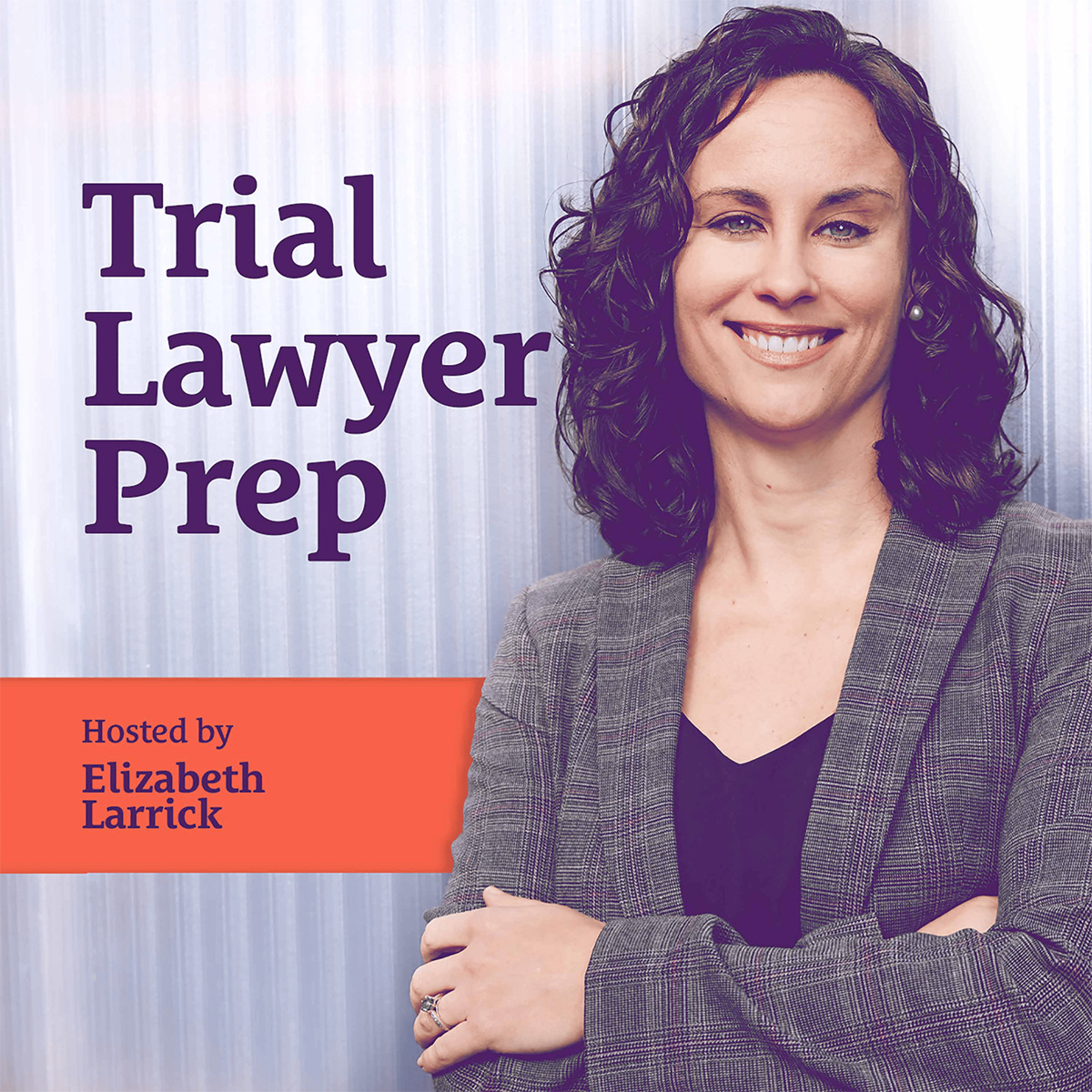
One of the most effective ways lawyers and other businesses can reach their audience is through podcasting. But without the right tools, the right people, and a clear purpose as to why you’re doing this, it can be so easy to get overwhelmed and lose focus on why you started the podcast in the first place.
Joining us today is podcast producer Danny Ozment and he talks all about podcasting – the benefits of having a podcast, how you can maximize your content, and some strategies to make sure you’re able to produce content consistently.
As a business owner himself, Danny is aware that he can’t do everything on his own, otherwise his business is never going to grow. And so, he has been advocating for people to do the same, regardless of the industry they’re in.
In this episode, you will hear:
- Reasons many podcasts don’t make it past 15 episodes
- How to deal with a creativity block
- What is ordinary to you is magic to someone else.
- The value of repurposing content and how it works
- Tools you can use to help you with repurposing content
- How podcasting can help you with the trust factor
- The power of niching down your podcast to a specific audience
Follow and Review:
We’d love for you to follow us if you haven’t yet. Click that purple ‘+’ in the top right corner of your Apple Podcasts app. We’d love it even more if you could drop a review or 5-star rating over on Apple Podcasts. Simply select “Ratings and Reviews” and “Write a Review” then a quick line with your favorite part of the episode. It only takes a second and it helps spread the word about the podcast.
Supporting Resources:
If you have questions or a particularly challenging client preparation, email Elizabeth directly for assistance: elizabeth@larricklawfirm.com.
Episode Credits:
If you like this podcast and are thinking of creating your own, consider talking to my producer, Emerald City Productions. They helped me grow and produce the podcast you are listening to right now. Find out more at https://emeraldcitypro.com Let them know I sent you.
Episode Transcript:
Elizabeth Larrick: Hello and welcome back. Thank you all so much for joining us today for the trial lawyer podcast.
I’m your host, Elizabeth Larrick, and I have a very special guest, my podcast producer, Danny Osmond is joining us today and he is going to talk to us a little bit about lawyers and [00:01:00] podcasting and some normal things that he sees and frequently asked questions. So Danny, thanks for joining the show.
Danny Osmond: Thank you.
I’m really happy to be here. And I am really impressed that this is episode we’re in the seventies now. I think you said it was 71. That’s a really great thing for me to be here and see you have gotten that far because a lot of podcasters don’t even make it that far. So I’m happy to be here.
Elizabeth Larrick: Well, I will tell you, I could not do this on my own.
When I first thought, Hey, I’m going to podcast. Like I can tell you like. I have so many other things on my plate as a solo that having your team, I didn’t have to learn how to do that. I mean, you guys make it so easy to do the stuff and I just do the content and send it over to you guys.
Danny Osmond: Yeah. Yeah.
That’s what we’re here for. And I learned pretty early on as a business owner myself that I’m like, I can’t do everything myself or my business is never going to grow. My agency is never going to grow. So it’s from experience that I teach these things.
Elizabeth Larrick: Well, I probably can still take a few more lessons, but I am glad that I [00:02:00] offloaded this because it makes it easy.
But I will say one of the challenges for sure is. Especially this year, I’m coming around episode 70, 71, like creating content has been somewhat of a stumper. And so we’re talking to folks in my audience, which would be other lawyers who are thinking about creating content for their social media websites, or maybe even podcasts.
Like, what are you, what are you seeing, what are you hearing as far as like busting through that creativity block?
Danny Osmond: Oh yeah, Creativity Block is a challenge for a lot of people. I alluded to it early on, that It’s impressive that you’ve gotten to episode 71 because a lot of podcasters, a lot of content creators in general, don’t make it past episode 10, episode 15, because they’re a lot of them are trying to do it themselves.
They think I’ve got a lot to talk about and I’m going to do this and maybe they don’t have guidance and they put out four or five [00:03:00] episodes that are an hour long each and they’ve said all they have to say. And they don’t hold anything back or they don’t have guidance on how to think about the branding of the podcast early on and who your ideal listener is and who you’re talking to and what the goal is of your podcast.
So often when I start out a podcast, whether I’m helping someone or it’s a new one for me, I’m thinking about those things early on as, you know, Okay, who do I really want to talk to? What goals do I have for them? What do I want to teach them? What do I want to accomplish? And we hear about the why of the podcast a lot of the why of your content or the why of your book or the why of whatever you’re creating, starting a community, whatever.
So you have to do that early on because that will often guide you for a while. If you’re a lawyer, if you’re in Certain types of law, like we work with a bunch of different law firms. If you’re in immigration law, things are always changing. If you’re in family law, things are changing. There’s a new family every week that needs something, a state law, things are always [00:04:00] changing in every Congress.
Like they, they decide something new. The IRS has something new that people need to pay attention to. Employment law, all those types of things, they’re always changing, so there’s always stuff you can talk about. But the best way to move through, like, once you’ve gotten 20 episodes in, 30 episodes in, 40 episodes in, is to talk to your audience.
Okay, I often early on encouraged podcasters to even talk to their audience from episode two or three on, ask them. Hey, what questions do you have? What problems are you dealing with? Because you already know you’ve probably got three or four problems that you solve all the time for people. You’ve got questions that you answer all the time for clients.
So you got something to start out with. But There’s always something else that someone needs to know. And chances are, if one person writes a review and asks a question or review, or calls your digital voicemail and leaves a recording for the podcast that you can play and ask [00:05:00] the question, chances are, there’s at least 10 other people that had that question that haven’t asked it.
And so you can start to go down that line and I’ve found. That I’ve had podcasters who started out, had a great idea for a podcast, even came in with a title like they knew this is what I want to call my podcast and six episodes in, they’re already starting to change course like, Oh, wait, I’m finding that people want to know a lot more about this.
And yeah, I talk about this and yeah, I’m an expert in this, but I didn’t think anybody would be interested in it. And lo and behold, some people started asking about it because maybe in their first interview, they, the guest mentioned something and they had a five minute conversation about it. And then they got three emails from listeners.
They’re like, Oh, could you do another episode on that? Could you talk about that in more depth? I have this question about it. I have this question about it. And the more you can do that, the more content. That gets created. The more that you can log, every time you get a question from someone in a client session, anytime you get a question from someone, let’s say [00:06:00] you’re speaking at a chamber or something like that.
And keep track of that. You keep a folder of those things and it gets really easy over time to create new content. You and I were talking earlier about like my podcast, for instance, where. I’m literally going to ideal clients and saying, Hey, I think this person, this law firm, this accounting firm, this healthcare practice would be really helped by having a podcast, but I just want to get my foot in the door.
So on my podcast for a long time, I would interview people that I would see as ideal clients, people I wanted to work with just as a way to start a conversation. And often that would lead to a connection. So you can create content that way just by going to interesting people. That you want to talk to and having a conversation podcast can be so many different things that once you have a really good guiding principle or a guiding topic for what you want your podcast to be, it’s pretty easy to start thinking about, Oh, where can I go from here?
[00:07:00] What tangent could I go on? How could I explore this? What expert could I bring in that knows even more about this little part of the topic that I’m focused on that could do two or three episodes with me over six months? And it, if you. Explore that way you get through those creative blocks pretty easily.
Elizabeth Larrick: Yeah. And there’s lots of ideas. Things always do change with the law, but also I always am super amazed when I work with somebody. For example, I worked with a family law attorney here recently, and she’s dealing with real estate and she’s dealing with business entities and she’s dealing with, and so the vast amount of.
Knowledge and experience that we have, sometimes we just forget like, Oh, it’s just the same thing over and over again. It’s like, well, actually a lot of the things that we do intersect with so many other areas of the law that we do just a little bit just to let people know what they can expect and also hate.
All these things are really interconnected and I can help you with that. Like I may not be the number one person, but I’ll at [00:08:00] least be able to spot it and then go find the help if we need it.
Danny Osmond: Yeah, there’s a quote that I like along those lines of for most professions, what is ordinary to you is magic to somebody else.
The stuff that you do all the time that you know every bit of is crazy amazing to somebody else because they’ve never even thought about studying or learning that topic.
Elizabeth Larrick: Right. Or it’s just like, Oh, I would not have thought you have this one car wreck. And now. Yeah. All of these things are involved or I have to go through and people like, Oh, well, it’s a divorce or a family issue.
Of course it’s going to, well, not, Oh, I mean, people don’t always think like, Oh, well, that’s going to involve all these other areas. And so I’m always like, Oh yeah, I forget about that. Because like I said, for me personally, sometimes I love having people on, because I think that that’s really helpful. Like having you on to spur a content and ideas.
And I think that’s really sometimes the easiest way to create new content. But like we were talking before we started. Recording, like [00:09:00] what I really love about like having a podcast and this content is like reusing it on my website, because that’s one thing that I have seen recently is just like an uptick in that searching for focus groups and then giving me a call.
So, I mean, I really love that part of the podcast. So to talk a little bit more about repurposing and like all the stuff with the content, with podcasting.
Danny Osmond: Yeah. I was having a conversation through email with a client. Earlier today, who she was frustrated because she’s worked now, they’ve had a podcast for a year.
We didn’t help them start, but they found us because they were needing some help with the production and keeping things moving. And she’d been through two or three marketing people because she was like, I just want to find one marketing person that can do all of the things that I need. And she was like, look at our social media.
Like, it’s so boring. It’s just, All about the podcast. And so I pointed out, I said, well, have you done anything to create [00:10:00] social media content other than the podcast? Have you done your own videos? Have you put stuff out there? Have you posted things about what you like and what’s going on in your life and things that are happening in the world?
Cause this is more of a current events type podcast. So, so there’s an element of. You have to, when marketing anything, whether it’s trying to grow a podcast, whether it’s using a podcast to grow your business, you have to do some things. You have to participate. But one of the things that we’ve had a lot of success with is like you said, repurposing content where a podcast.
Is such long form content, like you and I are probably going to talk for half an hour or something like that. Some people go longer than that, they go every week. Like you said earlier on, it’s easy for lawyers to talk and that’s why podcasting makes so much sense. For lawyers is, lawyers are used to being quick on their feet.
They can speak, they can teach something, they can share something. They can create an argument, they can convince people [00:11:00] of something, they can persuade. And that makes it easy for a lawyer to, to think about that. When you create that content, you’ve got a lot of words there. Okay. You’ve got a lot of time.
You’ve got a lot of a recording like you and I are on zoom. You might also have a lot of video. Okay. So when we work with a client, we take. That video, we take that long form video that we have and we strip the audio. Okay. So we can turn the audio, we can edit it. We can clean it up. We can make people sound more intelligent.
Like they didn’t use as many filler words as they actually did. And turn that into a podcast episode. But at the same time, we have video and maybe that client has even broadcast that video live. Maybe they used a tool like StreamYard or Ecamm or something like that to broadcast their recording, interview or whatever, to Facebook Live or LinkedIn Live or YouTube Live or Instagram.
And so there’s two big pieces of content right at the beginning. [00:12:00] But then we’ve got that audio recording, we’ve got the video, and we can Cut out some quotes from it, and we can have quote cards and social media posts that come from it. We, for instance, with us, we take the podcast episode and our copywriters rewrite the content in the episode into a blog post.
So you have your show notes that you normally would see with a podcast, but then we have the. A 700 word blog post that is for people that want to read the content and they read it and then they realize at the end, cause there’s a link, Oh, this was a podcast episode two, I might want to listen to it because maybe there was some more stuff, but most of it is there.
Um, you can send out an email. Like I said, you have social media posts, you’ve got the video. So now tick tock, we’ll see for how long, but Instagram reels, YouTube shorts are roughly the same thing. You can cut out minute long, minute and a half long videos. From the podcast episode that are really interesting.
And then you reach those [00:13:00] audiences and those channels from the same content. You can create graphics for social media that highlight parts of the episode and you can post about it to promote your episode. We also take it in other ways. You can. You think YouTube, I’d like to, I’d like to have a YouTube channel.
I need to do this video, but like, I don’t want to get all the makeup and have to worry about a script and a teleprompter and not screw up so that I don’t have to make all these cuts and things like that. Well, you can take a podcast episode. Which if you threw a 30 minute, 45 minute full episode up on YouTube, they don’t perform that well.
YouTube audience, they like 10 minutes or less generally, even on a 10 minute video, they watch two minutes of it, three minutes of it. So what we often do is take like this 30 minute long recording that you and I are doing, and we cut out. The two or three, four, maybe best clips. And we cut that down and we have a seven minute video, or we have an eight minute video.
And then we put a thumbnail at the beginning that [00:14:00] shows the title of the episode and has a nice transition with some music. And then for the next segment that, or the next clip that comes in, there’s a card that tells people what that clip is about. And so people can watch a seven minute video. Get the gist of the podcast, maybe move on from there or say, Oh wait, this was a podcast.
I’m going to go listen to the podcast. We even take it further. You and I were talking about an idea earlier where you can combine all of this copy that you’ve written for these multiple episodes, maybe on the same topic, and you can put them together into a bigger page that is a really bigger S big SEO boost for your site.
We take. Episodes as well and create like downloadable PDFs, lead magnets that are executive summaries of the podcast so that say someone from your audience is listening in the car right now commuting in Austin traffic, like I know what that’s like, they’re listening to the whole episode, but They wanted to take the [00:15:00] information with them.
The information really isn’t in the show notes. That’s more about getting people interested in listening to the show. And maybe there’s some resources, but now they have an executive summary that they can download. And Oh, by the way, when they do that, you get their email address. So you’re growing an email list.
So there’s all of these ways that you can take. A huge piece of content and turn it into everything else that you have to do, sort of your baseline marketing, social media, content, video, et cetera, email, and then supplement it so that you have time to post occasionally about, hey, I went to dinner at this place recently and it was really great, or did you see this new thing that came out last week from the House of Representatives or something?
Let me explain it to you, that type of thing. You then have the flexibility to jump in and make your social media feed more interesting than just promotion about the podcast, but even if you don’t, you have your social media feed, promoting your podcast and other things that you’re doing.
Elizabeth Larrick: So I have a [00:16:00] question on that because a lot of people I see.
Multiple podcasts. I mean, there are lots of examples of this, but they’ll have the episode and show notes, but then they just have the transcript on the, like on their website. So what are your thoughts about that? I mean, is that helpful?
Danny Osmond: Transcripts are really easy to do. Google recognizes transcripts. So where.
Three or four years ago, a transcript may have helped you in terms of SEO. It doesn’t so much anymore because now Google just sort of logs. Oh, that’s a transcript. It’s great for accessibility. Like it’s one of those things where if you can get the transcript on your site, it’s an accessibility thing for hearing impaired and things like that.
But it doesn’t help you as much as If you turn the episode into a blog post for people who are still looking to read blogs, that that’s the thing with all of these different channels is they have different audiences. The people that like to listen to podcasts are likely people who are commuting and they aren’t [00:17:00] watching as many YouTube videos and they aren’t reading as many blogs.
The people that like to read are reading sub stack newsletters and want to look at blogs and things like that. So they find those things and they read those things, especially younger audiences. They’re on YouTube, also listening to podcasts on Spotify, but they’re on YouTube looking for videos that are shorter, that get them information quicker.
So that’s why you want to be in all the places because likely you have audience that is interested in knowing what you’re teaching. Or sharing and they need a way to find you and it’s easy through repurposing to be in all of those places without a lot of extra effort or by outsourcing and having someone like an agency like ours or even a virtual assistant that can do those things and get you in those channels.
Elizabeth Larrick: Gotcha. Because I’ve seen that and I mean there’s so many new like transcription services that make it Mm-Hmm. so easy. I mean, auto AI and like you just, it does it. And so I’m curious.
Danny Osmond: Our [00:18:00] editing platform that we use is called DS Script. It actually transcribes so we can edit from a transcript as well.
Like we can automatically detect filler words and things like that. And you have to be careful when like deleting ones that are. Because, you know, some people slur them together and things like that. So you don’t want to be heavy handed. There’s a lot of tools like that that make it easier. There’s all sorts of, we won’t go into AI, but just tools out there where you can drop now a 20 minute video of you speaking, like doing a TED talk or doing a session at a conference, drop a 20 minute video into it.
And it cuts it up into minute long clips. That makes sense. It captions them automatically, and then also gives you some type of templatized look to them so that you can easily use these things. And it does it through AI. It can understand, Oh, this is a thought I’m going to cut here. Here’s another thought that made sense after a minute, and it will cut it up for you.
It sort of, again, can be heavy handed and you have to tweak it and you have to do the work, but there [00:19:00] are tools that can help you do a lot of these things these days where we as an agency are always exploring that. Cause like, if we can save time, it saves me money. And it’s a higher profit margin and things like that.
Elizabeth Larrick: Yeah. I will say lawyers are a little bit low tech. Now there are lawyers out there who are super high tech and I generally know how to do the stuff that I do and feel really confident in a lot of the stuff that I do, but I know that it’s just the tip of the iceberg when it comes to like all the amazing things that are out there that could be used.
I mean, it’s just, it’s really endless.
Danny Osmond: Definitely. To
Elizabeth Larrick: help systematize things. So well, awesome. So we talked about content and we talked about how to bust through creativity for any kind of content that we’re creating. As far as lawyers podcasting, I know that you’ve done several, I mean, I listened to some of the ones that you do as well.
I know some people like. Especially people that I work with, like sometimes like, well, who’s really listening to a podcast? And do I really, like, is this just going to be another white noise situation? Like, is this really [00:20:00] fruitful for a lawyer to have a podcast?
Danny Osmond: Yeah, I think for most lawyers, it is for most.
We, we have made a living as a business working with professional service providers, and I say the business is successful because it works for those types of businesses. There is an element to podcasting that we’ve alluded to, and that is trust. What the podcast provides is a chance for people to get to know you in some way, and I’ll give you an example Not a law firm because luckily I’m only working with one law firm now to do some special needs trust things And they don’t have a podcast.
Maybe I’ll talk to them, but I live in Central, Florida and Everybody has solar panels, and we wanted to add solar panels to our house So what did I do? The first thing I did was go to Google and look at Google, my business. And I was like, okay, who are out of the thousands of contractors that do solar panels in central Florida, who can I trust?
Who are the ones [00:21:00] that I should talk to first? And so it was who was rated highest, who had the best reviews. What did the people say? So I found a handful of those and I was like, okay, I’m going to talk to these four or five. I went to their websites. So how do I talk to them? And I would look on their websites and they were all pretty good.
And I’m like, okay, cool. They got some information, set up some calls. Had the calls or had the meetings. And at the end, there was one that I obviously trusted more than the other. So I was like, okay, this person was knowledgeable. They were really good about, I felt like they were being honest with me. They weren’t trying to sell me on things.
And I got to the end of that meeting and I said, Hey, I want to give you some free advice as a marketing person. If you’d had some form of content on your site, if it was a blog, if you had even just a handful of podcast episodes, I could have heard you, I could have hear you say things. Have you explained some things to me and I automatically would have trusted you more than the other Contractors that didn’t have those things because I got a chance to know you and [00:22:00] that’s what it comes down to is that even just In a few episodes you get to know the host of a podcast you trust them.
You feel like they’re your friend I mean, the people that are listening to this podcast right now, if they listen to other podcasts, they know that effect. They know that they feel like they’re hanging out with someone as they commute to their office and, and things like that. So that’s really why it’s fruitful still for any professional service provider, including law firms to do it.
Now, what you talk about again, goes back to that. Well, who’s your ideal listener? Who do you want to talk to? Are you trying to get new clients? Are you trying to generate leads? Are you trying to just educate people? Are you B2B? Are you trying to reach other firms? So you think about things like that, and I’ll give examples of, we have one firm that’s an immigration law firm.
That specifically works in the tech sector. And so she is talking about. Immigration law topics that solely affect that sector, the countries that [00:23:00] they specifically are getting engineers and developers from and coders. What has changed how to get those things? So she’s really current, like what is going on, how to.
Access it, what you need to do, how to help people when there were layoffs that started to happen in that sector. Okay. What do you need to know about your visa that got you here for this job? And how soon do you need to get a new job and all those types of things. And, but then there are lawyers that maybe their specific area is business law.
Okay. But they’re only certified to operate in Maine. And so their podcast may be for businesses in Maine. Okay. About things that they need to know about how the law affects their business. Or, uh, use an example from one of our mutual acquaintances, Ernie. He had a client that was in his groups that was from a small town and he had a specific area of law that he practiced, but he was really only one of like two or three lawyers in the town.
And he [00:24:00] decided to do a podcast about the town. Where he was like the digital tourism board for the town, where he would tell people about the town he’d grown up there. He’d talk to people, he’d interview people, he’d recommend restaurants. Cause really it was, he was trying to let people know in this sort of bedroom community of other major cities, what was going on for these new people that had just moved in and the town was growing and what that Led to was him being the lawyer that everyone knew, but also the referral source for all the other lawyers.
Okay. That were there because people knew him, they would go to him. He would get referrals. He’d also get all the business for his practice area. So there’s all sorts of things. There’s a special needs attorney. I know of that does a podcast for parents of special needs children. And she talks about all sorts of things about parenting, special needs, children, and things that are going on and things you need to know about healthcare and this and that and the other thing, but then she’s the.
[00:25:00] Special needs lawyer that all of those parents know nationwide. And so they go to her. So there’s all sorts of ways that you can use it, but it comes down to that. This is your opportunity to build trust with people who are only coming to you when something big is happening, something scary is happening, something that they know is going to be expensive is happening and they have to trust you immediately while.
If they’ve already listened to a few episodes or they’re on your site or they know you because you talk about the town all the time or the city that you’re in, then you have that door open already.
Elizabeth Larrick: Absolutely. And I like that you kind of pointed out, especially like when I got started and in just your example right there, like having a niche is so helpful for people picking podcasts because.
Yeah. If they won’t listen to marketing podcasts and like me, I’m a law firm. And I started listening to a marketing podcast and then I realized like, Oh, this is not general stuff. Like this is really specific just for real estate. Well, God, I just wasted my time. So niching down is totally okay. [00:26:00] And it’s totally good.
And that does not mean you can’t have an episode that’s like, Oh, Hey, by the way, like this weird thing happened to me. And I’m getting this person on the podcast because it doesn’t have to be 100 percent always related to your niche, but it really helps people find you. It
Danny Osmond: does. And, and that’s the thing with podcasting.
I mean, we’re now, we’re coming up on almost, I think next year is 20 years of podcasts existing. We go back way back to like Adam Curry. Remember the guy from MTV? He was like literally the first podcaster and Libsyn, who’s your media host, the one that we use a lot, just celebrated its 18th birthday last year.
It’s legal. It can vote now. And so it’s been around a long time, but even in the last four or five years, there’s been this shift where I think you’ve probably heard me mention before that there’s really only around 300, 000 to 400, 000 active podcasts at any one time. [00:27:00] And that number hasn’t changed for four or five years.
And by active, I mean like they’ve released an episode in the last 30 days, because you’ll see numbers. Yeah. There’s 4 million podcasts listed in the podcast index, but only about 400, 000 of those are still active and actually releasing episodes. The audience has gone up, but what has happened over the last four to five years, and you mentioned like with marketing, there’s a lot of marketing podcasts, there’s a lot of business management podcasts, there’s a lot of.
Sports podcasts, but the ones that have stuck around. They’ve already scooped up all the general audience people. They’ve already scoot like the, the Amy Porter fields of the world that talk about online and digital courses, things like that. She’s scooped up all the digital course people that want to learn generally, like how do I create an online course?
So if you’re going to go into that space now, you really have to focus in on, okay, I’m going to do a podcast on how to create digital courses for food bloggers, [00:28:00] how to create digital courses for. a law firm or for a personal injury, like what, like, if you’re talking to other lawyers and you want to give people some coaching and things like that, you’d have to start a podcast that is really specific now to reach new audiences because those podcast listeners.
Yeah, we’re getting new ones all the time, but most of the podcast listeners that have been around, the 60 some percent that now listen to podcasts weekly, they’ve got their three or four podcasts that they like, that they stick with. So if you’re going to get in there and be a new one, you’ve got to, like I said, like a little lawyer, you might have to be that podcast that’s about their local area.
Or that podcast for business owners that is specific to their state that really could help them learn some things or deal with, like I mentioned to you, an example of an employment lawyer who’s here in Florida that is getting started. And I’m like, okay, that’s your podcast because they’re especially like Florida’s crazy right now.
But like, there’s things that are going on in Florida [00:29:00] that aren’t happening in other States. And so you need to know those things and you need to know how that’s going to affect you. And when you do that, you get in front of that audience much more easily, because just like everything else, finding a podcast is all about search engine optimization and making sure that the title of your podcast lets people know what is it about, like, if I’m going to recommend this podcast to somebody else, I don’t want their first question to me to be, Oh, what’s that about?
Like if I say, Hey. This podcast, you’re a trial lawyer, you should go listen to this podcast, it’s called Trial Lawyer Prep. They’re gonna know what that’s about. It’s like, oh, okay, that’s something that’s preparing me as a trial lawyer for all the things that I’m doing in my profession. Okay, cool, I’ll go there.
That’s what makes sense.
Elizabeth Larrick: Right, yeah. Well, and it’s just, I think that sometimes it’s, I know a lot of lawyers that will start a podcast, and I’m always just like, well, what, what’s happening with it? They’re like, Oh, nothing. Now I’m like, well, wait. And I just think we have so many things that we do. [00:30:00] And for me, it was a lot easier than to sit down and write a blog or use AI to write a blog or go find a copywriter to write a blog.
I’ve done all of that. Like just talking into this microphone for whatever reason is a little bit easier. And I also appreciate like, as far as like your guidance and. There’s zero pressure that this has to be 30 minutes long. I mean, there are plenty of my episodes that are 10 minutes. Yeah, that’s it.
That’s all I got for today. And some of them are 40 minutes, you know, but most of the time they’re pretty short sweetened to the point.
Danny Osmond: Yeah. Yeah. They don’t have to be long as long as they provide value to the listener.
Elizabeth Larrick: Right. Absolutely. Well, awesome. Well, is there anything else? We’ve gone through quite a few different things, trust and repurposing content.
Is there anything else as far as thinking about my audience and those folks that you’d want to convey to them?
Danny Osmond: Yeah, no, I think we covered the main topics that are important for lawyers, especially thinking about the content that they know they need to [00:31:00] create and how to make it easy on them while also getting the benefits of, most of the benefits of creating that content.
Elizabeth Larrick: Yeah. And I will just say from my point of view, like if anybody listening to the podcast is interested, I would love for you to come be a guest, because that was one thing that I did a few times and then I was hooked, like, Oh, I really enjoy this so much more than trying to sit down and hammer out a blog.
It came so much easier. So if anybody’s interested, I’m happy to have you come on, come on the podcast. I think that’s a good way to get started. And that’s one thing too, I would say for people who are. Thinking about it is just get out there on a podcast and just try it out to see if you like Talking into a microphone.
Danny Osmond: That’s a good way to get your feet wet. It’s also a good way It’s a strategy that I tell our clients all the time to continue with because Like I said, you have all these different channels with different audiences. Well, if you have a podcast and you want [00:32:00] to grow that podcast, actually, one of the best ways to grow the podcast is to go and be on other podcasts and borrow people from larger platforms and bring them back because likely like with you, you’re talking to trial lawyers, you could go on other podcasts for lawyers.
Talk specifically about your expertise and say, Hey, come back and listen to episode 71 of trial lawyer prep. Cause we went way deeper into this topic than we could on this answering this one question. It’s one of the better strategies for growing an audience of a podcast is to leverage all the other podcast listeners.
Podcast listeners are always looking for new podcasts. Even though the average podcast listener already subscribes to six shows, they’re always looking for something new or something’s always changing. I mean. I look at myself as an example of the number of shows that have been in my podcast app for more than four years is probably two or three and all the rest, the other six or seven that are in there have changed.
I listened to this show for a year and [00:33:00] then I’m like, okay, that gave me what I needed and then I move on. But during that time, I might’ve bought a course. I might’ve signed up for a coaching session. I might’ve done something else, bought someone’s book or bought a resource that they mentioned or subscribe or, or listen to an ad that they shared and been like, Oh, I think I heard something for like low carb ramen.
A month ago and I ordered it and I’m like, Oh, this is great. You know, this cause it’s like, tastes like ramen, but it’s not all the carbs. And so all that stuff happens all the time with podcasting.
Elizabeth Larrick: Yes, absolutely. Well, awesome. I really appreciate coming in. And of course I appreciate all the work that you and your team do to make me sound professional and get this podcast out to the world.
Danny Osmond: Oh, you’re welcome. I appreciate you having me here.
Elizabeth Larrick: Awesome. Thanks so much. Thank you all for joining us today. If you enjoyed the podcast, please follow us, like us, review us on your favorite podcast platform. And like I said, invitation is open. My email is in the show notes. If you are interested in starting a podcast, please contact me and we’ll get you on [00:34:00] and be a guest and see if you like it.
All right. Until next time. Thank you.