The Art of Teamwork: Winning a $27+ million dollar verdict with John Heenan [Ep 152]
In our last episode, we heard from Tim Bechtold, whose perseverance ultimately led to a verdict in Montana of over $27 million for his client.
Today, we’re joined by Tim’s partner in the case, John Heenan, for his perspective on the process and the role he played in achieving the result, particularly as someone who joined late in the day to help push it over the finish line.
We talk about how to approach the trial, the importance of adding someone new to a team for crucial fresh perspectives, and advice for working with conservative mentalities on juries and trial presentation.
John emphasizes the importance of empowering jurors and leveraging collaboration to achieve results in the courtroom, while also reminding us of how we can measure success, keeping an honest assessment of our role in the outcome.
You can also watch this episode on YouTube here: The Art of Teamwork: Winning a $27+ million dollar verdict, with John Heenan [Ep 152]
Follow and Review:
We’d love for you to follow us if you haven’t yet. Click that purple ‘+’ in the top right corner of your Apple Podcasts app. We’d love it even more if you could drop a review or 5-star rating over on Apple Podcasts. Simply select “Ratings and Reviews” and “Write a Review” then a quick line with your favorite part of the episode. It only takes a second and it helps spread the word about the podcast.
Supporting Resources:
Guest John Heenan of Heenan & Cooke Trial Lawyers, Montana.
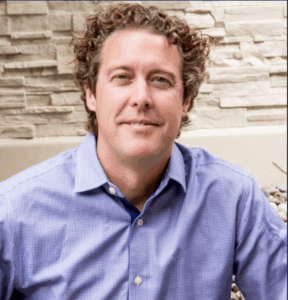
Contact John directly at john@lawmontana.com
Books recommended by John:
- Carl Bettinger, Twelve Heroes, One Voice: Guiding Jurors to Courageous Verdicts
- David Ball, David Ball on Damages, 3
- Nick Rowley and Steven Halteman, Trial By Human
Do you have an upcoming trial and want help writing your opening statement? Book a free call with Elizabeth to see how she can help.
Don’t want to miss an episode? Join the Trial Lawyer Prep Newsletter for resources, tips and episodes by going here: www.larricklawfirm.com/connect
Episode Transcript:
I’m your host, Elizabeth Larrick, and we have a treat today. We have guests, John Heenan joining us all the way from Montana to talk to us about a recent verdict. Hello, John, and welcome to the podcast.
Hey, Elizabeth, thanks so much for having me and what a treat to get to be on your show.
Speaker 1 (01:02.136)
Well, I think it’s gonna be our treat because you guys had an amazing verdict, 27 million. And so I’m excited to have you here to talk a little bit about that. But before we jump in, for folks who may not be familiar with you, tell us a little about where you practice, what your main focus is. Give us a little background.
So I’ve been a in the trenches trial lawyer here in Montana for 20 years now. Cut my teeth on some federal criminal defense and have been a consumer protection lawyer. So I’ve for many years sued debt collectors, banks. Back in the 2007, 2008 time period, I kind of did nothing other than sue mortgage servicers for defrauding people.
had some good results at trial in those cases. And yeah, I fight bullies. I take on bad guys. And here in Montana, everybody’s somewhat of a generalist. So I think I get referred cases involving people getting picked on by bullies.
Okay, well that’s a good background to give us and of course if you want to reach out to John his information will be in our show notes. But what I find so curious about this verdict was you jumped into this case kind of just a few weeks before trial. So what made you get excited? What made you say yes to going to trial in this case?
Well, I think probably like many of your listeners, my least favorite part about the practice of civil plaintiffs law is how long it takes to get a case to trial. And so, you know, my normal case is like probably everybody else’s where I file it, grind it out for years and years and years before finally after all the doors have been closed on the defendants, we finally get our day in court.
Speaker 2 (03:03.714)
This one was kind of every trial lawyer like me dream. I was literally sitting at the brewery having a beer with my good friend and we had another trial coming up and he told me that he had back to back trials. And I said, what’s the other trial? And he told me about this case that we’re here talking about. And I said, hey, do you need some help? I work on tips.
Hahaha
So that’s literally how I think that was two or three weeks before trial that I first heard about this case. And I do think and I a lot of times help other lawyers either jumping in and helping them try a case at the last minute or at least kind of giving them a fresh set of eyes. And that’s a big thing that I want to visit with you about Elizabeth. And I know that you specialize in is, you know, I think lawyers.
grind all these issues for years and years and years. And so we just think because it’s important to the other side or the court that it must be important to a jury when 99 % of the time it’s not at all. And so I do think whether you’re willing to relinquish the control and let somebody else try your case, that’s always hard, but at least getting fresh sets of eyes on a case that you’ve been staring at for a long time.
is incredibly beneficial. I brought a fresh set of eyes to the case.
Speaker 2 (04:37.432)
helped my good friend to help his client get a fair result.
Absolutely. You guys have so much wisdom and knowledge. I really wanted you each to come in and give your own thoughts.
Kind of the flip side of this case and working a case for three weeks is Tim and I just finally got resolved a case that we’ve had for eight years together. So that’s sadly more the norm in the civil practice than a couple weeks.
Absolutely. mean, I think you’re going to be preaching to the choir to most people who totally understand the slogging it out. This case is a case that it really kind of lingered pretty significantly long. It took a while to get to trial. There was an appeal. So there was a lot of, you know, back and forth, a lot of slogging out. know that Tim really had to do a lot of fighting and digging in this case against a private prison. And so we did a focus group together. So I am curious.
You you got to take it all the way through into trial. So tell us a little bit about what you learned from that virtual focus group.
Speaker 2 (05:40.366)
Yeah, it was hugely beneficial. And I mean, for more just kind of, you know, interesting story or whatever, somewhere between the bar with Tim and agreeing to be on the case. And then I had a long planned road trip that I drove from Arizona back to Montana. So for me, thank God for the zoom nature, the virtual nature of your focus groups, because I was in a geodesic dome at a campsite in remote Utah.
in range of their Wi-Fi in order to participate in this focus group. And so I’ve always done focus groups in my cases way back when before Zoom, we, you know, put an ad in the newspaper and bring people into the office, feed them a sandwich and give them $20. So I will say that, you know, that was the first time that I’ve ever worked with you.
Speaker 2 (06:40.462)
And I was incredibly impressed with not only the people that you found, because in my experience, it can be kind of the usual suspects when you’re trying to do it yourself. There’s a certain kind of group of people that likes to do the I mean, rightly so. I think it’s fun, but you get the same people. And so their perspective gets kind of stale. And also, you know, we’ve read the books.
I what we thought was the best, then I watched you handle one and realized that what I had been doing up till then was not the best. So I know who I’m going back to next time. It’s not me running an ad in the newspaper anymore.
I appreciate you saying that and I will say from all my virtual folks you had the coolest background because you were
Yeah, I’ll send you picture if you can link it because the geodesic dome was a pretty neat place to office from for the day.
It was, I, you know, as far as getting up to speed so quickly and thinking about those three weeks and thinking about that focus group, I you yourself did an amazing job getting up to speed on the file because you did part of our presentation in that focus group as well. And then, you know, sat back and watched everything else people were saying. So there was a lot of information to kind of synthesize down and then get that feedback. And then you took that then and
Speaker 1 (08:05.1)
you know, recreated and went back and create an opening statement that I thought was fantastic.
Well, and I really also continue to sing your praises, Elizabeth. mean, I’ve done focus groups with other people too, but that never involved kind of, hey, let me look at your opening PowerPoint slides, because I might have feedback, and you had amazingly good feedback. One of the things I like most about trial is the collaborative process and just the finished product that the jury sees is…
It’s never the work of one person or I would say it shouldn’t be the work of one person. I definitely the way we do it in my office is it’s very collaborative and through that process, the jury gets the best version.
Absolutely. think you used a beautiful word for that, which is stale. You know, we get so stale, our stale perspective as lawyers and having more people get eyes on and give even just very small things make, I feel like the biggest difference. And in this case, I think you guys had a really good challenge of getting the focus in on the really bad violations. Cause you had so many ways to go.
so many bad acts it was really trying to connect everything together and keep the jury focus.
Speaker 2 (09:25.068)
Yeah, and that was, you did a great job of helping us with that. For the listeners, I think I had four or five things I wanted to prove them guilty of, and you correctly said, let’s just go for three. I couldn’t help myself in closing. I reminded them of the three that we were told them we were gonna prove, and then I put up a four, five, six.
think that’s brilliant!
just to kind of sugar coat it for him. Yeah, so I…
I think that’s, mean, that’s, you know, that’s one of the things I was hoping they would, you’d kind of tell us a little about because one of the things about, think sometimes can be difficult when you’re approaching a trial, especially in your case, right on the eve of things, you’re taking in all the information and creating all the crosses and the openings and being able to then think through and tailor opening into closing. But you use it in a way where it was just like, and let me show you what else we proved. You know, they were not paying attention.
Yeah, you know, we all get good ideas from, at least I get good ideas from other people and just kind of, you you crib them and you make them your own. A mentor and friend of mine is Carl Bettinger, who wrote an excellent trial guides book, 12 heroes, one voice. And that’s kind of my go-to for how to put cases together. It’s the Joseph Campbell, it’s just a way to tell a story.
Speaker 2 (10:55.246)
is explain to the jury what’s going on, kind of what they’ve entered into and what their options are for either stepping up and doing something or choosing not to. And that’s the way I sue debt collectors, it’s the way I sue banks, I do bad faith insurance stuff, it’s the way I present bad faith cases and that’s how we presented it here too.
And I think it works. mean, you tell me if you’ve been successful before.
Yeah, yeah, it does work plaintiffs lawyers. Our instinct is we feel so by the time of trial we feel so kind of emotionally wrapped up in our clients. We uniquely know all the crap that they’ve been put through behind the scenes, how disrespected they are almost always through this process. And so kind of we go in with a chip on our shoulders that the judge, the jury, nobody else.
has that perspective. And so when you start off from a position of, and I guess I’d say too, Montana is a very conservative venue. Our jury here was a federal court, Eastern Montana. These are farmers, ranchers, people that do not want to give money away, period. Everybody says, that hurts, rub dirt in it, get over it. You know, and that’s great. And that’s
kind of the only place I’ve ever, I’ve had a couple cases in California and stuff like that and I won’t lie, that’s pretty fun too. But on a case where kind of values have been broken, think a conservative jury is your best jury because they understand right and wrong and are willing to act when they see wrong.
Speaker 1 (12:44.04)
Absolutely. But I mean, let’s spin it a little more here because it’s federal court. You guys are pulling from 300 miles to get people.
Yeah, it’s the Canadian border to North Dakota. That’s right. Damn near Idaho.
You’re doing a private entity, which is one of the biggest employers in that entire area. Everybody knows where this place is, who’s, know, and the fear would be, my gosh, right? You’re going to put these people out of business. Like they’re the main employer. Also, let’s be real here. These are prisoners. Like you deserve to be there. Why should we even care about this situation? So you guys kind of had a little bit of an uphill battle to get
and really position the case and frame it in a way to where, like you said, you focus on the values and correcting the wrong.
I think a lot of that happens in Bordier. Bordier isn’t just the place to select your jury and get rid of the people that you don’t want. It’s the place to frame your case for the first time and stake out the posts of what ethical drama, what are the moral values and moral issues that are going to come into play in the trial. And I think I always do cards up and tell the jury panel it’s cards up.
Speaker 2 (14:07.074)
And that’s just cribbed Jerry Spence stuff. I mean, there’s no, it’s not so original, but it’s really effective when you say, here’s the warts in my case. Let me show you what they are so that the jurors are hearing it for the first time from you. So yeah, we had a prisoner, a positive meth test, stuff that might scare somebody away from taking their client’s case to trial.
Absolutely. don’t know if you, there was much of a choice here though, was there? don’t think there was even anything remotely that would give any of you guys an opportunity to settle, I should say before.
Yeah.
Want to know what jurors really think about your case? Stop guessing and start testing. I run virtual focus groups that give you real insights from real people without the hassle of conference rooms and catered lunches. We’ll uncover the landmines in your case before they blow up because the best surprise in the courtroom is no surprise at all. Ready to see what you’ve been missing? Let’s talk virtual focus groups and book a free consultation call with the link in the show notes.
Well, talk us through if you can, anything a little bit about jury selection or opening statement. Is there anything that you can kind of share with us as far as thinking through? Cause there are lots of people who have the same bout, know, the same battles, conservative venue, uphill battle against a defendant, a not so great plaintiff. So tell us a little bit about if you can, things from the trial.
Speaker 2 (15:39.18)
You know, jury selection, obviously one of the big things that we had to kind of put front and center was does anybody think that people in prison don’t have the right to be kept safe? That, you know, stuff happens because that was going to be their big defense and we knew it. So kind of getting ahead of that, having the jury panel openly talk about, you know, and some people did say basically, why should somebody like that be kept safe?
So that’s, don’t fool yourself into thinking if you don’t have the discussion with the panel, they won’t think of it on their own as they’re deliberating. So, you know, we had that conversation and we had the hard conversation about money and that’s always been the scariest part for me is talking about money and especially getting ahead of the jury because I do really think that you can kind of like when the record screeches, like
Every, you the music’s going, everybody’s having a good time warming up and then you say, $20 million and it’s like, and the record screeches and that can be hard to come back from. And my friend, Brett Turnbull, he came up with the good idea that, you know, I’ve used since I’ve stolen from him on in Vordir, it’s just millions and millions of dollars. There’s not a specific amount. There’s not a litmus test.
but it’s putting it on the table. I mean, if the case justifies it, defer to everybody in your own venue, but I don’t think just asking for millions and millions of dollars gets juries to award millions and millions of dollars. think there’s a credibility component and you’re gonna get burned if you start throwing big numbers around and the case doesn’t justify it. But if the case justifies it, I think it’s really important to let the jury know where you’re going.
so that they have the opportunity to talk about it. And we a lengthy conversation at the jury panel, people saying, I’ve never seen a million dollars. How would I know whether I could award a million dollars or two million or more? But they kind of had that discussion amongst themselves. And then, so by closing, I mean, there were specific things that the people that ended up on the jury said that we were able to harken back to.
Speaker 2 (18:06.35)
kind of remind, use their words as they were contemplating what the verdict was gonna be. And I think it was all from a position of empowering them that they didn’t have to award any money, much less a lot of money, but they certainly had the power to if they decided that was appropriate. So our client, as you know, Elizabeth, I mean, he has a brain injury and so he can’t walk. He has kind of a…
stunted gait, he talks very slowly, it would be obvious to anyone that he has problems to eyeball him. Well, in Vordier, one of the potential jurors basically said candidly, you know, I feel sorry for your client. Unprompted, she just said, I feel sorry for your client. And we use that as an opportunity to talk about how no sympathy in the courtroom.
Our client didn’t want sympathy. He wanted, I love the phrase we used was cold justice. And we kept going back to, know, he just wants cold justice and not your sympathy. And in Bordeaux, had a panel, had a nice conversation about this is America. We don’t just take money from a big company and give it to somebody that got hurt. So I do think getting ahead of that.
and kind of staking out the high ground of that kind of language, especially with the conservative jury. Here in Montana, you’re not going to get sympathy. So throw that idea in the garbage and talk about what the rules are and get a commitment to follow the rules.
Awesome, wonderful. It sounds like you guys had an ample time for journey selection.
Speaker 2 (19:58.092)
Yeah, it was great. Federal court, the judge did about an hour and he did a great job and then let the parties each do about an hour. In state court here anyway, we can get half a day. But, you know, I also think working under a timeline can be helpful, keeps you efficient and sure, there’s ways to dribble out the clock. Even if you have four hours, I’d say use one hour if you can.
Yeah. Yeah. Awesome. And you guys ended up with a panel that you were pretty pleased with, right?
Yeah, they were, I mean, a good cross section of Montanans, but everybody was committed. Before COVID, sometimes there were potential jurors that were just downright hostile to the whole system. I do think that people are more open to serving on a jury now since COVID and everybody was kind of locked inside. But I mean, another thing I asked and I think I’ll always ask now again is,
who hates being here, who wants to be here, and who’s somewhere in between. And that even was kind of a good conversation of taking people’s temperature to see. you don’t want the person that hates being there. The person that loves being there is also a little bit dangerous.
Yeah, I was like you kind of actually want somebody in the grave
Speaker 2 (21:21.086)
Yeah, like I want a five out of ten.
That’s right. That’s right. Yeah. I think that’s a great question because I’ve seen juries here in Texas where before I feel like people were kind of little subtle about like not wanting to be there. Some people made excuses, but it is like eye rolling, huffing and puffing, like, you know, very obvious, like they do not want to be there. And if you have to get stuck with that person, cause I’ve seen it happen. It is not, it is difficult to overcome that, that burden of them not wanting to be there.
Yeah, I’ll say, mean, jumping around on you, but I mean, the other I’ve gotten burned on technicalities enough time and I’d gotten burned on, especially in federal court. You get that one juror that just wants to play NCIC investigator and they want to, it tanks the case. It really does. And so if I can lend one good thing to the listeners here, it’s, you know, in closing, before I got into the case, I gave him.
kind of helpful hints on how to do their job in deliberations. And one of them was I use the analogy of an escape room, which, you know, I told them that my family, we always do an escape room at Christmas and you go in the room and Santa wrote a letter and every word in the letter has some hidden meaning and you have to figure out what the hidden meaning is. And I said, that’s not what this is. This isn’t an escape room.
The judge isn’t trying to trick you with the jury instructions or hint, use your common sense. And that was really designed to neutralize that one person that can go back there and deliberations and tank your case and say, well, they never talked about this weird thing or why did the judge use the instead of them or what? mean, just whatever, but just
Speaker 2 (23:17.954)
talked to enough juries after verdicts that didn’t go our way where it was just like you bang your head against the wall because you’re like, how could anybody have anticipated? But then that’s probably a good segue into how important it is to get a focus group because there is a lot of those things that you might not anticipate. But if you hire Elizabeth to do a good focus group for you, the people on that focus group panel will anticipate. There’s nothing better than in real trial.
solving mysteries that you didn’t know existed until you learned about it in a focus group.
Yeah, I mean, you definitely hear all the off the wall possibilities where, you you as a lawyer think, okay, well, that’s not likely to happen. But it still goes into a category of if I get this kind of person and they’re stuck in there, they could be thinking about, well, you know, where are the fingerprints? Well, how could there not be a video of this or maybe and it’s like, no, like we’re all doing.
To me, one of the biggest values of a focus group is that cognitive dissonance is a real thing. And if you’re prosecuting cases and don’t understand it, you’re doing your clients a disservice. we think my plaintiff had a hip replacement surgery, so I think I want people on the jury that had hip replacement surgeries. Maybe, but probably not. Because they’re sitting there going, nobody gave me a million dollars when I…
got a hip replacement surgery. Human nature is to sit there and go, how would I have never been in the circumstance that this plaintiff was in? And I’ve heard some preposterous, you I’ve heard people saying that they never listened to music while they’re walking down the sidewalk, because they’re always ready to jump out of the way of a vehicle that jumps the curb. mean, crazy stuff, but that’s what we need to be anticipating and closing doors on.
Speaker 1 (25:21.334)
Absolutely, and I think that’s where you know the creativity of focus groups always blows me away. We’re just like my gosh They’re trying to put themselves so far from the position of the plaintiff and I mean in this case None of your people were probably were been in prison or in jail. So Right. It’s hard that point of view in a case like this is very difficult because that’s always what you want to be seated is knowing what the point of view is of the jury are they with us or against us and in the situation
no one’s going to have the point of view of being in prison. They’re more likely to be working at the prison.
Yes. Yep. Not for sure. Well, surprisingly, though, I mean, I’d never handled a prison case before, but I do do a bunch of assisted living cases. so I I kind of presented it as an assisted living case. And even in Vordir, we talked about who’s had loved ones at a facility that, you know, they’re dependent on other people to take care of them. I mean, it was kind of a natural analogy.
Obviously different reasons why you’d be in an assisted living facility versus a prison, but
Sure. Definitely. But I think, you know, the way that you guys framed the case and of course, starting first with focusing on the defendant and the conduct there, not focusing on injuries and that kind of stuff. Like you said, sympathies out of the courtroom. Were there any other takeaways that you feel like could stand out that would help other trial lawyers either getting ready for trial now or just putting a tool in their toolbox?
Speaker 2 (26:59.0)
Yeah, a couple things. mean, one is you never know when lightning’s going to strike unless you’re on the field. And so I’m guilty of it. We’re all guilty of it. But handling a case for so long, the defense can say, well, you might lose on this. You might lose on that. You can talk yourself out of taking a case that ought to go to trial to trial. And you can talk yourself into
convincing your client that something’s better than nothing. And often it is, I mean, every case is different, but when you’re getting low balled, when the defendant or the insurance company are not offering any work in the neighborhood of close value for your client’s damages, you know, we’re trial lawyers for a reason. And part of that means showing up and trying cases every once in a while. And I use the line with
insurance adjusters and defense counsel sometimes that’s, and I probably stole this from somebody, but I’ll tell them like, you know, yeah, if I’m batting 250, I’m playing in the major leagues. You know, I just got to win one out of every four. And they hate that because they don’t want to be the one hit that you get. And I think my average is better than that. But I still, mean, even if you’re only one out of every four for the right reasons, you should probably be taking those cases to trial.
I think we as plaintiffs’ lawyers make ourselves a bigger part of the equation than we really are for big wins. I think that if I set my ego aside, most big wins that I’ve had in my career and I’ve watched others have, have more to do with compelling facts, compelling plaintiffs, and then the magic spice on top is often not what we as plaintiffs’ lawyers do.
but the way that the case is defended. No holds barred, no accountability, beat the plaintiff in the submission might sound pretty good when it’s the insurance company and the defendant and the defense lawyers all huddled up. But sometimes when you watch it play out in front of real people, it just looks kind of ugly. And I’ve seen that happen quite a bit. And so I guess my…
Speaker 2 (29:22.434)
Council in those circumstances is don’t re-inject yourself as part of it. Get out of your way. If there’s particularly nasty cross of a plaintiff or a family member, maybe just let it play out instead of objecting. Like we just presented it straight up. There wasn’t any razzle dazzle. Some people are.
better at the razzle dazzle than I am. And some people are in places that that’s maybe better received, but razzle dazzle doesn’t work in front of conservative Montana juries and they don’t like feeling tricked. And so I think just, you know, straight up the middle, cards up the whole way.
I’m sure you had some razzle dazzle in there, John. You know, okay folks. He went in there with, know, pretty much a no offer case. I’ll say pretty much and turned it around, gave it to them, empowered them, asked for, you know, a range and then they settled themselves on around 27 million. So, I mean, that’s a pretty, there’s gotta be, like you said, I think the magic of the courtroom.
does so much good for us than we can ever anticipate. It’s just hard to trust that that’s gonna happen.
Yeah, I think and even the, you know, people want to try and boil it down to a science, but it’s just not, you know, if you try the same case 10 times to 10 different juries, you’re going to get 10 different results. And that risk makes us scared, but I promise you it makes or should make the other side more scared. I think a product of what happened here was a company that’s used to getting sued by pro se litigants all the time and just kind of
Speaker 2 (31:15.458)
beating them down and not really understanding their own risk exposure. But it’s, you know, it’s our job to create risk and create exposure for the defendants and the insurance companies. And that’s how we get more money for all of our clients.
Absolutely. Well, John, it has been a treat to have you and listen to you give us your pearls of wisdom for trial because there are a lot of folks that are struggling with conservative venues and a lot of people just say, I’m just not going to do it. But I hope that everyone listening says, okay, we can do it. It’s totally possible. John’s not get out of the park there in Montana and other other folks in other parts of the country doing the same thing with conservative jurors. So.
John, you’ve been such a good guest here today and I appreciate you coming on. We’re gonna put in the show notes, your contact information and also your mention of that wonderful book by Carl Bettinger. Is there any other resource books that you would recommend?
It be the big one. mean, trial by human, the ball on damages. Most people that have read, you know, the trial by human and ball and rules of the road and stuff like that. Carl’s book is a little bit less on people’s radar. And it really is just a, that formula will work for every single case you have.
Yeah. And then, like I said, I think what I find, there are so many books out there. It’s the one I go back to, right? Like it’s the one I’m like, where’s that thing again? where’s that idea? And it sounds like for you, it’s Carl’s book.
Speaker 2 (32:56.462)
It is. I mean, it’s just like, okay, how do I put this one together? Read that book? Okay, that’s how to put it together.
Well, thank you again, John. I appreciate you joining here today and have a good rest of your day.
Thanks so much, Elizabeth.