My Journey to Witness Coaching
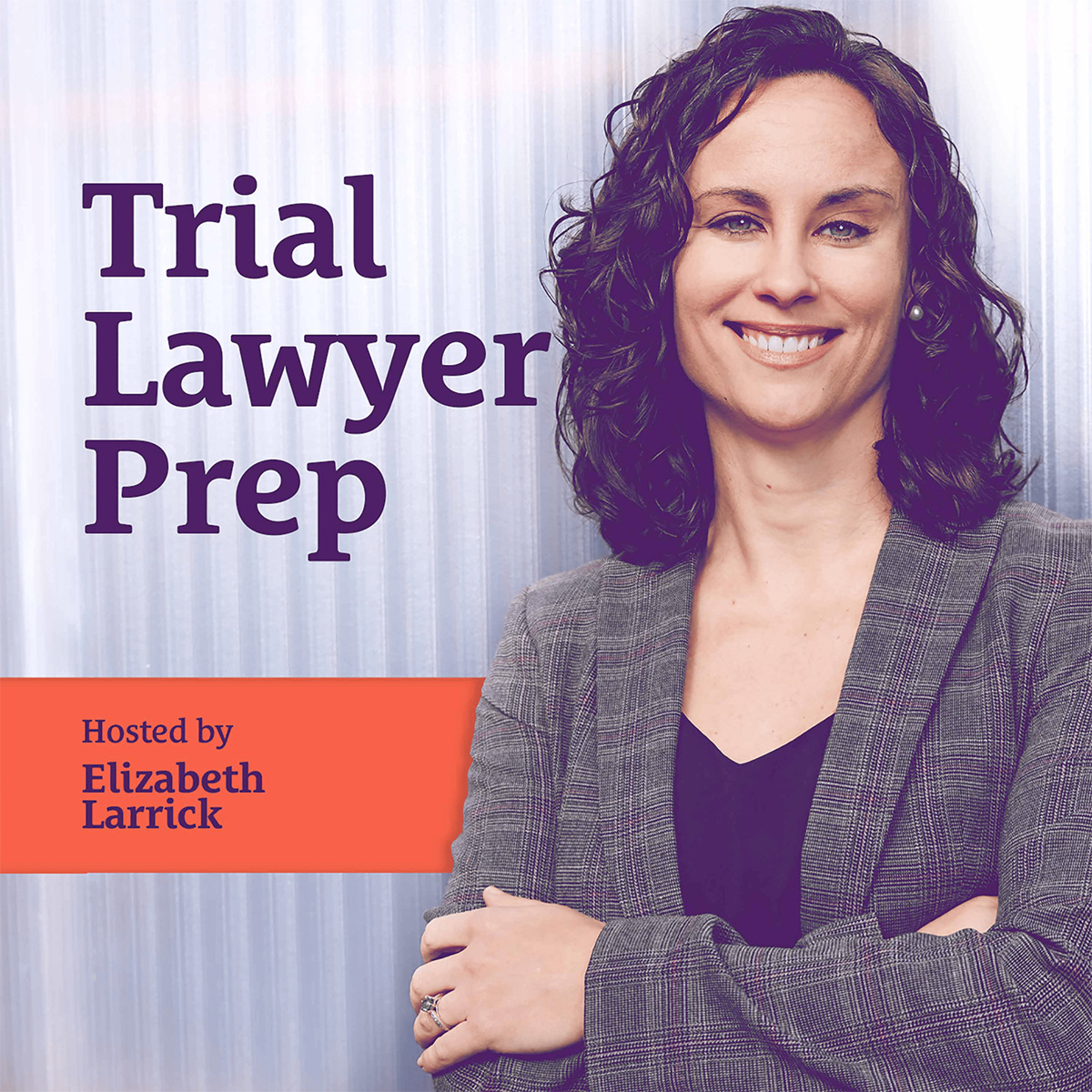
In this episode, let’s take a backtrack to reflect on how I got to this whole spot of podcasting. I’m also sharing lessons we can all take away and use in witness preparation and coaching.
Witness coaching may sound negative because you might think you’re just coaching them on what to say. But try to look at this in a different way and turn this from a different angle. Witness coaching is really about seeing things that the other person can’t see that they’re doing.
Additionally, an overconfident witness can end up getting tripped up really quickly on a cross-exam. And so, we want to be able to prepare people and coach witnesses to do the best they possibly can.
In this episode, you will hear:
- My journey as a trial lawyer in depositions
- My memory of having to testify in a restraining order hearing at 17
- The importance of witness coaching
Subscribe and Review
Have you subscribed to our podcast? We’d love for you to subscribe if you haven’t yet.
We’d love it even more if you could drop a review or 5-star rating over on Apple Podcasts. Simply select “Ratings and Reviews” and “Write a Review” then a quick line with your favorite part of the episode. It only takes a second and it helps spread the word about the podcast.
Supporting Resources:
If you have questions or a particularly challenging client preparation, email Elizabeth directly for assistance: elizabeth@larricklawfirm.com.
Episode Credits:
If you like this podcast and are thinking of creating your own, consider talking to my producer, Danny Ozment.
He helps thought leaders, influencers, executives, HR professionals, recruiters, lawyers, realtors, bloggers, coaches, and authors create, launch, and produce podcasts that grow their businesses and impact the world.
Find out more at https://emeraldcitypro.com
Episode Transcript:
Elizabeth Larrick: Hello, and welcome to a new episode of trial lawyer prep with me, your host, Elizabeth Larrick.
It’s a podcast dedicated to trial lawyers working to have better results in the courtroom with better clients on the stand and in deposition. [00:01:00] We are going to break from our regular programming to have this episode because It’s episode 52. That means a whole year of podcasting, and that’s kind of a big deal.
And I really wanna say thank you for listening and tuning In this episode, we are gonna take a little bit of a backtrack to reflect on how I got to this whole spot of podcasting and talking to y’all. Now I know you’re thinking like, oh no, snooze fest. Let me just skip this one. Wait, wait. I promise it will be brief.
It will include some comedy and some tragedy, and then ultimately four lessons that we can take away and use in witness preparation, witness coaching, and what we do today. So I do want to have a little side note though on witness coaching. Now, that normally makes me cringe, like, Oh, because it sounds something negative.
[00:02:00] Like, Oh boy, you’re just coaching them what to say. And you can actually prep them on what to say to that goes either way. But I have a coach myself and we got talking about, gosh, let’s look at this in a different way. Let’s turn this in a different angle. And coaching is really about seeing things that the person who is doing can’t see.
Let’s talk about like a batting coach, right? So the batter’s in the box and they’re swinging. They can’t actually see themselves doing the swing. So that’s why they get a coach to help them. Right. And we want to be able to prepare people, coach witnesses to do the best they possibly can, but they can’t see it if they’re doing it.
So. That’s why coaching folks on all the different parts, all the different ways, right? So coaching goes lots of different ways, but I really like thinking that it’s coaching because everybody needs to coach. Even Steve Jobs had a coach, right? There’s a book out there, the trillion dollar coach, right?
There’s somebody who he helped out, you know, because we can’t [00:03:00] see and do at the same time. So side note about that. Thanks for going on that journey with me back to our main programming. I started my journey as a trial lawyer, personal injury, and I had a little bit of experience in depositions, but not very well.
And I had tried and most of the preparation had really kind of been stinky. And so at the time, my boss sent me to a seminar for depositions, hopefully to learn and gear up. And this was by a really particular prolific seminar circuit that had all kinds of opening statement, jury selection. And I did.
several, almost all the seminars they offered. But the depth session one was the one that I first one I took and it really opened my eyes. But the experience I had was, while I was there was really what shook me out of where I was. It’s the second day and they’re looking for volunteers to come up on the stage to role play as a witness.
And I was chosen. And as I walk up to the stage, I’m thinking, I got this. I just hope to be one of my [00:04:00] channel a witness and you know, there’s no way that lawyer sitting across me is going to get me to cave. And sure enough, I totally failed. And in that failure and in that experience seeing, wow, there are so many things that I don’t know.
really deep things going on that I need to know if I’m going to start preparing people the right way and with success and depositions. So I started studying, taking it as much as I could, went to classes, bought a CDs and actually there, I bought these DVDs, I should say not CDs, but what I began to gather, obviously I was really honed in on particular method by Don Keenan.
He’s the one who pulled me up on stage. Basically got me to embarrass myself on stage, but got me to that point of just knowing like, wow, there’s so much I need more to know. And in following and going to seminars and absorbing everything and then teaching it and then getting up on stage and speaking about it, really trying to immerse myself [00:05:00] in the principles of what was going on and seeing results and feeling like, wow, this is really x ray vision, like helping these people and seeing around the corners is awesome.
And I took an even deeper dive by fast tracking my experience and taking a year off and going to work for Mr. Keenan and really just getting as much experience as I could, three trials, 10 to 15 case workshops, where it’s immediate feedback, tons of information and immediate feedback application. And it was amazing.
And. It was going through that experience and coming back and starting to apply all these things that it really started to become a big part of my practice and having other people ask me to help that as well. And that’s really kind of how I got to this place of Hey, this is what I love to do. This is really a passion of mine [00:06:00] and passing along those principles that I’ve learned is a lot of what this podcast is about.
Let me pass on what I know so that you can have the same success as well. And along the way, as I’m basically standing up and saying, you know, this is me, somebody approached me and said, you know, there are lots of skill sets out there for trial lawyers, cross exam, jury selection, depositions. What is it that’s drawing you to like this particular focus of clients or witnesses generally preparing them for deposition and trial?
And I spent some time reflecting on that. Question, because, you know, in the moment, I just said, Oh, I, I like helping people. And of course I do. And we all do. That’s why a big part of what we do. Why’d you go to law school? Well, I want to help people. Of course. And one of the biggest things that I took away from my time working at Kean Law Firm was you got to take time for reflection.
[00:07:00] We have so many things to do as trial lawyers. It’s like a checklist. Okay, here’s opening statement, jury selection. Deposition designations. It’s like a checklist, right? And sometimes we just got to work through down and check through it and get it off and move on to the next thing. But what I learned and what we spent a lot of time on was developing reflection and analysis.
At a deeper level to know, okay, I checked that box. Is that the best I could do? Can I think about that a little bit more and have a deeper reflection and maybe get a little bit better? Oh, you’re going to get so much better because you’ve taken that reflection time. So anyhow, spent some time reflecting on that question.
And ultimately kind of what came to me was this memory. I’m going to be talking about the history of me getting up on the stand and me having to testify. And clearly something I had pushed away because it wasn’t anything that I thought, Oh, I had this experience. I must become a lawyer. I already had in my [00:08:00] mind.
That’s what I wanted to do. But taking the stand at 17 years old and had to testify. I chose to testify. I should say I chose to testify in a restraining order hearing. Um, and so I’m going to be talking about, um, how I experienced that hearing against my mom’s husband at the time and reflecting on that experience.
I lived in a small town, walk into the courtroom. There’s not very many people there, right? So anybody there is definitely there for this hearing and seeing the judge and knowing who he is and seeing the, all the familiar faces in the room and, you know, literally feeling like I’m climbing up. A ladder to sit on the witness stand and like sit above everybody, which, you know, I wasn’t, but that’s the way your mind kind of creates this.
And then being on the stand and feeling like an intense amount of frustration and not getting out what I wanted to say. And then [00:09:00] ultimately walking away from the stand and literally walking out. And knowing like we didn’t get it, it was failed, like there, there was not a restraining order and at 17 at the time, I’m not thinking about, well, there’s elements and there’s all the, I don’t know any of that stuff.
It seemed like this seems super simple to me, you know, we’d gone in and met with the assistant district attorney and told him the story and it seemed like, okay, yeah, okay, let’s do this. And okay, great. You know, this seems super straightforward and that. experience. And I should say, probably in my mind at the time, and in my memory, a failure and how so many frustrating things came out of that.
But wow, what a terrible feeling someone could be left with, you know, 17 at the time, carried that with me. And wow, if our clients are feeling the same way, like that’s something that’s [00:10:00] really, really deep and it’s going to stay with them. And. Wow, we can prevent this. So this is kind of my turn on, let’s talk about the lessons that we can take from this experience that we talk about in this podcast.
And as we go through this, you’re like, Oh yeah, of course. And here is the other issue is a lot of times because we are intimately known and know this experience, we sometimes skip over these things. But the first thing that came from this experience was I didn’t know what to expect. All we were told is where to show up.
And then I was going to be asked some questions and in my mind, it all seemed again, so simple, but it turned out so wrong. It made such a huge change or impact on our lives by not having that order. But I didn’t know what to expect and not knowing what to expect can lead to all kinds of problems. And we obviously talk a lot about that when [00:11:00] we sit down to prepare people.
And that’s the first thing we do. Right. We want to talk about their expectations and have that open conversation and really ask them to tell you what it is. Right. Because if we just sit down and tell them, Hey, here’s, here’s this and this and this and this, that’s great. But because again, we are so, we know this process so well, we could skip over something that’s so huge to that person across the table.
We just don’t even know. Right. So asking about what those expectations are. The other thing from this experience was, I really wanted some really specific questions and I didn’t get them. But I felt like I needed these questions to be asked of me. And, you know, he and I never, the district attorney never had that exchange.
And what a simple thing that we can ask folks, right? You know, what is there something you’d, you’d like to say? Is there something that’s really important that we’re not catching on that you would like to talk about? Or you want to make sure [00:12:00] the jury knows? That’s easy to take care of. That’s a super simple question.
The other experience being how frustrating it can be as a witness working with a lawyer and having this assumption, having this trust and assumption that they’re going to get you through this. They’re going to ask you the questions. It’s all going to come out and it’s going to work out because you got to trust them.
And I know more than you, but having that complete trust. Lack of communication in the most important time was huge for me. Right. And how can we avoid that frustration with people on the stand? And one of the ways that I do that is I tell people, listen, I’m probably going to ask you a confusing question.
And we’re going to be in front of the jury. And what I want you to do is you just want you to look at me and just say, can you say that a different way where I’m not following you? It’s okay to tell me I asked you a bad question because what’s so important is what you have in your mind, your thoughts, your experience.
That’s [00:13:00] what we need to get out. My question is not the important thing, your responses. So you’re not going to hurt my feelings. It can get a little confusing up there. So let’s keep this communication clear. And let me tell you that you have permission. To tell me that the question doesn’t make sense to you.
And I’ve had witnesses do it a hundred percent and you know what, that’s my job, just to give them a question. They understand. So just pause, go back and try it again. Right? We’ve got a lot of questions in our arsenal. And of course, this last experience, which would be. The witness type in that experience, I had a lot of confidence.
I had overconfidence, right? I didn’t ask this person any questions when we were meeting with them. I didn’t ask him any questions, but I got there, right? Very overconfident. And it got me in a huge pickle because I should have been asking questions, but I wasn’t right. And we face witness types like this all the time.
And an overconfident [00:14:00] witness, Can end up getting tripped up really quickly on cross exam. And then their reaction to that is the problem right? Maybe it’s defensiveness. Maybe they just flow off the handle. Maybe they go quiet. Right? And don’t answer anything. So, knowing what type of witness that we’re working with is very helpful.
And then there’s the other one who’s just completely No confidence, right? Very timid, right? We’ve got to work on building that person some confidence and some courage, right, to speak. So, and we’ll talk a little bit about in future episodes about witness types and how to look at them, analyze it, and figure out the best way to help them prepare.
And sometimes people are, well, overconfident, you just need to take them down a peg or two. Well, that’s maybe going to help, maybe not because sometimes it could do more damage than good if all you’re trying to do is basically prove them wrong. That’s kind of one of those things is it’s. You know, a lot of people have really deep seated [00:15:00] beliefs.
And if you think that you’re going to be able to upheave those and overturn those, you’re probably not going to, they’re just going to get more entrenched. So how can we work with human behavior to help them get to where they need to be and do it in a way with as least amount of resistance, but also allowing them to come to that conclusion themselves.
When we do that ourselves, we end up understanding a whole lot more and actually remembering it. So. Okay. All that to be said, right, four really important experiences from my time on the witness stand. I hope not to have to go back there ever again, but we’ve got all this help out there. So I hope that you enjoyed this episode and found it helpful.
You know, these are things and principles that we’re going to keep talking about in future episodes. But. I will tell you our next episode, we will jump back and finish our sequence, which would be documents and deposition, the future episode [00:16:00] being how do you decide what documents to use in deposition prep.
For now, thank you so much for joining me and please rate, review on your favorite podcast app and share with somebody who may find this helpful. Thank you.