Laurie Koller & Her Favorite Part of Trial: Voir Dire
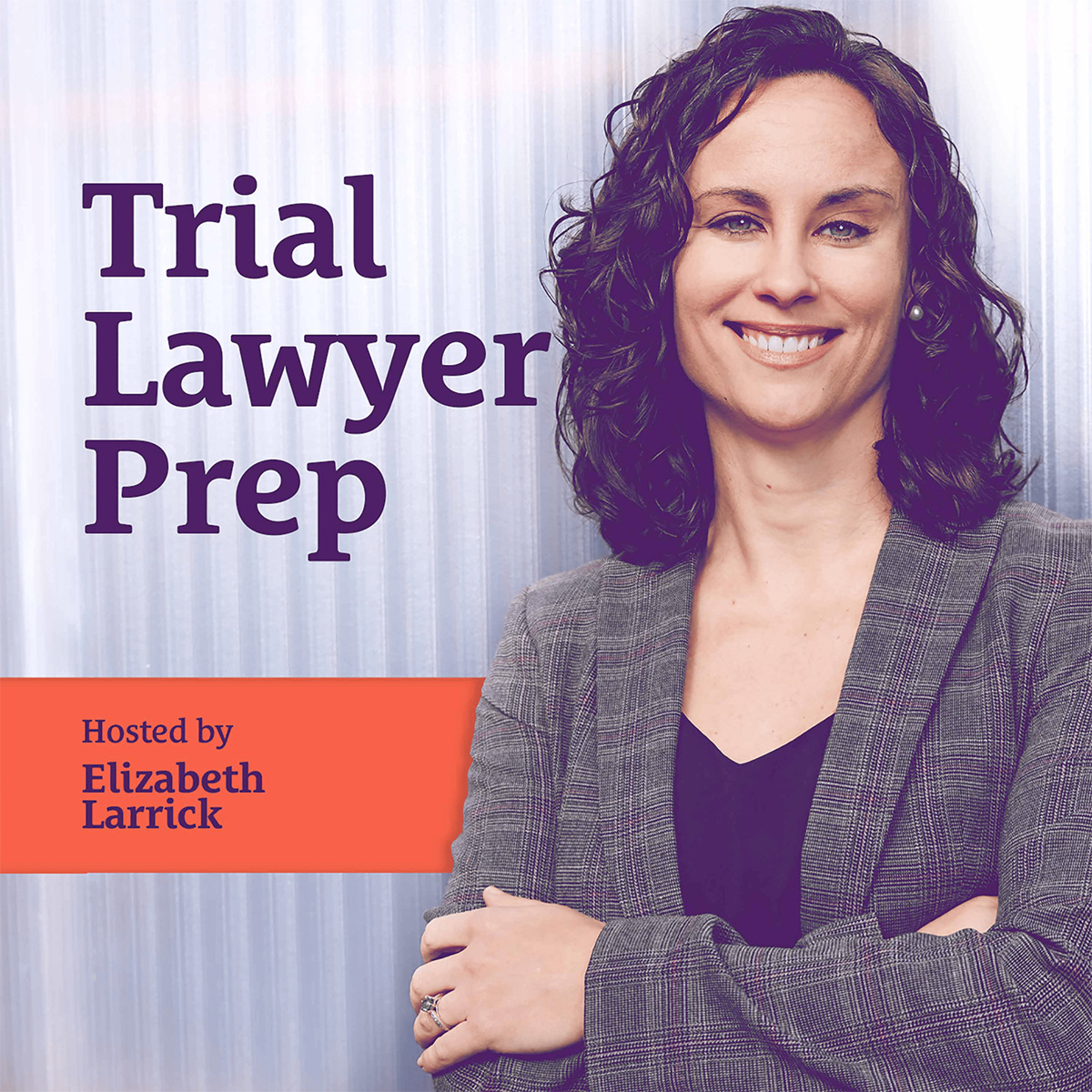
Jury selection: either trial lawyers hate it – or love it. Although many trial lawyers are afraid of it, jury selection never gets old. You will be getting different stories, different personalities, and different answers each time. But it takes a lot of practice to get better at it. The skills required for it are learned, practiced, and honed for hours and hours.
Today’s guest, Laurie Koller, a practicing lawyer for 31 years now, shares her experiences doing jury selection and the things she loves about it the most.
Laurie talks about the importance of running focus groups in jury selection as well as the benefits of hiring a voice coach. She also talks about the book that she co-wrote with Rena Cook, called Her Voice in Law, which teaches vocal technique, especially for women in the courtroom.
In this episode, you will hear:
- What it was like going through the pandemic in Oklahoma
- Her experience working with David Ball
- The benefits of getting a voice coach
- The importance of having awareness of time
- Tips for running focus groups in jury selection
- What you can do to get better at jury selection
Subscribe and Review
Have you subscribed to our podcast? We’d love for you to subscribe if you haven’t yet.
We’d love it even more if you could drop a review or 5-star rating over on Apple Podcasts. Simply select “Ratings and Reviews” and “Write a Review” then a quick line with your favorite part of the episode. It only takes a second and it helps spread the word about the podcast.
Supporting Resources:
Laurie Koller
Her Voice in Law by Laurie Koller and Rena Cook
Rena Cook https://myvocalauthority.com/about/
Lexlee Overton https://mindoverlaw.com/about/
Theater for Trial by David Ball and Joshua Karton
Episode Credits:
If you like this podcast and are thinking of creating your own, consider talking to my producer, Emerald City Productions. They helped me grow and produce the podcast you are listening to right now. Find out more at https://emeraldcitypro.com Let them know I sent you.
Episode Transcript:
Elizabeth Larrick: Hello and welcome to a new episode of Trial Lawyer Prep with me your host, Elizabeth Larrick.
I’m excited for this episode because I’m interviewing one of my very good friends and mentors, Lori Kohler. Lori and I have known each other for many, many years. We have lots of connections. And so I was glad to have [00:01:00] her on. She is a very experienced trial lawyer, but we also share the passion of wanting to constantly learn and get better.
So without further ado, here is the interview that I had with Ms. Lori Culler. All right. Thank you so much, Lori, for joining us today. If you would just give us a little intro, a little bit of your background, just to let all the listener know a little bit more about you.
Laurie Koller: Gosh, where do I start? I’ve been a practicing lawyer for 31 years.
I’ve been doing plaintiff’s work for two thirds of that time and now I’m in my own practice for the last five years. Enjoying that and brought a new younger lawyer on board to help me.
Elizabeth Larrick: Just
Laurie Koller: kind of appreciate being able to try cases now that we’re hopefully out of the COVID era. Other than a few friends, I know it
pretty
Elizabeth Larrick: much doesn’t exist anymore.
So no, no worries about that. I mean, I [00:02:00] feel like we have people, of course, who listen from all over. And when we were going through the pandemic, it was not, it was fun to have people come on and be like, okay, well, what’s happening in Tennessee. Okay. Well, what’s happening here. And so you were in Oklahoma.
So tell us a little bit about what it was like going through that, but then also adjusting back.
Laurie Koller: So we immediately moved to work remotely from home, we were in a downtown office tower, and I just didn’t think it was a good idea to have me and my paralegal using the same elevator and all that stuff, because we really didn’t know much.
So we just took our work home, moved out of the office and worked. I was in my attic for a year and a half doing a lot of Zoom and feeling pretty isolated. Courts here were for the most part completely shut down. And so I had a lot less work, a lot less activity than [00:03:00] normal. I used that time to do a lot of CLEs, some things that I had been wanting to do.
Didn’t really have time, so I did that. And then as things started to crank back up again, we got a new office. moved in and now things feel twice as busy as they were before the pandemic. I feel like all the cases that you had that were on pause during that time, you have those. Plus all the new cases that you would have had anyway.
And so it’s a double whammy.
Elizabeth Larrick: And I feel like Oklahoma kind of went from like zero up to back up in person, a hundred percent, but they didn’t do like here in Texas, we had a pretty, I wouldn’t say a pretty smooth transition into zoom hearings and dockets and getting things moving again. And we, some places had better with trials and others, but I feel like Oklahoma was like, Flip the switch, we’re back on, come back in, we’re doing it in person.
Laurie Koller: Yes and [00:04:00] no. It really depended on the judge. Some of them were more concerned about the virus than others. Some of them believed and probably still believe that it was a complete hoax. Some of them are still afraid of getting sick. We tried one case. In state court during the pandemic, so everybody wore masks, even the witnesses, we have the jurors out in the gallery instead of in their box, so they could spread out and do the social distancing thing.
That was, Awkward, like really uncomfortable, not great communication because of the setup, but at least we were trying something. So we’re happy about that. But now I don’t see any difference than pre pandemic. Things seem back to normal, other than occasionally a trial gets postponed because one of the [00:05:00] lawyers got COVID.
Elizabeth Larrick: Right, right. And are you, are everybody, are deputies back in person or is Zoom sticking around for that?
Laurie Koller: That really seems to be a personal choice of the requesting lawyer. I personally like doing depositions on Zoom better than I like in person because I have more control over the documents. And I don’t rely on a lot of bullying tactics and deposition, so it doesn’t bother me not to be there in person.
Bullying? What could you possibly mean? You know full well what I mean. There’s some lawyers who that’s their stick, right? And in order for that to work, you have to be in person. Because otherwise I’m sitting looking at the screen going, really dude?
Elizabeth Larrick: Yeah, and that, so it’s so interesting that you say you have more control of the documents because there are, I feel like there’s still folks who are still like really [00:06:00] struggling to get the Zoom and the documents and all that to work together.
Laurie Koller: Yeah, it’s just a matter of want to if you need to make it work, you have to figure it out.
Elizabeth Larrick: Absolutely. Yeah. No, totally. And I totally, we just launched off and start talking here and I didn’t tell everybody how we know each other. So, back when I 1st started practicing, I was in Oklahoma City. And the plaintiff’s bar in Oklahoma is pretty small.
So I met Laurie pretty quickly doing some Oklahoma association of justice stuff. But also we came together over the, at the time reptile CLE seminars, and then got to be one of the first teachers in the, at the time, or I guess it was Keenan Ball trial college, but you even have a longer history with David Ball.
So tell us a little bit about that.
Laurie Koller: Yeah, actually, David Ball was my boss when I was an undergraduate. [00:07:00] I was an undergraduate on a scholarship and government loans and work study was part of my financial aid package. So my work study job ended up being for the drama department that David was the chair of.
And it was an interesting work. I was doing library research on the Greek chorus. which was a dramatic technique that the Greeks developed and he ended up turning a lot of that research into his first post drama teacher, now jury consultant book called Theater Tips for Trial Lawyers or something like that.
And so I guess I was 19 when I met David and then followed His career after he became a jury consultant.
Elizabeth Larrick: Yeah, I think he just re released the fourth edition of [00:08:00] that with Josh Carton as well. So if you’re in, if anyone, if the readers are interested, I’ll put that link in the show notes, but I just saw that trial guides that they just released their fourth edition of that book.
So he’s had quite a few. Editions of it, I guess, I mean, over the years. Well,
Laurie Koller: actually, now I’m interested in that book because not only do I know David, but Josh Carton has been a presenter at trial lawyers college before, and he’s extremely effective in changing The emotional tone behind lawyers speeches.
So I’m real curious what’s in that book. You’re going to have to go buy that.
Elizabeth Larrick: Oh, there you go. We’ll, we’ll have the link in the show notes for you. Also to do the email too. Yeah. Communication is so key. So that kind of leads us beautifully into what we’re going to talk about a little bit here today, which is how many cases have you tried to verdict?
Laurie Koller: Over a hundred. I stopped counting
Elizabeth Larrick: and that’s pretty awesome. That’s, I mean, I always stress [00:09:00] in a lot of my episodes, you know, that getting to trial is what trial lawyers love to do, but that’s really like 2%. We didn’t always used to be that way. And you had, you’ve trials as Okay. So lots of experience and obviously you’re tuned into the educating mind, the reptile edge and teaching that and trial lawyers college.
So definitely a disciple of educating and learning more constantly. So what would you say in all your realm of experience, what’s your favorite part of trial?
Laurie Koller: So it’s funny because it used to be my least favorite part, but now my favorite part is jury selection. Really, I just enjoy getting to hear from them instead of always being the one presenting, right?
And I used to be afraid of jury selection. [00:10:00] I think most lawyers are afraid of it. I know. Like at trial lawyers college where we have optional classes, right? There’s three classes going on. You can pick A, B, or C. Two thirds of the group will end up in jury selection class. Because we’re always trying to figure out how do we do that part better.
And I just have kind of come to the point where I like doing it. It is the most fun to me. The rest of it becomes a little bit old hat. And the jury selection is never old. There are always crazy answers. Different personalities, different things going on to me keeps it interesting.
Elizabeth Larrick: So let’s, let’s dive into a little bit with the, when you, when you hated it, you mean, or when you, when you didn’t like it, tell me a little bit more about that.
Was there a particular time that like, you can come to mind a story where you’re just like dreading? [00:11:00]
Laurie Koller: Yeah, so it didn’t bother me as a defense attorney to do jury selection because it’s relatively easy to stand up there after somebody has already broken the ice and you know people’s names and that kind of thing where I really started not liking it is after I made the switch to plaintiff side and now I’m the one who has to break the ice.
And I am actually a very introverted person. It takes a lot of energy for me to get to a mind space where I’m ready to connect with other people. And so it was terrifying for a while. And I remember my first really good size verdict. I’m in the courtroom. I do jury selection. It didn’t go very well. It felt painful, like I was pulling teeth.
We’re on a break, probably to [00:12:00] strike jurors, and the judge, we’re in his chamber. He’s an old guy. He’s got his socks on top of his desk, feet on his desk. And he leans over to me and goes, that was the worst jury selection I’ve heard. Geez, that’s painful, right? That was that moment that I’m like, I’ve got to figure this out.
I mean, if I’m going to keep trying cases on this side of the V, I’ve got to figure this out.
Elizabeth Larrick: So then what, what was the, what were your steps in your journey? Well,
Laurie Koller: the first one was. Kenan’s program and his methods of doing jury selection. And that helped, but it wasn’t the whole picture for me. What he did do is give me kind of an outline of What do you need to cover and why, most importantly, the why part, but it doesn’t do much to get that [00:13:00] interpersonal connection with strangers that you need to make jury selection work for you.
When I pick that part of it up, practicing at trial lawyer college events. I had some other lawyers as teachers who really broke it down for me in ways that, you know, it finally got through. And that’s staying connected to the juror you’re talking to, maintaining eye contact for longer than is comfortable for me.
And not letting go of that person until they were ready to let go. Right. Those were things I learned from the lawyers who were involved in that. And the combination of those things now, I’m still nervous. Always, if you’re not nervous, you’re not doing a good job. Yeah. So I’m still nervous, but I have a [00:14:00] level of confidence that the process will work.
Right. And I can trust it. And I can lean into it and know that. Eventually somebody’s going to talk, right? And that’s one of the things, you know, you do a lot of focus groups, I do a lot of focus groups, some with you, some on my own, and I used to practice jury selection with focus group participants. But that’s a little dangerous because you’re actually paying those people to talk to you.
They do talk to you, unlike a normal jury who usually will start out just staring at you. Oh, yeah. Right? And so to think, oh, I killed it in focus group. I’m going to do great at trial. And then you get up there and you ask your same question and there’s crickets. Yeah. You know, you have to be ready to deal with that.
Elizabeth Larrick: Yeah. I mean, I love focus group for practicing for like [00:15:00] hearing like the most outrageous stuff and then navigating back to your outline. Like, that’s what I always feel like focus groups is like, that’s really helping you like navigate when you get something crazy or off the wall. And how do I bring it back?
You know,
Laurie Koller: It’s good to practice. It really is. But for this purpose, you can’t assume it’s going to be the same.
Elizabeth Larrick: Sure. Got to get ready for definitely the uncomfortable silence. So, well, tell me, okay, so let me just make sure everybody gets a little background here. Like when you say you like learned the Keaton method, like.
Okay. Lori taught the method, like, you know, immersed, learned, and then was able to teach people how to do this. So not just like a little bit like dabbling in it. But I’m also curious because I know having spent some time with you as well, that you also did some stuff to help maybe fill a more confident front of people as far as working with your voice coach.
So. Do you mind just telling us a little bit about that?
Laurie Koller: I actually did [00:16:00] two things in that regard that I think helped a lot. I did get a voice coach. That was actually David Ball, back when he and Kenan were on the road doing presentations recommended that you go find a voice coach. And at some point, I took him up on that advice.
There was another lawyer here in Oklahoma, who told me, hey, there is one at OU. So I actually drove from Tulsa to Norman about two hours. Once a month to go work with her while she was a professor at OU, and then fortunately she retired and moved back to Tulsa so I could stop commuting. But that helped a lot, both with boys, breast support for boys.
These are things that, you know, unless you’re in a drama program, they don’t teach you that in debate. Right.
Elizabeth Larrick: No. Or law school [00:17:00] or anywhere else. And you, you run out of breath more than you think,
Laurie Koller: especially when you’re stressed. Right. So she was a big help. And then it kind of started with trial lawyer college, spend some time having the lawyer work on themselves and like dealing with.
What baggage are you carrying around with you? And let’s work on that and deal with that. And I did that through them. And then I worked with people outside of TLC to where I was just a little more comfortable in my own skin. And I didn’t have to put on this fake lawyer persona in order to communicate in a courtroom.
And I think you’ve come to the program where I brought those two ladies. together in one place because they helped me so much. I wanted other people to be able to have that experience. And that was fun. You [00:18:00] don’t have
Elizabeth Larrick: to shroud them in mystery. What are their names?
Laurie Koller: Rena Cook was my voice coach and Lexley Overton is a mindfulness coach, I guess is what I’m gonna call her.
Elizabeth Larrick: And not to have another sidetrack, but you and Rena, like, you wrote a book. So like, tell me a little bit about the book.
Laurie Koller: The book is called Her Voice in Law, and it’s really about vocal technique, especially for women in the courtroom. Now, David Ball made a comment that we really should have written it for everybody, and maybe that’s true, but for me, I have heard criticisms or comments that we Remember unsolicited advice is criticism.
Elizabeth Larrick: I like that.
Laurie Koller: So I heard a lot of unsolicited advice about women presenting and women’s voices. I [00:19:00] was told as early as high school debate that you needed to have a low voice to be able to communicate in a big room, which is bullshit. By the way, my life to use that word.
Elizabeth Larrick: You just did. So we’re
Laurie Koller: okay. And so it’s kind of a desire to.
address that for women lawyers who are trial prisoners?
Elizabeth Larrick: Absolutely. I mean, there’s definitely a void in that space for helping particularly, and there’s absolutely nothing wrong with it. And again, if you’re moved and drawn to do that, then that’s really. Can I help you write a book? Because writing a book is an arduous task.
Yes. Not easy, but okay. So there’s lots of pieces to this journey. Like how long do you feel like it’s taken you to really come to that place of like, Oh, I love this part of trial. And like all these things kind of came together.
Laurie Koller: I would say from [00:20:00] the moment that judge said that sucked right until I felt comfortable was probably about four or five years.
Real serious work on jury selection, seeking out who’s teaching it, being willing to take on the extra work of learning how to teach it, but the beginners course that Keenan offers and the advanced course. And then just practice, practice, practice.
Elizabeth Larrick: Yeah. It’s, it, it takes so much longer. I mean, it’s a, it’s a skill.
I mean, a hundred percent. And you know, I always people, well, they’re naturally good at it and like, no, not trial is there’s really not a lot of natural. I mean, you can, you may be more comfortable getting from people, but all of our skills. Are practiced and learned and practiced and honed and of hours and hours,
Laurie Koller: you have to start by being willing [00:21:00] to public speak.
Right? There’s huge parts of the population that will never do that. Never wants to do that. Would rather die than do that. But if you’ve gone to law school and you find yourself in trial practice, presumably you’re past that part. Right. But that doesn’t mean that you’re, you’ve put your ego aside enough to connect with germs.
That you know enough to understand, like, I don’t have to try my case in jury selection. There are other things I need to be doing then. That’s all learned.
Elizabeth Larrick: Yeah, and I would say also, I mean, if you think about, we also have to evolve with our jurors. One of the things we try to, I try to keep up with people who are going through trials, different places, like, what are you seeing in your jurors?
And like, now we’re past the pandemic. Like, what are we seeing collectively in people and what will they [00:22:00] tolerate not tolerate anymore? And wasting time has been one of the things where people like, were like visibly and rolling eyes and like, wow, like they are really giving the message that they not want any more of this creepy testimony.
Laurie Koller: That has been my experience, attention spans, which were all, they’ve never been, people think, Oh, they used to have long attention spans. That’s not true. But now it’s short and I blame social media, right? We get our news in 10 seconds soundbites and you better get your trial across in 10 seconds soundbites because that’s what they’re used to.
Patience is not there. So last couple of trials. We have cut witnesses out in the middle of trial because, like, they’re not, they’re not patient. They’re not going to hear this. What do we have to have? Right? And it [00:23:00] used to be acceptable for a trial to take a week. Right? When I started practicing, it was not unheard of for trials to take multiple weeks.
Early, you know, pre pandemic for a week long trial, that was kind of the norm. It is not true anymore. I mean, speed trials, people have been talking about that. However you want to name it, the shorter the better, because you will lose them because you’re not efficient and not sure.
Elizabeth Larrick: And what do you feel like you’ve changed in your jury selection of what you’re set up, if anything?
I don’t know.
Laurie Koller: I’m not sure I changed much other than being aware of time. My jury selection, after all this learning, is really juror focused and juror driven. So long as they’re talking and participating, then I feel like I’m not going to lose them on that part. [00:24:00] Right? Now you have to have your sixth sense about you.
If they stop participating or you’re seeing eye rolls or that kind of thing, it’s time to wrap it up. Right? So you have to get in there, know what you want to find out, find it out and be done. But I guess my idea on average takes a couple of hours. And that hasn’t proven to be a problem so far. When it surprised me if it becomes a problem, but so far it hasn’t been as the other parts.
witness testimony. You mentioned the repetitive stuff. For sure that’s out the door. You do not need more than one witness to say the same thing, right? Oh, well, this person has a different perspective. No, they don’t. So you have to be real conscious of that.
Elizabeth Larrick: Yeah. So then what’s the fun part then for you?
You know, [00:25:00] you said it fearful before, you know, now it’s fun. What’s the fun part?
Laurie Koller: It really is. Being able to get them to speak to the things that I know need to be spoken about for this case. Right, and I learned that through focus grouping. So I had a case, a trial, pre pandemic about a railroad injury, injury at work against a railroad.
Unlike every other injured worker, they don’t have to go to work home, they’re in a regular court case. And we were very worried that in that particular case, the jury was gonna get. Off the rails because we didn’t have an instruction manual with this. machine that injured the worker, right? So we’re concerned that was a missing piece and it was going to hurt us.
We focus [00:26:00] group that issue and found out that the jurors assumed that the railroad company had the manual at one point in time and it’s their fault the manual’s not here. We tested that several times because I mean that’s a big seed change from what I thought going in and over and over. They just assumed it.
You didn’t have to tell them. You just assumed it. And so we went to trial with the confidence that this is what they’re going to think about this, right? And let the defense attorney get up in his opening and rant and rave about this missing manual. Like, go ahead, dude. Just go ahead. Yeah. And it. Starts, really starts with jury selection about asking them, you know, when an employer purchases a piece of machinery, what’s the process?
And I’m not telling them, oh, by the way, the railroad company lost the [00:27:00] manual. I’m just leading them to come to that conclusion themselves.
Elizabeth Larrick: Right.
Laurie Koller: And doing the focus group lets me know that I don’t have to do much. Right. I just have to get them thinking about what is normal for them and watch them right in front of my eyes work through it in jury selection.
Elizabeth Larrick: Yeah, it’s pretty phenomenal to me that, like, It’s just really, like you said, one, you’ve got to get them in a place where they’re comfortable that they realize, oh, you’re giving them the space. You’re making them comfortable to talk about that. But then it’s just a matter of just really asking them questions that are easy and.
Open. And now they’re, you know, then they’re doing all the heavy lifting for you. There’s no, well, let me give you these facts and you tell me what you think. Like they hate that because tons of focus groups and focus groups, other lawyers, and you, they hate that setup. They really just feel [00:28:00] like you’re about to pull the rug out from underneath them.
They’re trying to figure it out, you know, versus the other way where it’s like, Oh, here’s this, Oh, here, what happens next? And what do you expect? And it’s very. Okay. It’s much more conversational. Um,
Laurie Koller: so I call it bottom up instead of pop down. Right. A lot of lawyers will try to do top down though. I know the information.
Let’s see if you can figure it out. Right. So it’s kind of the mean teacher approach. Right. Whereas bottom up is. Obviously, I know the information, but I’m not quizzing them. Right. I want to know what their normal experience is. In their jobs or their life or their family that they will bring the bear on these issues that I know are out there.
So I’m starting where they are. Instead of where I am, [00:29:00] right? Because it doesn’t do me any good to be there and try to tell them this is how you have to think. Nobody likes that. Tell a two year old, this is what you have to think. It’s a temper tantrum, right? It’s against human nature. Instead, let’s figure out what in their life connects them to what they’re going to hear.
And get them starting talking about that and thinking about that, because that’s really what we ask for a jury anyway, is bring your life experience. So why don’t we start there?
Elizabeth Larrick: Right. It’s true. And, but yeah, I love that analogy of top down versus bottom up because I mean, we do, and I think I’ve learned so much from doing focus groups, like listening, watching over and over again, however many years I’ve been doing them.
Yeah. Thank you. And I, I see people take for granted so many things like what, like, don’t repeat something. They heard it, you [00:30:00] know, like don’t what you’re taking for granted. They know what preponderance, like literally the word preponderance, why are you using the word? You know, like you’re already confusing them and they are already in a confusing place.
So the study of human nature, I feel like really comes to bear in a lot of, almost all the trial work. But I love jury selection because you do start off where it’s like, You’re walking in there and angry group of
Laurie Koller: people. Well, sure. I’ve had family members be jurors. My mother was a juror. My husband was a juror.
It’s a really pain in the butt process. To get this notice, to figure out where you’re supposed to go, to listen to them drone on and on about, Whatever the process is, before they ever get to the courtroom, right, they’re frustrated. And nobody wants to be there, but the couple of people who do want to be there, you kind of got to worry about.
That’s true. [00:31:00] Right. Yes, there’s, there’s an agenda there. Right, exactly. And you have to be aware of that. But for everybody else, it’s kind of giving them permission. Right. To have space to have a life to acknowledge that they’re giving up for the community and getting them to connect to you really are here for a reason.
And the reason is important, even though you’ve had to jump through all these hoops and deal with all this. annoying bureaucracy, right? And so let’s stop and think about why you’re really here. And that’s because it’s your life experience, 12 people, random strangers, right? What are you bringing to the table?
Let’s talk about that. And then I think they can hear the evidence. In a way that helps them connect to their power and their ability to make a decision, or if [00:32:00] you don’t give them that if you don’t give them that underlying connection to why they’re really there. Right. I think they stay mad.
Elizabeth Larrick: I mean, people having to make decisions, like, we, we don’t like to do that, right?
Like, you know, when you get, you’re going out with friends, or even when it go in a happy, or something like, where do you want to go? Where do you want to go? Where do you want to go? Right. Oh, you pick, you pick.
Laurie Koller: No, President Obama gave that interview. I think it was for the Rolling Stone or something. He said, He wears the same suit, not literally the same suit, but the same style of suit every single day.
So he doesn’t have to waste energy making that decision. Right? And if he’s doing that, then the rest of us are like, why make a choice if you don’t know?
Elizabeth Larrick: Especially one that doesn’t involve me and then you’re inconveniencing me to do this for you. Like I have to do something for you. I don’t even know you and there’s lawyers and most people [00:33:00] don’t like lawyers.
So I mean, I, what do you, I feel like you’re, you know, jury selection is one of the biggest places where people like lawyers love it or they hate it. And because there’s so many places to start, there’s so many different theories out there. And the other part that I think we forget about as lawyers sometimes is we have another person, another juror in the room, which is the judge who at any moment can shut down what you are doing.
And you’ve got to have plan B, plan C, if they don’t like it, or if your time’s up and you really got to hope you finish everything you’re
Laurie Koller: doing. I find a lot of that actually solved by talking to the judge ahead of time. I mean, at pre trial conference, I’m asking, you know, what’s your process? What order are you putting all these seated people in?
How much time are you comfortable giving me? [00:34:00] And clear that up with them then, right? Sure. I’d much rather know at pre trial the judge thinks I can get voir dire done in 30 minutes, I would much rather know that then, then at the beginning of my plans to our warden. Right.
Elizabeth Larrick: Yes. And I totally, totally agree.
I know that we’ve got, you know, I occasionally hear the murmurings of you go to pre trial and the judge is like, Hey, listen, I, we haven’t done that reptile life, blah, blah, blah. If I see it, I’m shutting it down. It’s just like, what does it look like? And I think that. Judges want to know what to expect too.
They’re that juror as well. They don’t want to be surprised or hoodwinked or the lawyers pulling over on them. Well,
Laurie Koller: and I think they’re also reacting to what’s going on in the room, right? Like if the jurors are rolling their eyes and clearly uncomfortable and not communicating, the judge is going to be much more inclined [00:35:00] to go, okay, we’ve done enough of this.
Let’s move on. Okay. With good reason, right? Then if the jurors are engaged, they’re talking, they’re talking to each other, and it doesn’t feel like you’re at the dentist’s office, right? And if it’s going well, I don’t think the judge, in my experience, or state court judges anyway, If jurors are not giving obvious signs of distress, the judge is pretty much going to let the process happen.
Right.
Elizabeth Larrick: Absolutely. So, you know, as we kind of kind of wrap up here, of course, thank you so much for joining us. But what I want to do is thinking about somebody who might be in that same place of, I’m terrified of it. I stink at it. Like what would be things that you would practical things or things that you would suggest for listeners as far as if they’re starting out maybe on this journey to get better at this?
What would you suggest?
Laurie Koller: I definitely think [00:36:00] education is helpful, and I know we have a lot of options on zoom now, but I don’t think that’s an effective way to learn jury selection, because it’s so interpersonal. It really helps to be in an environment where you’re with other lawyers who maybe have more experience than you at jury selection, you’re getting up on your feet and practicing.
In a place where it can be dissected. What did you do? Did it work? Why didn’t it work? You know, what else could you try? Oh, great. So go try it or watch right? And there are lots of places that do that. Keenum. Trial Lawyers College is now in Estes Park. There are some newer people out there who are doing that kind of thing.
I don’t think it really matters who you start with. I think it [00:37:00] matters that you go and that you practice. Right? And learning and getting comfortable can happen from lots of different people, but it does involve a time commitment. Setting the time aside to work up a jury selection and go be with lawyers and get some solicited advice, right?
Right. Which is not criticism. You’re asking for help.
Elizabeth Larrick: Yeah, absolutely. You said it at the very beginning. Right. Right. What are the most unpredictable parts of trial? You don’t know who’s going to show up. You don’t know if it rains that morning and everybody’s soaking wet. Like, you know, I mean, there’s so many factors versus opening.
I mean, you can plan that booger out and practice it, practice it, practice it. These witnesses, they’ve deposed them. Those things you can really work and prepare on. But sometimes that like on the fly thing and. That’s why I love jury selection, having that, like you talked about the human connection and that whole role that [00:38:00] it plays into being comfortable holding that and feeling the connection and knowing when it’s okay to move away and when it’s not, and if you do, what have you just done and how’s the group reacting and it’s hard to practice that without live interaction.
And like you said, just having other people there to say. Hey, I would do it this way, or how’d that feel, questions like that. So absolutely. Awesome. Well, Laura, you’re in Tulsa. I’ll put your contact information in the show notes. Is there anything else that you would suggest or help people with when it comes to jury selection?
Laurie Koller: I think we’ve pretty much covered those things, and we did mention using a focus group now. I use it less for practice. than I used to, but I don’t think you can be ready to do jury selection unless you focus group two days. Because you don’t have a way of [00:39:00] understanding what are the issues that really matter to these journals, right?
Because that’s where you need to connect with them, but you’re not going to know that unless you’ve done the focus report.
Elizabeth Larrick: Very, very good point, because otherwise you are guessing. And if you guess wrong and they’re sitting there thinking, why are they not asking me about that? I need to know about that one thing.
I can think of a thousand examples. Well, they didn’t say about the weather. I just know about the weather. If you don’t tell them, they are going to be worried about that weather the entire time. They’re not even listening to you.
Laurie Koller: If you don’t tell them, they’re going to make it up.
Elizabeth Larrick: Yes, that’s right. It’ll
Laurie Koller: be bad.
They might start by worrying, but they’re going to fill in those gaps, right? So you got to figure out what do they need to know?
Elizabeth Larrick: Exactly. Exactly. Awesome. Well, Lori, thank you so much for coming on. I really appreciate your experience and of course our friendship and I always appreciate you. Let me pick your brain on different things.
So thank you so much. And again, if anyone wants to reach out to [00:40:00] Lori or have questions about her journey to loving voir dire, I know she’d be happy to help. I’ll put. the book, all the notes and everything in the show notes. So again, thank you so much, Lori. It was really good to talk to you, Elizabeth. All right.
I hope that you enjoyed that interview with Lori Kohler. And again, all the resources that we talked about in the episode are going to be in the show notes. If you’re interested in any of the books or the classes or the people that we spoke about. And I do hope that maybe I can have Lexi Overton and Raina Cook on for an episode.
Of course, anybody else, Josh Carton. David Ball would love to have him as well. So again, thank you so much for listening. I appreciate that. If you would rate and review the podcast on your favorite platform so other people can find this podcast. And of course, if you have questions or suggestions for show, please send me an email.
My email will be in the show notes. All right. Thank [00:41:00] you.