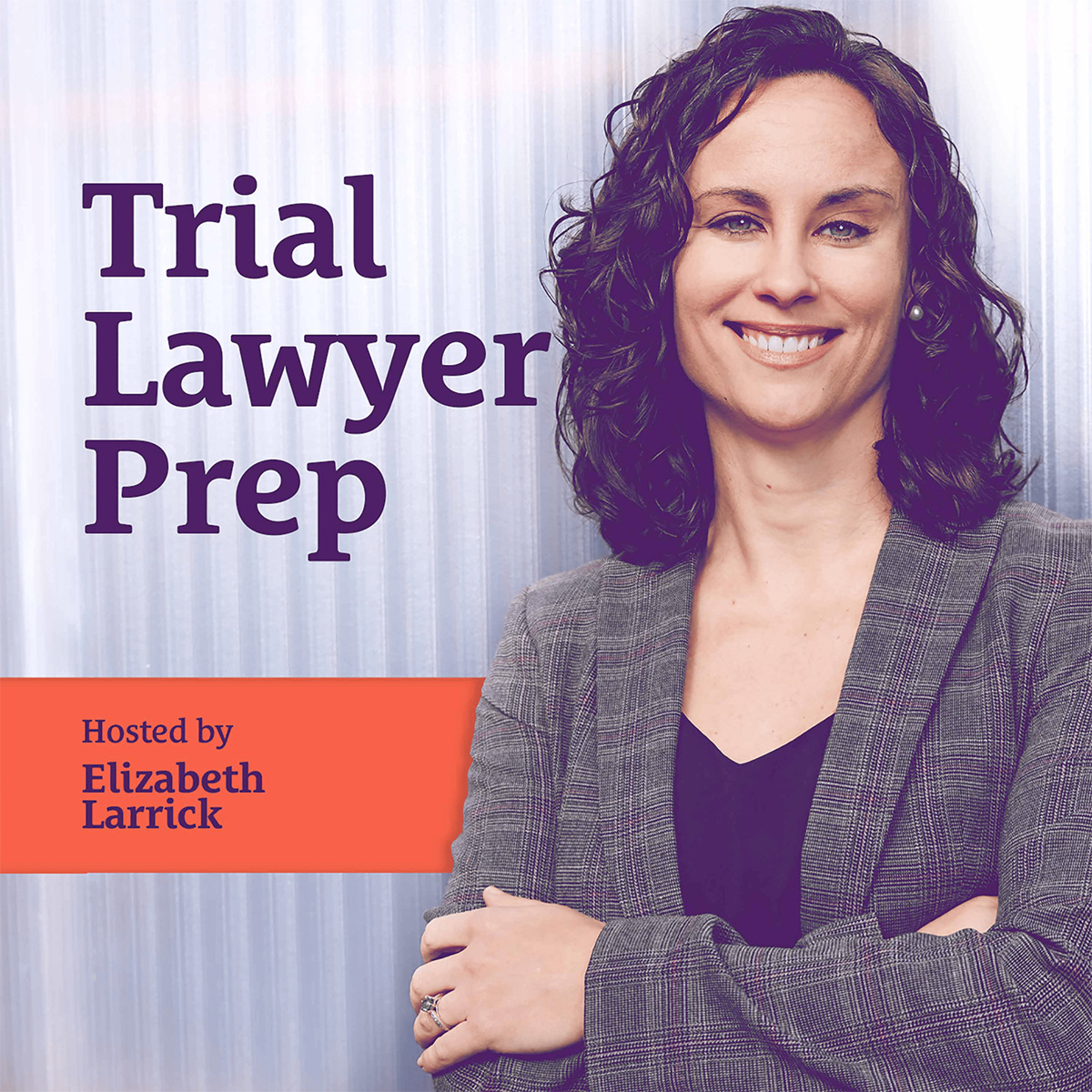
How Are You Preparing Your Client?

Unlock the secret of success in the courtroom: thorough client preparation. This episode is a wake-up call for all attorneys who underestimate the importance of client deposition or role at mediation. We unravel why investing your time in understanding the client’s mindset can turn the tables in your favor and cement trust. The true value of a lawyer isn’t just represented by the number of cases they successfully close, but also by their ability to prioritize client experiences.

We also devolve into how attorneys can efficiently prepare their clients for depositions and mediations. It’s a harsh reality that due to insufficient guidance from their lawyers, clients often resort to platforms like YouTube for answers. We put a full stop to this common occurrence, stressing the necessity of having at least two preparatory meetings. By taking control of their cases and ensuring a smooth client experience, we, as lawyers, can significantly bolster their reputation and increase their case value. Stride into this episode as we unveil the keys to successful client preparation and testimony.

In this episode, you will hear:

  • The importance of client preparation and perception
  • How lawyers can better prepare clients for cases
  • How to avoid YouTube searches from clients and ensure client satisfaction

Follow and Review:

We’d love for you to follow us if you haven’t yet. Click that purple ‘+’ in the top right corner of your Apple Podcasts app. We’d love it even more if you could drop a review or 5-star rating over on Apple Podcasts. Simply select “Ratings and Reviews” and “Write a Review” then a quick line with your favorite part of the episode. It only takes a second and it helps spread the word about the podcast.

Supporting Resources:

Do you have a question? Or an idea for a podcast episode? Please email Elizabeth directly: elizabeth@larricklawfirm.com 

Episode Credits:

If you like this podcast and are thinking of creating your own, consider talking to my producer, Emerald City Productions. They helped me grow and produce the podcast you are listening to right now. Find out more at https://emeraldcitypro.com Let them know I sent you.

Episode Transcript:

Elizabeth Larrick: Hello, and welcome back to the podcast, Trial Lawyer Prep. I’m your host, Elizabeth Larrick, and I’m glad you’re here with me.

This is a podcast designed and dedicated to lawyers trying cases, personal injury, employment law. Business law, maybe a little bit of criminal law too in there, but [00:01:00] basically we have set up this podcast, I’ve set up this podcast to talk to you about preparing people to testify, how to get the best testimony possible, how to use focus groups, to dive into what the jury is going to think, to find holes in your case, to find blind spots that you may have, We have some folks that come in along the way as experts to help us.

We just heard one in last episode talk about our image and gave us a few tips about things that we can wear. Definitely sometimes fun things to talk about. Today is a little different. We’re going to talk about how are you preparing your client. Now I have been on the road a little bit for the past couple of weeks doing some speaking engagements and working with some clients in different places.

And anytime I go to a speaking engagement, I always like to have conversations with folks and just ask, Hey, how are you guys doing stuff or how are things [00:02:00] working for you? What’s not working for you? And I was a little shocked that so many conversations that I had with attorneys telling me, We just have generally one meeting with folks.

We tell them to tell the truth and say yes or no. It’s okay to say I don’t know or don’t remember. That’s pretty much the gamut that we run. We really don’t need to spend too much more time with folks. And it really got to me thinking like, huh, am I the only one out there doing this phases and steps and multiple meetings?

No, I know that I’m not because I just taught a class of witness preparation and I know that there are other people out there doing kind of a multi phase, multi plan. But that led me to what maybe we should be talking like. Asking some questions here. And so that’s what this podcast is really going to be about.

It’s asking some questions. My first question was like, do you have a plan? Because when I was having these conversations with lawyers and again, I’m just being [00:03:00] curious, Hey, everybody’s got different constraints to different firms and times and expenses, and you guys decide how to spend your time. But really what struck me was.

Most people don’t have a plan at all, and the crap that they’re doing with clients. And let’s just run the gamut here. Deposition testimony prep, motion prep, mediation prep really doesn’t follow a plan. It’s just we need to do some kind of call to tell people where to go and what to wear and really what’s going to happen.

But it doesn’t really sound like you do any preparation either. So are you having a plan for preparing folks? And do you have a plan to prepare yourself? Cause what that makes me think of is you aren’t really prepared to talk about the facts with folks or case weaknesses that you’re really just hoping for the best.

Just hope for the best. And [00:04:00] a lot of pressure, a lot of pressure on this client’s nice enough, I think that they’re going to present fine. It should just be fine. Which is telling me like, wow, either there’s just not a lot of stock and not a lot of value in a client deposition or a client role at mediation or, and a lot of times I will tell you from my experience working as a solo, sure.

There were times before I was doing multi step prep with people that, yeah, people would get in there. And say things that were damaging to the case, and they would not follow what I had advised them to do, and it was really frustrating, and it was like they were bombing their case, which, you know, as a personal injury lawyer, you can’t let any kid die.

Piece of value go down. You need every piece of value to stack up when you’re fighting the insurance companies. I get it. We can be really jaded about having a bad experience or multiple bad [00:05:00] experiences, but I just go back to, let’s just look at this. Did we have a plan? Did we cover the full plan and did we spend time ourselves getting ourselves ready and what we need to talk about?

Did we spend time listening and talking with the client? Uh, on multiple occasions, just make sure we know what is in that brain or what’s going on inside that brain. The other thing that I heard, because of course, a lot of people that I talk with know that, oh, you like to do days and days of preparation.

And they say, my clients are just, they’re just not sophisticated people. This is just, this is the prep they need. Just tell them to tell the truth. And again, that led to me more questions of, are you, is this just coming out of laziness? You’re just putting this label on people. Do you really think your clients are dumb?

Is that really it? Hey, these people just are dumb. When you tell me they’re unsophisticated, that’s what I assume. They’re not [00:06:00] smart enough to understand what a deposition is and questions and preparing for that, which then of course leads me to the question, do you care? Oh, of course. But really do you?

Because if things are important. You spend time on it and you spend money as well, right? So if you want to find out what’s important to somebody, look where they spend their time and their money, right? That’s will tell you what’s important. And the thing is, if you don’t spend your time preparing your client to fulfill their role, testifying to fill their role at mediation, and they may not have a big role at mediation.

Um, but you know, they Again, I’ve fallen in all into the same traps that most people have. When I came into practice, I didn’t know what I was supposed to prepare people for. And I did, Hey, here’s a video, watch this and follow this. Or we send this letter out, or just [00:07:00] tell the client not to talk at mediation.

And what I found was really disappointing. Like I was disappointed just generally, they were disappointed. Everybody’s just really frustrated and there’s a lot of lost trust. And once I started to really sit down and spend a little extra time with people, especially like for mediation preparation, and they were able to in that moment at mediation, when they’re getting hammered by the mediator, they’re hearing something that.

I’m cringing and I’m just thinking, all right, I hope they remembered what I said when the mediator leaves the room and they turned to you and they said, wow, that’s exactly what you told me they were going to say. And I was totally prepared for that bad news or I was totally prepared for that badgering.

So wow, thank you. Like absolutely. And that’s really what we want to do is stay ahead of the surprises. But if you don’t, if you don’t [00:08:00] spend that time on those important things, it’s gonna end up costing you in the end. It’s gonna either cross value to the case. It’s gonna definitely cost you in referrals because that client’s just gonna say, yeah, we, the case got done, but boy howdy, it was miserable, and The other thing that I also hear from lawyers many times is, you know, they just blame their behavior on, this is the insurance company, or this is opposing counsel.

This is just the way that it is. And from the very jumpstart, and why I’m so passionate about preparing people for deposition and testimony and feeling that this is a place where people fulfill their role in their case and work through some of the crap, mental crap that they’ve been put through when you go through an injury or losing a job.

I believe that there was a better way to serve our clients. I knew it didn’t have to be that we had to blame other people. I knew [00:09:00] that there was something that we could do to take control to at least there are things that we can’t control, but there are things we can do to make people’s experience.

Better to help them through this crappy time or this crappy problem. That’s most of the time. This is just a crappy problem. We have to deal with and that’s really what led me to spending so much time and hours learning the witness prep and being uncomfortable trying something new and taking extra time and but what happened was I I saw almost immediate results, right?

This is something where I feel like, Hey, this is not like, you know, doing social media marketing and see in six months and you hope it works out. You know, your return on investment is almost immediate. And that’s, what’s so fantastic is you got to believe in people and you got to believe. They’re, you know, you’re quote unquote [00:10:00] unsophisticated people, they’re folks, they are getting through the world, they got house payments, car payments, they got kids, they got other problems, just like you do, and guess what, they solve them and move along the way, they’re going to be able to figure out how to navigate a deposition, it may be a little bit different preparation style for you, but hey, that just helps you grow when you face situations like that.

The other thing I always want to remind people of is. The number one social media for kids 13 all the way up past 65 is YouTube So if you aren’t taking the time to walk people through preparing for deposition preparing for mediation They’re gonna go online and they’re going to try and find answers. I don’t care how sophisticated or unsophisticated they want to know.

They want to be prepared because nobody wants to be humiliated. Nobody wants to be [00:11:00] embarrassed. And so, yeah, they’re definitely going to. And trust me, the preparation and the information on YouTube about depositions is not what you want your clients to be looking at. It’s that sit and suffer. Talk about this.

Often that makes me cringe when I see, okay, this is just going to be a terrible experience. You’re going to suck at it and you’re just going to have to sit and suffer through this and say as little as possible. Oh, that just makes me so disappointed. But I get it, that makes it really easy for us as lawyers, doesn’t it?

It does. And whatever fear we have, we just get to stuff it into those four instructions. Tell the truth. Say yes or no. Do not offer anything besides yes or no. It is 100 percent appropriate to say, I don’t know, or I don’t remember. Hey, now listen, there’s some good things in there, but let me, if that’s all we’re telling folks, which is pretty much a lot of the information on YouTube, Along with some really awesome deposition testimony, which I encourage you, if you have [00:12:00] time, to go see what people are looking at.

It’s pretty entertaining. But you don’t want people, you don’t want your clients doing that behavior, and that’s my point. Don’t, don’t let somebody else prepare your client, because it’s going to be YouTube and it’s not going to be what you want. At the end of the day, if you don’t have a plan, But you do care about what happens to your clients in deposition and in mediations and you do want to have The right case value and you do want to have clients that send you people and refer people then I just challenge it It’s just a very simple challenge.

If you’re sending your clients an email or a letter with instructions About the deposition or and again when I say instructions, I’m not saying like where to go Yes, please send them a letter or email telling them where to go at what time very important But if you’re sending instructions just pause take that letter set up a phone call set up a zoom call That’s even better and just have a conversation about what [00:13:00] the instructions you have in your letter and then ask them if they have questions Right and then have one other meeting.

My challenge is just have two meetings with folks just And again, this is not scary stuff. You know, these people, you know, what depositions are. And just see if you’re going to have a little bit better result, because I guarantee you that second meeting, you’re going to learn a whole lot more about what your client thinks, how they feel, and the expectations that they have of you and of that deposition, and they’re going to bring you a lot more questions.

And they’re going to feel a lot more prepared spending that extra meeting, 30, 45 minutes with you. Now, obviously you want to go above and beyond the challenge. It’s been extra, you know, spend a whole hour with somebody in that second meeting. Take a moment yourself and prepare, go through some of the things in the case, be able to have a conversation with them.[00:14:00] 

What I find is if you don’t have a plan, what generally ends up happening is, You jump from one to ten you go from here’s the deposition you’re gonna get a lot of questions It’s always answer yes or no little information and then you jump to a ten and you start role playing They’re gonna say this about you and they’re gonna ask this question and people are just like whoa What they can’t it’s so much information.

They can’t process it and jumping in straight into roleplay They can’t process what, there’s no context, so therefore it just flies out the window. It doesn’t stick in the brain. We want things, we want your instructions, we want your, your help, your instructions, your help, your thoughts. They want all those things, but if there’s no context, it just, it’s not sticky.

It just flies in one ear and out the other, right? But if you provide a little bit of context. Have that conversation with [00:15:00] them. Have that first meeting. Hey, just want to go over some of this stuff. We’re gonna meet one more time, but I want these things to marinate with you. Sweet. We have more questions.

It’s not a problem. And give them that opportunity then to talk just a little bit more than they would in that 30 to 45 minute one solo meeting. All right. Now if you’re folks in my audience thinking, gosh, Elizabeth, I’m the person in the audience that does that multiple step thing and prep that you talk about, and we do talk about expectations, and we do sit down and help organize, and we use visuals and kudos to you.

Just know that you’re, you’re standing out there in the 10%, I think about 80 percent of folks. Don’t have a plan. And again, this is my personal research, which, you know, I love research. It’s my focus groups are about. Just get a little pat on the back, but also just know, keep at it. I know that it can be draining and I know that it can be frustrating.

Trust me. This is not smooth sailing. There’s always going to be challenges. People are [00:16:00] challenging, but. Again, the return on investment here, investing in your client, investing in that relationship, it’s going to be instant. Even if things still don’t go as well, trust me, your client’s going to know you tried, you were there, you wanted the best for them, and you wanted them to fulfill their role, right?

I always talk about it that way. So people know you have a place here. It’s not just a bunch of lawyers pushing paper and forcing you into situations like settlements or trials. I hope this Episode was helpful. Again, it was just one of those things that in my last couple of weeks in my travels and in talking to people, I thought, wow, maybe I ought to just stop and have a conversation about this because it’s real basic.

It really is. Of course, I live in a world where this is what I do. So. Should I be shocked? I’m not really sure, but I’m always going to be curious, right? And I’m always going to be asking people how they do it because I want to know [00:17:00] there may be some nugget or some tip or some little thing that somebody else does that works wonders on folks.

And that’s what I want to do because I want to learn more as much as I can from everybody out there. But also again, pass on what I know to help you be better lawyers, to help your clients better. Build those relationships, get better referrals, build that case value in there. If you have An idea for an episode or a question, please don’t hesitate to email me if you’d like to be in the podcast.

I would love to have you in the podcast. As you can tell this year, I’ve really focused on having people on as much as humanly possible. Although we did have a little break for our grief week, our grief month, I should say. Uh, a couple episodes on grief, but if you have anything, please don’t hesitate to reach out to me.

I promise that I’ll answer your email. It’s Elizabeth at Lyric Law Firm. Of course, the email is always in the show notes. Thank you so much for being an audience member. I really appreciate it. To [00:18:00] help other people find the podcast, please rate and review on your podcast listening platform or find. And until next time, thank you so much.

Joseph Rosenfeld Image Consultant for Trial Lawyers

Did you know that your wardrobe could be the key to professional success? Get ready to unlock the powerful potential of personal style on our latest episode with image consultant Joseph Rosenfeld.

Joseph sheds light on his personal journey, revealing how a chance encounter with the Official Preppy Handbook at 15 shaped his unique sense of style and in turn, his approach to consulting. He takes us through his experiences at Neiman Marcus in Chicago, where his interactions with lawyers and wealthy clients refined his skills. He also shares the secret sauce to his client interactions – helping them find their integrity in personal and professional spaces.

We dive headfirst into the art of dressing for the courtroom. Joseph underscores the critical role of storytelling in fashion, the challenges lawyers face keeping up with changing trends, and the importance of understanding the courtroom culture. We unravel the theatrics of court appearances and discuss why it’s crucial for lawyers to be relatable and believable. Joseph also challenges some antiquated advice on the type of appearance that lawyers still adhere to, providing fresh perspectives on dressing for success.

We also explore the immense power of personal image in the legal profession. Joseph draws upon his expertise to explain how an individual’s personality and style can be harnessed to create a look that reflects their self-image. He discusses how the right colors and styles can sow seeds of credibility and trust for potential clients. We also delve into the complexities of keeping up-to-date with fashion trends and identifying archetypes that best suit a lawyer’s personality and style. Finally, we touch on the potential of a well-curated image to change perceptions, even for those with a tarnished reputation. So, gear up for an enlightening discussion and tune in now!

In this episode, you will hear:

  • Dressing challenges for trial lawyers
  • The significance of multiple impressions 
  • Theatrics of court and the need for lawyers to be relatable and believable
  • Understanding personality and style for creating a custom look to portray credibility and trustworthiness
  • Discovering fashion trends to create a powerful, confident look for litigators

Follow and Review:

We’d love for you to follow us if you haven’t yet. Click that purple ‘+’ in the top right corner of your Apple Podcasts app. We’d love it even more if you could drop a review or 5-star rating over on Apple Podcasts. Simply select “Ratings and Reviews” and “Write a Review” then a quick line with your favorite part of the episode. It only takes a second and it helps spread the word about the podcast.

Supporting Resources:

If you want to learn more about Joseph Rosenfeld please connect with him on LinkedIn or visit his website https://www.josephrosenfeld.com/

Episode Credits:

If you like this podcast and are thinking of creating your own, consider talking to my producer, Emerald City Productions. They helped me grow and produce the podcast you are listening to right now. Find out more at https://emeraldcitypro.com Let them know I sent you.

Episode Transcript:

Elizabeth Larrick: Hello and welcome back to the podcast. I’m your host, Elizabeth Larrick.

And today we have a guest with us. I was super excited to have this guest come on. We met on LinkedIn, probably one of my first exchanges on LinkedIn, but I was [00:01:00] super intrigued. I watched his content and I said, Joseph, you need to come on. So Joseph Rosenfeld is here to talk to us. He is an image consultant for litigators.

So welcome to the podcast. 

Joseph Rosenfeld: Thank you so much. It’s really wonderful to be with you, Elizabeth, and to share some cool stuff with your listeners. 

Elizabeth Larrick: When you first reached out, I was intrigued, but I was also, I’m not gonna lie. I was put back because sometimes we get told what to wear and told how to look and it can be so frustrating.

And then I listened to you and your video and I was like, Oh, this is totally my jam. Because like you talked about the inside reflecting outside. And I was like, Oh, This is it. So I’m excited and I know my audience is going to appreciate this. So stick around here, folks, but Joseph, tell us, how’d you get into this?

Joseph Rosenfeld: That’s a whole other podcast episode, but [00:02:00] in brief, I was 15 years old and discovered the official preppy handbook. So if you’re carbon dating me, that puts me back to being a teenager in the mid 1980s. I suffered a tremendous amount of bullying. Kids used to tell me how ugly I was, and I believed it for all my childhood.

And rather than try to do something dire and irreversible, the official preppy handbook became my odd salvation from that I really had an epiphany, which was, I may never be hot or sexy or tall or gorgeous or whatever, but I could have style. And if I could show people what my style was, I wouldn’t only look stylish.

I would reveal who I truly am from the inside out and it worked the first thing that I, where I knew it definitely was working and I was onto [00:03:00] something was people immediately almost stopped telling me how ugly they thought I was. They were wrong, but they just kids can be cruel. It’s amazing. You could turn off that cruelty and the rest from that point of being 15 And all these years later is history.

I’ve just been working on my hypothesis ever since. And every single client who I work with is another experiment and is another teacher of mine. In many ways, I’m the student and my clients are constantly teaching me who they are. And internally, I’m constantly learning more about myself and who I am to become.

And those are the things that come together and make me Uh, sought after expert in my field, 

Elizabeth Larrick: it sounds like then we could say your passion started early, 

Joseph Rosenfeld: Barry. 

Elizabeth Larrick: So when did you really make the turn [00:04:00] of, wait a second, I can help people with this. Or was this something people said, they just looked at you and you were like, I need your help.

You’ve got your style down. Help me with mine. 

Joseph Rosenfeld: Back in the day, I quit college and got a job working at Neiman Marcus in Chicago. I was the youngest sales associate that they had put out on the selling floor in 1989 and I was not even quite 20 years old at that time. The store was open for seven years, the types of folks who came into my department.

I was stationed in the men’s sportswear department at the time. So I worked with men chiefly at that point, it was remarkable who they were, because. Chicago is a big law town and I had lots of lawyers and scions of wealthy families and traders from the mercantile exchange, board of options, board [00:05:00] of trade, you name it, all kinds of people with money coming in and out and so on and coming into the store.

So I developed a clientele that was very loyal very early on and it shocked me because I was green. I’m wearing an olive jacket today. I guess I’ve stayed green all my life. There was so much that I didn’t know, but I had taste. In the beginning, and then that was innate, but then the, the knowledge that really took me into making a difference with people came shortly thereafter.

And it really came by learning about people and who they told me that they were and who they wanted to be and how they wanted to position themselves, which is a personal branding statement there, positioning themselves. But it was very much also about who they wanted to be. in their life? What kind Person of [00:06:00] integrity did they want to be?

And I worked with lots of lawyers all through that dozen years of my early career. And that continued on once I hung a shingle and said, okay, I’m an image consultant and I’m working independently. So all told, I’ve been working in this way for over 30 years now. And it’s been an incredible journey and a ride because people have opened up so much to share.

A lot about who they are and how they want to show up in all different settings and contexts. And the lawyers that I’ve worked with have been some of my greatest teachers, honestly, because they could be in so many different contexts. So, Places, all kinds of different scenarios. Is it a courtroom trial?

Is it an arbitration meeting? Is it a settlement meeting? Is it a client meeting? Is there something going on with colleagues? What’s happening at networking and bar [00:07:00] association activities, so many different things. And then just being out socially and social networking and just having private time with loved ones and dear friends.

And how does All of that kind of showing up in the world impact a person’s image and brand and style, and it just goes on and on. So it’s a long explanation, but it just goes to show how deep things can be in terms of the interactions that we have. 

Elizabeth Larrick: Absolutely. And I’m sure 30 years is a long time, but even just looking at that 30 years, there’s been so many leaps and changes with professions and with style and with social media, just people are seen, whereas before it was.

Like you said, especially for litigators, it’s, we’re showing up to the courthouse and now it’s, I have a lot of lawyer litigator friends who like anytime they go to the courthouse, they’re snapping that selfie or they’re walking out of there. [00:08:00] So there’s so many more opportunities to quote unquote be seen now than before.

Joseph Rosenfeld: Very true. I think that’s the thing about the digital age, and it’s a warning as much as it can be a joy. It’s also a warning. How are you showing up if there are all these other opportunities to put yourself out there, even in Some in some jurisdictions, court appearances are still also taking place on zooms, not everything is back to being in person.

So the context of how you show up and how often you may put yourself out there to promote what you’re doing, or to showcase your Not really as a promotional thing, but just to say, Hey, I’m doing this today and it feels really good to be out doing this, which I think is a slightly different context than something overtly self promotional.

How you put yourself out there for all those different experiences matters. And it matters more than ever. You think it’s ephemeral. Oh, if I [00:09:00] just put this little ha selfie moment on Instagram, for example, it will go away, but people have A way of remembering these images, there may be more indelible than they are throwaway.

It’s important to contemplate what kind of lasting impression an impression of the moment may give a person. So just to tell you one thing that I think is so important about this in my world, people are always talking about the first impression. What about the hundredth impression nowadays? The first impression is so far in the way back machine, but we’re able to make so many impressions today that we wouldn’t have made at any other time before more recent times.

So the hundredth impression, the 500th impression, the I’m not even exaggerating the 1000th impression matters. And perhaps More so than ever, the most recent impression matters [00:10:00] more than anything previous, 

Elizabeth Larrick: unless it’s something super sticky, right? And it could be something that you don’t want to be stuck in.

So what’s brain 

Joseph Rosenfeld: for sure, because something that happened a couple hundred impressions ago really left. Some indelible impression that is unshakable. And maybe it’s something that, uh, your good friends will razz you about, Oh my gosh, when you were showing up like this and your makeup ran or something like that, it just, you have to laugh about it.

But then you also want to be able to perhaps not have that happen because then that will be the only thing you’re known or remembered for instead of your. Great skills. Your heart, how hard you really work for people, what your work really means to you, what your clients really mean to you, what, just how far will you actually go for your clients.

Those are very deeply personal things and they should be reflected on the [00:11:00] outside of you. Not only those wackadooey, silly moments that people can’t let you live down. 

Elizabeth Larrick: Sure, sure. Tell me, you mentioned working with lawyers and have done that for a long time, being a lawyer, is there any something so special about us that you just like working with?

Joseph Rosenfeld: I think that the work that you do. is consequential and it’s personal. I also think for the litigators that I work with, there’s a little bit of a theatrical element to what it’s like to go to court and to think about how you want to show up to tell stories. I think every lawyer tells stories. I don’t mean fibs.

It’s real storytelling. Even if you’re a work a day lawyer working in an office at a law practice or in a corporate setting, [00:12:00] the stories that you have to tell to get buy in, the arc of the story has to do so much with the consequence of taking an action. Storytelling is very important. And how you show up to tell that story matters a lot.

It matters similarly to all the thought and preparation and research that goes into preparing for the actual story. For litigators, when you go to court and you have a story to tell, you have to tell it to the judge, you have to tell it to the jury, and Everyone in the courtroom is listening. Who’s the better storyteller?

The facts will play out. But if the facts can be malleable to some degree, and it’s about believability beyond a reasonable doubt, [00:13:00] who’s got the better story? Who’s the better relator? So, I love being able to do that kind of work with my clients. I find it joyful. And most people that I’ve worked with in the law find that storytelling and those theatrics is actually enjoyable for them too.

So I love being with people who find the joy in what they’re doing and also take it. Drop dead seriously, it’s consequential and I know that the work I do is consequential. So the energies really meet up nicely between the folks I work with and my own energy. 

Elizabeth Larrick: Absolutely true. And of course think trial lawyers sometimes take themselves too seriously, but it’s so true because most trial lawyers, litigators are very passionate about being in the courtroom and passionate about their clients.

And so. When you had that [00:14:00] video about matching right inside the outside and having that presentation come all together, I was like, Oh, that’s exactly what I think so many lawyers struggle with because there’s so much old advice out there about how we should be showing up in the courtroom. Very conservative where, if you will, and then the changes in the struggles that we have with, I will say just from my point of view, like it is sometimes a super struggle to go and be like, okay, I want to get a new suit or a new dress.

And I show up and it’s all these things that are quote unquote in style or fashionable. I can’t wear these things. Like, so tell me a little bit about as far as helping. Let’s take it like for sure, like the old advice, like what is some of the things that you hear? And I’ll share for me some of the old advice that I’m like, can we please get away from this old advice?

So what have you heard? Lawyers come to you and say, well, I have to do this. Just 

Joseph Rosenfeld: ladies always tell me lots of the same [00:15:00] things that gentlemen are somehow off the hook from, but here are some jewelry. Curls, quiet jewelry, when you move they can’t make noise, closed toed shoes, heels, specific types of hemlines, of which there are so many I won’t waste time even telling you.

Elizabeth Larrick: It baffles the mind. 

Joseph Rosenfeld: full body coverage. There are so many things, cosmetics, how heavy or how bare is a red lip salacious. These kinds of things really come up all the time and they still come up. And I have to welcome the questions because when people have to ask these questions, I know that people are definitely struggling with what is acceptable today.

Now, I should say for men, the question now comes in [00:16:00] around what about jewelry? Can a man wear an earring? Can a man wear two earrings? What about tattoos being visible? Do I have to wear a necktie? Can I have facial hair? It’s 2023. These types of questions still arise. And I think In large part, a lot of the answer has to do with the type of law you practice, the type of clients you have, the type of judge who hears your case, and what the judge’s values are, because it’s that person’s courtroom, if you will, and That creates a culture.

That culture may or may not have anything to do with your firm’s culture or your corporation’s culture, but you’re stepping into that environment and that is that culture. So there’s always research to be done. [00:17:00] I, as a non lawyer often find myself asking my lawyer clients, what kind of research have you done?

What do you know firsthand about that kind of culture? Do I need to go and do some research? And then I will do some stuff. It’s really interesting to try to figure those things out. You might consider, since we’re talking about a lot of storytelling, that’s the back story. Okay. And you need that, that’s the foundational basis for how to show up and do things right.

And then I think in terms of current mores and values and how people can show up. Everything to me is about in the end dressing appropriately and that casts a broader net than ever. Years ago, Mary Barra, who’s the CEO of General Motors, basically threw out an entire multi Page dress code [00:18:00] and said, the answer is dress appropriately, which then left every employee up to deciding what is that?

And then for employees and their managers to have to hash out what is appropriate dress and within different subcultures and we’ll stick to the law here, since that’s what we’re talking about. Different subcultures, even within law, have different kinds of acceptability levels, and so there are times when still more conservative dress is required.

I still think a tie is required for men in court. Basically anywhere. Why would it be wise to a shoe wearing a tie? Only to have a judge toss you out and say, this has continued. Go home and put a tie on, or go to the restroom and pull that tie out of your briefcase and put it on. To use a [00:19:00] pun, it’s not a good luck to have to stop a proceeding because someone isn’t retired correctly, and that’s just for the lawyers.

Of course. Then you have witnesses. Your clients, if they have to take the stand in the case of personal injury cases and things like that, or you may have for employment lawyers, there could be an employee that needs to take the stand. How do they need to show up? It’s all part of the story and how they can really represent themselves in a strong way that is good for the case and helps to really get their truth out.

So there’s so many. Rungs to this now, and I think when it comes to trends, Elizabeth, there isn’t necessarily one right answer. That’s probably the crux of the whole thing is that as I started off with the story of pearls, quiet jewelry, closed toed heels, these [00:20:00] things are like everyone is to do the same thing.

Um, everything is about complete conformity. There’s no room for anything personal about who you are as an individual, as a human, something that also differentiates you from any other lawyer within earshot of that courtroom, at least. I think that’s been what was wrong with all of those old rules. And by the way, there are still a lot of people in my field who think that those rules Rule.

And I think they suck because they don’t allow for a person to really stand in their power. Imagine feeling like this is my job. I am a litigator and I’m a rock star litigator and I have to dress this exact way that makes me conform to some old world standard of being and I actually feel held back [00:21:00] if you put clothes on and it starts to cost you things like your voice, your ability to move around and use your body and your body language to help communicate points.

That you feel absolutely sure of true to the letter of the law about passionate about and you feel like you have to hold back because you’re in some suit or dress that may as well have been a straight jacket. 

Elizabeth Larrick: Yeah, it’s a horrible feeling. Yeah. 

Joseph Rosenfeld: So that’s why I think it’s so important. important to put all these pieces together and then come up with a look that is a signature for you that allows you to really be exactly who you are supposed to be.

It should be emancipating and freeing and unleash your creativity. Inner beast of a lawyer, if you will, in the good way and really [00:22:00] represent your case and your client. 

Elizabeth Larrick: And I think those rules are helpful because when you’re coming out of law school, okay, those are the rules. And that makes it easy to think, oh, okay, then I know exactly what I’m going to get access to the variety of now at your fingertips, just going on Amazon.

There’s so many. Choices now that we have, it’s almost, it is overwhelming. And so going back to those rules is okay. Okay. This is comfortable. Okay. Um, I tried to step out, but no, I’m just going to go back to the rules. Cause that’s one of the things I think is always helpful when I walk into a store and I have an idea of this is what I like, and I’ll get someone to help me because one, I hope that they know like what’s in the store, otherwise I’ll be there way too long, but looking for something, but is that kind of, because there’s so many choices and it’s like.

There’s no way we would know all of that. Our job is to know what the law is and the case is. Am I hitting what you can help with or tell us about that? 

Joseph Rosenfeld: Yes. I [00:23:00] think what’s different about what I do versus what you can experience in a store is yes, people in stores know the merchandise and perhaps because they know the current merchandise, they know the trends.

And that’s part of it. helpful when you’re shopping, but what’s more helpful and what store associates don’t really take the time to do. And I just have to say, it’s what they’re not really paid to do. I used to be one, so I know, but I was a different kind of a person. That’s why I got into my business.

I’m in the business of really getting to know people. So that I can match with great precision what someone should wear. There’s a reason why I wore an olive jacket to sit. on Zoom with you. I knew that we were recording this for example, so this gives you a little background [00:24:00] context into why we would make decisions.

Now my eyes, which only you can see right now, and then whomever watches this when you put it up online, will also be able to see perhaps. My eyes are hazel and My eyeglasses and my jacket are an olive tone that play off my hazel eyes. People tell me that I have this incredible gift of being able to see into a person, that I can really take a good look at somebody and know them, that I’m very interested in studying them.

The color psychology behind hazel has a lot to do with healing, like sage. You burn sage when you are looking to heal a space, heal yourself, and there’s color psychology involved in everything. So I love to wear this kind of a color as a signature because It helps to [00:25:00] tell that story. Now, I told the quiet part out loud just now.

I want people to be able to see you and feel you really feel you and see you for exactly what you stand for. It’s like I’m making a value statement. Only now I cheated because I told you what it is. But if I didn’t say something, you would probably be able to absorb from looking at me and hearing me, how I’m using my body language, even my hands on a zoom, my vocal intonation, the way that I use words, the sound of my voice matches everything.

So I want to do that for. Anybody that I’m working with that’s super important, and it’s detailed and subtle and sometimes painstaking. For me, it comes more easily though because it’s my [00:26:00] gift, but try to explain this to anybody and they’ll be like, I’m just gonna go. Chop my closet or I’ll just go on Amazon and click on the first thing I find and buy it and be done with it or whatever.

I think that being able to put thought and intentionality into what you wear is transformative. And this is what I am really here to do with people. If you’re a lawyer and you’re listening to this, I think what’s important is how do you stand out and be the better lawyer, not only to be competitive.

With literally other lawyers that you practice with or are competing for the same clients or business with, how do you better yourself as a lawyer? If you could compete with yourself and be the better lawyer, and you have all the competence and all the skills and the degrees and the JD [00:27:00] stuff from all the right law schools and universities.

After you have all those things and you probably are on the bell curve with lots of people at your caliber being on the bell curve, by the way, is a, okay. That means you’re alive. You’re on that curve. It’s 

Elizabeth Larrick: wonderful. 

Joseph Rosenfeld: I just have to say, but then what happens, how do you actually differentiate yourself, even in some subtle way that allows people to see that your energy And the way you are as a human, which infuses the way you practice law, how does all of that come into play to make me want to come to you?

Why would I, as the client in need of a lawyer, come to you? What are you going to do for me and how are you going to do it for me that matters? And what’s amazing is that it’s not just the clothes. [00:28:00] I’m not bypassing the personal style and the appearance of things. It’s the entire self image, the self images, the parts of self from deep within that really make you who you are and who you want to become.

And then the clothing. Aspect and other parts of your outer image, like your nonverbal communication. In addition to your appearance, all those things come together to paint this very rich picture for everyone who needs to be in your presence. So when I’m thinking about. The apparel part of a person’s image.

I’m thinking about all the colors and the styles that are right for a person. How strong or how gentle does a person need to come across? How trustworthy and businesslike does someone need to be? How laid back does someone need to be? How poised [00:29:00] and perfectly positioned does someone need to be? Or how much of a Maverick or an avant garde personality needs to come through.

All of these play into different archetypes that I work with and people can be a blend of these different archetypes. No one is a monolith. We’re all multidimensional people. So by studying who a person is through their personality and understanding what colors best support that person, every lawyer that I work with ends up really having their own unique principles around their appearance and their style that is custom for that person.

So each lawyer really deserves to honor themselves. And in doing that, they can stand up in a better way to support their [00:30:00] clients and the cases they have and all the business matters that are before them. 

Elizabeth Larrick: And I think something that you hit on too, was lawyers, especially personal injury lawyers have a little bit of a tarnished reputation.

So credibility is really important for us. And I think, like you said, part of that blink reaction that people have sometimes is if things are. Cohesive, then you have a little more credibility, but if something is off or it’s just a little bit like in that blink reaction, people have a pause or they try to label you.

And like I said, sometimes our old school stuff comes where we just don’t know, or it’s like, Oh yeah, if I could have picked a different color instead of just wearing that same black suit or some, some variety of black would have been a little bit better. 

Joseph Rosenfeld: Right? Well, if you think about it. Black is a color that can create distance between you and the people who are looking at you.

It can [00:31:00] also be the color of someone who is in service, but that could be like the maitre d at a Michelin starred restaurant or a server, literally, or it could be a perfume spritzer in a department store, which you’re probably trying to avoid at all costs. So black has its place. Black can be very powerful, though, when you are practicing law and you have a point to make and you mean to be absolutely direct, the question then becomes, what do you augment that black suit or black dress with in order to communicate that you’re not just all that, that there’s more.

And so can I share a little story about that? 

Elizabeth Larrick: Oh yeah, sure. That’d be helpful. 

Joseph Rosenfeld: Okay. So I had a, this is a cool story. I had a client who [00:32:00] reached out to me one evening before going away on a, I remember this inside my head thinking this is a really funny story to recall because I was sitting in the hot tub at the time when she called it was in the evening and I knew to take the call.

So here we are. I’m in the hot tub on my cell phone and she’s in her closet saying I am taking a trip tomorrow to try to settle a case. What do I wear? And I asked her to tell me some information about the situation without giving away anything that I shouldn’t know, which I’m always careful about. And I have NDAs with lots of my clients anyway.

So sometimes they need to tell me more than perhaps I might like to know, but I have to or they think I should know. We all cover our tushes that way. So she told me That she knew that they could litigate this case [00:33:00] and win it, but she could also be a hero in that they could settle the case and it would save them a huge amount of time and money.

Yes, they would still have a payout, but it would come out better for them in the long run anyway. And then that would free up their resources to move on. Sometimes these decisions are very much about business. I’m sure I’m not telling you anything you don’t know, but for me as the non lawyer. This was important context for me.

There was even more to it than that. She also inherited this case from a predecessor. And when she learned about it, she felt badly about it. To be honest, she was honest with me to tell me. So I’m honest to share that. And I said, okay, I think I know exactly what you need to do. I asked her one question though.

Before giving her my advice, I said, is there anything that [00:34:00] you really want to tell this ex employee that you’re going to try to negotiate the settlement with? And she said, yeah, I want to say, okay, I’m sorry, like in a kind of a personal way. And I said, okay, here’s what you’re going to do. And I knew exactly everything she had in her closet.

So it sounds easy peasy because it was because I knew, and I had procured her wardrobe for her. So based on what I knew she had, I said, I want you to pull out this black suit pantsuit. It’s got peak lapels and underneath of it, I want you to pull out this. teal silk blouse and I want you to wear black heels and I want you to pull out the specific jewelry and I told her exactly what it was and she pulled it all together and she said, huh, that looks great.

Why did you tell me to [00:35:00] pull this out? Here’s the foil. This is the crux of the whole thing. The black suit in wool basically says, I’m here to do some business and I am serious and I’m not effing around, but underneath. So there was a sternness to the whole thing and the peak lapel as an expression is also important because it conveys authority and confidence.

Any garment with a lapel creates. A sense of authority, but a peak lapel in particular shows more boldness than a notch lapel like what I’m wearing right now. She had that. Then I told her about wearing this teal blouse. I said, this color plays off your eyes. He’s this ex employee is going to look at you saying something sincere [00:36:00] and he’s going to see sincerity.

The other thing is it’s a silk blouse. There’s a softness there. It’s closest to your skin, by the way. It tells an onlooker that you have a soft inside, even if your suit represents a hard shell exterior. You’re never going to tell this to somebody. But if you can show up looking that way, we are so conditioned in Western society to pick up on these cues, like it’s a language that we’re not fluent in, but somehow we understand contextually what’s going on.

And she said, I would never put it that way, but when you describe it that way, and I know that’s exactly how I’m going to wear it, that’s genius. And then of course she had the jewelry that also complimented her dark brown hair color and her eye color and it just put [00:37:00] a really good focal point on her.

Guys, if you’re doing the same kind of thing and you’re not really going to do a necklace and earrings like this, it’s all about what you do in your necktie. There’s so much symbolism that is the same. Whether it’s a solid tie, there are messages that come across in a solid tie. If you’re wearing a patterned tie, there are a bajillion messages that come across in patterns.

But if you’re wearing something that’s multi hued, Just like this jewelry is multi toned that I’m describing that she wore, it can be an ideal compliment to standing in your truth, standing in your power, standing in your sincerity, standing in your earnestness and standing in your, I am here to do business.

Take me seriously. This is serious. And the teal and the jewelry and everything [00:38:00] offset the black suit and the seriousness of the peak lapel, as I was describing, and it created this kind of push pull about these are my walls, but inside my walls is also another aspect of the real me. I’m not that difficult to deal with.

Let’s do it. And you know what? The whole thing flew and they settled. And after she called her husband to say, babe, I’m coming home and it was a good day. She called me to tell me what happened. And I was really flattered that she reached out to me to tell me what kind of success she had. The reason why the story I think is so powerful is yes, it was about what she wore and what that gave her, but it supported her [00:39:00] story.

It supported the messages that she wanted to deliver. And if she had to go to trial to do the same thing and not to settle this in an arbitration setting, we would have had similar conversations about exactly the very same thing, only it would have been a trial of maybe a few days. And we would have had more to strategize on over who are the witnesses, What’s the arc of the story when you’re not presenting your side and you have to sit back and listen for objections and things like that?

What do you wear when you’re going to behave like that? What do you wear for cross examining? There are so many things that I think about. We didn’t have to do that in this case because she arbitrated and it went exactly like clockwork the way she wanted. So that was a great, I loved that for her. 

Elizabeth Larrick: Well, and that, [00:40:00] I love the story.

Like that makes a lot of sense. Some people might say. Joseph, that’s a whole lot of thought into what I’m going to wear. I don’t have time to put all that thought into what I’m going to wear. Ever heard that holdout? 

Joseph Rosenfeld: Sometimes I do, but what’s interesting is when my clients are working with me, we make it a lot more simple.

So clients like this one new. She can pick up the phone and call me, and I’ll have an answer for her, because that’s just the way I work with people. Imagine, though, that she was leaving the next day, and she called me up that night, completely panicked. I don’t have the right thing to wear. And that then we have to go through what she does have and try to come up with something that she would have settled on.

[00:41:00] And, I feel like that notion of settling for something less than what it could have been is costly when the consequences of your presence in a setting is high. So in this case, she didn’t have to settle because she actually had the thing. Because when I build a wardrobe for my clients, I’m often thinking about, well, you’re going to need different things for different scenarios, different audiences, different purposes, and how can we be as fulsome, even if you’re a bit of a minimalist in how much of a wardrobe you might want to have.

I love the idea of. Own less, but better and do more with it. That’s my mantra. Secretly. I’m a maximalist. I’m a collector. 

Elizabeth Larrick: Pictures of your closet. 

Joseph Rosenfeld: I love the idea that for people who can’t have a big closet, like I have [00:42:00] that. And if you don’t want to spend your entire salary on clothing, which I don’t recommend anyway, How do you make more with fewer things?

I think in her case, she had all the right things. And when you make the right investment in that way, then it negates this pushback that you suggested that people could have. And yeah, people do have it. People do have it. But it dissipates once you realize the power that your wardrobe can give you. If you think about it, not as a lawyer and just as a lay person, you have a social gathering to go to, but you don’t have the right thing to wear.

It’s almost, Oh, that’s nice. I got invited to go to something, but I don’t have the right thing. The right thing or the lack of having the right thing is almost like someone [00:43:00] outside me gave me this invitation, which is a form of permission. I’m invited. I can cross the red velvet rope and get into this thing, but without the right thing that you don’t treat yourself to.

Or don’t invest in. Not everything is about treating in a luxury way. Some things you just really need without having the very things that you need. You deny yourself permission to gain entry. As a lawyer, you pass the bar, you have a case, you have right to be in that courtroom. Do you have a right to win?

If you got the right case, yes, but I think that how you show up enhances not only your right to be there, but your right and your ability to win. That’s what I firmly believe in. And so I’m trying to pass that message along to more folks because it doesn’t have to be as complex for you to do it. You don’t have to hire somebody to get help.

You [00:44:00] have to be mindful, at least, and if you could incorporate a touch more mindfulness, at least, than what you have gifted yourself with at any time in the past, you’ll set yourself on a better path for success through your wardrobe selections and how you show up to all your proceedings and client meetings.

You’ll do better. And if you want to do better than that, that’s where help is definitely. 

Elizabeth Larrick: Yes. Well, and I think that we should be thoughtful about how we’re showing up because one of the things we always, I definitely tell folks who are going to go up on the stand is the moment you walk into that courtroom.

You are being watched and you’re being judged and they’re making decisions about you before you even get to open your mouth. And that’s everybody. And sometimes when I walk into a courtroom and I size up the other lawyer and I noticed things about what they’re wearing, I make immediate judgments that they’re not prepared.

They don’t know what this case is about. And I [00:45:00] know, you know, what I’ve done, but. I’ve definitely had that blink reaction and totally judged people. And I know that I’ve had judges look at me and make blink reactions about who I am and who I’m showing up to be. And of course it’s based on what I’m wearing, what I look like.

So tell us, okay. We’ve got folks listening here, mostly or personally trial lawyers and some employment lawyers as well. What are a couple of one or two tips or strategies that you would suggest to folks who are listening? 

Joseph Rosenfeld: When in doubt, take a look at your eye color. As I referenced earlier, it’s something so obvious, but people often ignore whatever your eye color is represents.

a deep inner knowing of the truth of who you are as a person. If you can repeat that color on your body in a way that provides a focal point back to your face, people will see your [00:46:00] earnestness. I think every lawyer has a baseline of being fairly earnest in their work. Sometimes though, it needs to show you aren’t ever going to Carry a picket sign into a courtroom with the letters on it that say, I am earnest.

They may think your name is earnest. I don’t know, but seriously, this is a very important thing because it’s the thing that you want people to know about you without you ever saying the, saying it out loud. Cause to say it out loud sounds. Ridiculous, except that you’re being earnest is far from being ridiculous.

And I think as you mentioned a little earlier, Elizabeth talking about in the case of personal injury attorneys, how Some have sullied the reputation of the whole and that may be true, but that does not have to be [00:47:00] true of you. And a lot of that comes through your earnestness, quite frankly. Eye color is really huge.

I also think that making sure You’re wearing garments that fit you well is very important and I have to say this in kind of the new post pandemic world. I don’t care if your weight went up down if you stayed the same. I’m a body positive person and I just have to say that because you don’t know me.

Find something that fits your body beautifully. It needs to flatter your body. It does not have to be skin tight, no matter what your size is. What you want is to make yourself look tall. If you could wear a monochromatic ensemble. whether it’s a suit or a dress that automatically makes you look more [00:48:00] monochromatic.

If you are very traditional in terms of your dress style and you’re female and or male, and you want to wear a skirt with a jacket, still going monochromatic is helpful. In that case, I think being able to stand tall, And powerful is important. And then to understand for yourself, okay, I got my strong and powerful part on how do I show my human side?

Because I’m not a monolith. I’m using first person here because I want you to be able to think about this for yourself. Like I am not a monolith. I’m not only about being strong and tough because what you want to be careful of. And I can say this without trying to insult anybody. I’ve worked with a lot of lawyers, right?

So you want to avoid the pretense of [00:49:00] arrogance. It’s important to try to find ways where there’s a win out of the situation. There’s any opportunity, even in the middle of a trial where it’s possible to still settle something. And you’re usually looking for some kind of good common ground. If you show like you’re, I’ll say this with air quotes, A good guy , um, meaning really just a good person, one of the good guys, if you will, a good person, judge, jury members, opposition counsel, even the people that you’re up against.

Oftentimes, people are willing to see the good in somebody if you’ll let it show. So always try to find a way to bring that good part of you in. And of course, being strong and powerful is also part of good, but that is that outer confidence piece. That’s what your suit is about or your dress is about. [00:50:00] As a funny thing that also I think is serious as well, this is for the ladies.

If you’re in a dress and it’s opaque and nobody can see anything that you’re wearing underneath, there is a time and a place when you may need to bring a little bit extra energy that no one is going to know that’s there, except for you. And I can’t tell you how many female lawyers I’ve worked with where giving them Lingerie that makes them feel absolutely powerful underneath helps them bring their power.

And I can’t say that any man has ever asked me to do underwear with them, but I will say that everybody has to wear something. And that, by the way, that’s extremely important. That’s a tip 

Elizabeth Larrick: right there. Always wear something, always 

Joseph Rosenfeld: wear underwear for sure. And I have to say, cause that’s come up. A time or two, believe it or not.

It’s also important to think [00:51:00] through what it is for you as a man. Those of you gentlemen who are listening in what as a man, you would wear that makes you feel powerful. As a whole person that you are still that soft. Where’s your core? What are your values? And just spend five minutes. You don’t need more than five minutes to really think about this.

You may even know it instantly. A favorite item that you have that might not be something that you’d wear to court, but might be something that could inspire what you could wear. That way, people also get to know a little bit more about the real you. Those are some of my favorite tips and often have to do with color because it’s what people who have the ability to see, which is still most people can see.

And they can infer a lot of [00:52:00] messaging directly from that because again, we are so deeply socialized into understanding what those messages are. 

Elizabeth Larrick: Yeah. And I think, you know, undergarments for ladies can be challenging. So for sure. And Just from personal experience. I don’t want to overshare here with somebody, but you can be, it can be all off and totally wrong and switching around those undergarments and getting things correct can really, truly being supported the correct way, but that way can really change how you’re.

Feeling and showing up and you don’t even know you’re doing it wrong. That’s sometimes what happens as well. 

Joseph Rosenfeld: It’s so true. When you finally get it right though, it’s, Whoa, it’s important to feel confident in your body. You can do so many exercises about confidence, about your voice and about your body language and about how you move.

There is something to be said about [00:53:00] being truly at one and at peace with your body for women. I always tell my clients every six months, it’s time to go get remeasured because your size will change. It just happens to, you know, Be that way. And if it doesn’t great, then you’re fine, but it doesn’t get you off the hook that you shouldn’t replace because the garments get used and which is important that you should use them.

They get used and then they are less effective. Let’s just say, and what you want is something that positions your body in just the right place. Place and where your garments fit beautifully and that when you see yourself, you can take pride in who you are and in how you’re showing up. And there is a kind of an inner self assurance that’s just for you.

That’s why I have to discern this. The inner self assurance [00:54:00] is just for you, and it can come through in outer confidence, which is from you, through you, that you want to project in a setting where you want everyone to know. You’re good. 

Elizabeth Larrick: Yeah. 

Joseph Rosenfeld: It’s not a start from within though. So I’m glad that I brought up the undergarment thing because it’s a thing and it’s a 

Elizabeth Larrick: total thing.

And you just, again, from personal experience. You just, you totally make an assumption and you just assume and you walk in there. And I just bless this salesperson who helped me because, and it’s just, it’s so easy to just again, go in there, get the same thing you always do. And it’s simple, it’s easy. You don’t have time, but it really does make a huge difference hands down.

And especially if you’re saying like, if you’re going to buy and invest in some clothing, It’s definitely worth like step one, get that [00:55:00] right. And then be able to have those things with you when you go to get the next wardrobe piece. I have one quick question and it’s like a burning question in my mind.

Pantyhose. 

Joseph Rosenfeld: Oh, 

Elizabeth Larrick: are we still doing this? Is this still a thing? Are you still doing a lot of your lady lawyers still wear pantyhose? 

Joseph Rosenfeld: Some. 

Elizabeth Larrick: Okay. Okay. 

Joseph Rosenfeld: Now I would say in fall, it becomes a little bit more acceptable in summer. Nobody really wants to do that. What sometimes what does happen though, in summer or hot months, I know you’re in Texas, it’s HOT.

Elizabeth Larrick: Yeah. 

Joseph Rosenfeld: It. I think what’s important is that perhaps. If a dress, if you want to wear a dress, maybe the hemline antithetically goes longer, but you’re in a lighter material, like a Jersey type of a material [00:56:00] because it helps make things more comfortable, but you’re a little bit more covered where you feel like, okay, my legs are not so bare and I don’t have to wear nylons and then that’s, and then that’s okay.

Then of course, sometimes people will ask me, I, I want to wear dresses. I, I would wear nylons, but it’s just so hot. I’m not going to do it, but what else can I do? And I have to probe a little bit more. And I find out sometimes what happens is sometimes women are very self conscious of their legs. Not even that it’s their shapeliness of their legs, if you will.

It has to do with the color of their legs. And so sometimes I will say, if you’re not putting yourself out there under the sun, which I’m not saying that you should do that, it’s cancer risk, obviously. What about wearing a safe. Bronzer and at least getting some color on your legs. Would that perhaps give you a little bit more [00:57:00] confidence to wear a dress where some of your leg will be visible.

I will make those kinds of recommendations to people because that matters. And that usually resolves. Most of the issue. 

Elizabeth Larrick: Yeah. And I think it’s just for us for a lot of times when I’m having this conversation with people, it’s where are you going? And for us it’s July and good luck. Cause it’s 109, no matter where you go and adding another layer just sounds like, Oh, but yeah, I’m always curious.

And yeah, of course. Depending on the weather, sometimes you just want to like, that’s an extra layer of warmth that makes it better for you. So 

Joseph Rosenfeld: correct. And then the fall and winter, not only are nylons okay, but then you have the chance to wear tights. You can wear something more opaque that can also be.

More shapely to the leg and I would use the word more containing in a way it’s if you could wear a leg or opaque tights, it’s very interesting what that can do, especially opaque tights, how that can really [00:58:00] give very, very definite shape and darkening to the legs can also make a person feel very powerful.

And sometimes that’s also what a woman would tend to wear with a boot. And not really just with a regular old heel at that point. And sometimes the feeling that you get when you’re wearing a boot versus a heel changes. It’s probably similar for the guys. If you’re wearing a loafer versus a lace up, it’s not that you can’t wear a loafer, but a lace up definitely looks a little bit more all about business.

So you can do both, but it also means that you’re. demeanor and disposition can change in the context of where you are wearing it and when you’re wearing it and who you’re wearing the stuff in front of. So being able to change things around is, it’s good to know that you have choices and then it’s about what choice are you making and why are you making it and when are you making it and for whom are you making it.

Elizabeth Larrick: Lots of things to think about, but I do [00:59:00] appreciate the fit is always so important, no matter what it is you wear or where you buy it from fit is always key. And then I love that eye color. That’s an easy thing to do. We can all look in the mirror and figure out, figure that out. So 

Joseph Rosenfeld: exactly. 

Elizabeth Larrick: Joseph, it has been a delight to have you.

I’ve learned so much about what I need to be thinking about when I get dressed. If folks want to get to know you more or connect with you, what’s the best way they can do that? 

Joseph Rosenfeld: I really enjoy making connections on LinkedIn because LinkedIn is where you can create community. And I have a nice little community of lawyers that I Chat with and create programming with for you on LinkedIn.

So that’s my favorite preferred place to meet up with me. 

Elizabeth Larrick: And I would highly recommend that. Like I said, that’s where we connected and I got to see some of your posts and some of your videos and really enjoyed just being thoughtful, being mindful and connecting those inner and outer parts to do a better job with who I am.

And then also, like you said, [01:00:00] I’m just just naturally going to reflect to the work that I do. Thank you so much again for joining us. And if you enjoyed the podcast, please rate and review it on your favorite podcast platform. Follow on any of those to get the downloads every Wednesday and until next time, thank you so much for joining us.

We will have all of Joseph’s contact information, including LinkedIn to be able to connect with him as soon as this podcast gets out. Thanks again.

What Focus Groups Taught Me about Communication

After ten years of focus groups, I take a look back at what focus groups taught me about communication. This episode passes on a few of the major teaching points and likely reinforces things you already knew to be true. Riding on the wave of our experiences, we delve into the importance of understanding the unsaid and the challenges in extrapolating data from a focus group to an entire case.

Imagine if you could simplify legal jargon into a persuasive story that hooks your focus group. That’s exactly what we’re going to demystify in this episode. Learn how to tell your client’s story in a compelling manner that cuts through the noise of legalese and reaches the hearts of your audience. We also underline the importance of tuning into what isn’t being said. Plus, we share our tips on how to champion your clients’ cause using the power of persuasive language. To wrap it all up, we’ll be discussing the significance of closely listening to the unsaid in focus groups. This is a not-to-be-missed episode for anyone looking to elevate their legal practice!

In this episode, you will hear:

  • How to improve communication through focus groups
  • Ways for effective communication and simplifying legal terminology
  • Paying close attention to what is not said in focus groups 
  • How to use persuasive language to advocate for our clients

Follow and Review:

We’d love for you to follow us if you haven’t yet. Click that purple ‘+’ in the top right corner of your Apple Podcasts app. We’d love it even more if you could drop a review or 5-star rating over on Apple Podcasts. Simply select “Ratings and Reviews” and “Write a Review” then a quick line with your favorite part of the episode. It only takes a second and it helps spread the word about the podcast.

Supporting Resources:

Episode Credits:

If you like this podcast and are thinking of creating your own, consider talking to my producer, Emerald City Productions. They helped me grow and produce the podcast you are listening to right now. Find out more at https://emeraldcitypro.com Let them know I sent you.

Episode Transcript:

Elizabeth Larrick: Hello, and welcome back to the podcast. I’m your host, Elizabeth Larrick, and this is Trial Lawyer Prep.

I want to have an episode that piggybacks off. The interview that I just had with my good friend, Andrew. We had a pretty long interview, a [00:01:00] little bit longer than normal, about focus groups and narrative versus adversarial. But while we were chitchatting, one of the things that came up was, man, we learned so much good things from focus groups, but they also really teach us how to listen to bad news.

So I want to take a few other things that I have learned from doing focus groups, specifically about communication, and talk about those with you here today. Now, not everybody run focus groups, and that’s totally okay. As you know, I really want to help folks out there who are nervous, who are thinking about it, how to do it on their own, how to get out there and try it.

Because we learn so many wonderful things about our cases. We learn so many bad things about our cases, but all these things that are going to make us grow and develop. a better case overall. What we’re talking [00:02:00] about today are the things that I have learned in doing focus groups for over 10 years about communication.

And these are things that I think we could use right now in our practice in many different areas. And some of these things are skills, and some of them are just like, Hey, don’t do that anymore. So let’s get started. First about this topic that Andrew and I tossed around and I’ve talked about it with other folks as well But I think I really delved into focus groups Teaching you how to be a better listener of bad news right focus groups Let’s get real, they generally trash your case, right?

And that’s a little bit of the purpose. If you go in with the mindset, I’m going to win this focus group. All these people are going to be completely convinced that my case is a better case. Okay, that’s really not the purpose of a focus group. So just stop what you’re doing, go back, read some transcripts and see if you’re actually trying to put your [00:03:00] finger on the balance.

But typically focus groups are kind of a gut punch. You’ve got to look at all this stuff they tell you that’s bad and go back. In listening over the years to all the bad stuff, you develop a little bit of a, okay, how do I deal with this? One, because as a moderator, you’re facing all these folks and you can’t necessarily have the reaction that you would want sitting on the focus group.

It’s again, moderators are supposed to be neutral, right? So you really learn how to get a fantastic poker face, which is helpful in other areas. I think a lot of people already develop that in depositions, having this poker face. But this really helps because you have to overcome, most of the time in deposition, you just keep marching.

Here’s, here, answer this question, answer this question. But in a focus group, you have to keep engaging and you have to keep, Oh, what about this? And being neutral. And that helps you not run away, right? That elevated pressure, it allows you then to really turn and be able to go deeper into and ask more information [00:04:00] about that bad stuff.

And then, once you learn a little more, you don’t have to take it down all the five steps of why. Right? You have to keep going, why, why. Sometimes it just takes one little extra question to get more information about maybe an experience they had, or the story about a family member, or maybe it’s, hey, they learned this from a movie, or this TV show.

All those things come up in focus groups, by the way. But once you kind of learn the backstop, right, what’s behind that. Negative news about your case. Then you can really figure out, okay, do I need to go round this? Can I go over it? Can I go under it? Do I need to just to drop it? How important is this whole thing and that’s really helpful.

And specifically I had a recent focus group where this happened, where I’m helping out a friend and I’m running this. Cause he’s obviously very deeply involved in the case and it’s a medical timeline about a client that has medical care. And of [00:05:00] course, Stuff’s missed. And there’s several providers involved.

And in true lawyer fashion, we want to get everybody on the hook if it’s there, if it’s possible. And again, this guy’s done his due diligence. If you’re thinking like, geez, you’re supposed to get an expert, you’re supposed to look at the law. You did all those things, right, but if you run any focus group or listen to any focus groups or focus talk, like there’s a whole other underlying thing, like jurors will do whatever they want.

I’m sure you’ve experienced that. Even if the law says, Hey, you got to give a dollar for pain and suffering, not going to do it. Not going to follow the law. Here’s what I think should happen here. Right. Jurors do it all the time. Focus groups do it all the time. So that’s why you want to bring it to focus group C.

Okay, can we get there on all these other providers? And surefire, no, we didn’t, right? He ran right up against the same issue that we had, that he’d run before with his own focus group. But what I tried to do was understand a little bit more, right? [00:06:00] Just to pause and ask a next question, and then ask maybe another question, and then Get other folks engaged and try to have, like, where’s this kind of coming from?

And in doing that, we really discovered people have no idea about this particular type of medical care. No one had personal experience. No one even had family members or friends, like, nothing to draw on on knowledge. So they’re relying on kind of what they know. And that’s what we learned. What is it that they’re comparing this to?

The referral system, right? So many of us get stuck up in this, Oh, you got to go back to this person, you got to get the referral, and then what’s this referral’s part, and then you go this, this. So we have lots of experience with the referral system. And so that’s what they were drawing on. And so what we did was once we finished the focus group, talked about, okay, here’s what we heard, but here’s what I think is the why.

This other layer that’s missing for them that maybe it’ll get them there. But the nice thing was we looked at that. Do you have facts of this? Oh yeah, here are this, that, this, that, this, this. So you [00:07:00] rearrange things and take another run at it. It was helpful to stop, hear the bad news, but then to take it another step forward to really figure out.

And then work with what we had, sometimes you got to drop it, like I said. So that’s always a very helpful skill to use in jury selection. Find those folks out. I think it significantly helps when you’re facing mediators who are looking at you like your case stinks. Your bills, they’re only X amount of dollars, three times medical is what you should be getting.

And it’s, sometimes it’s very difficult in that moment to not say, you can leave this room now and continue working with this person. And I also think it helps with judges as well, because you’re going to get pushed back. You’re going to know that the law’s on your side. That’s our job sometimes is to make that judge give us the right answer.

Right? So you can understand better. And there’s ways to do it in a good way and a bad way. And trust me, I’ve seen both ways in the courtroom on how to do that. But what I love about [00:08:00] focus groups is where I’m gathering this is because I’ve been doing focus groups for 10 years. I’ve done trials in that 10 years, but there are lawyers out there and maybe folks listening in here, which, hello, who have.

30 years experience, 40 years experience. And they’ve got hundreds and hundreds of trials under their belt because that’s the way the system used to be. It’s significantly changed, and talked about here on the podcast, like 2 percent of cases are going to trial. So, difficult to get that experience in there, courtroom experience, of this whole idea.

But focus groups have helped me, I would say, and I would urge other people too, that this helps develop the skill if you can’t necessarily get in the courtroom to practice, get on your feet, and learn to listen to bad news. So, a couple of things very quickly that also I’ve learned from focus groups about communication, which would be confusion kills.

And what I love [00:09:00] about focus groups is, I’ve heard this before, this was not new to me, but I didn’t understand it or really be able to see it in practice until focus group after focus group, getting these puzzled looks. It’s even just people outright saying, I’m just confused now. I’m not even sure what’s up from down.

Or the typical, a lot of times I get, I have some questions, can you go back? It’s too many facts frustrates the brain. It’s overload and overwhelm. We’re taking folks who have no context whatsoever, whether it be the jury, whether it be the A mediator who hasn’t read anything you sent them, whether it be a focus group, and we have to teach them in a very short amount of time, the context.

And so many times we just give way too much context, way too many facts. And that brain [00:10:00] is just, whoa, trying to juggle all these things and decipher what’s important and what’s not. And generally what happens is people just throw up their hands. Just say, gosh, I don’t know. What about this? So their brain just comes up with another question.

I can’t answer your question, but here’s another one, right? Go away, person asking me questions. Always thinking about ways to simplify. What is important and what is not important in the sense of confusion. And also this is helpful to be able to see. We know when the defense does this to us because. Wow, they’re just smearing everything around, and you know that works really well.

Again, hello, our brains get frustrated, and we just stop working. Ugh, just, I give up. No, never mind. Always important to be looking at, are we making things more confusing than it needs to be? Are we facting it up? Another thing that I see so often is using legal jargon when we don’t. We all know in communication, words [00:11:00] matter.

We can use persuasive words. We can use positive words, negative words, right? But let’s just look at legal jargon. I see this so many times where people come in and they’ll say, the plaintiff, blah, blah, blah, blah, blah, blah, blah, blah. And the defendant and surefire, you know, the first round of questions, somebody’s what’s a plaintiff?

Who is that? Who was it? So was that the person driving the red car? I’m just like, Oh boy. They got stuck. You’re going along telling them something, and that word, it’s zero context clues, by the way. No one can figure this out without context. And generally, when we start talking about defendant, people think it’s criminal.

Because that’s, okay, I’ve heard that word before, you know, law and order, defendant, okay. Movies, right, we talk a little bit more about defendants than we ever do about plaintiffs. Because that word is, people don’t know. So, other part about this is, especially when it comes to using the word plaintiff, it completely removes any personal component.

It just [00:12:00] sucks any kind of personal component out the room, out the door. It’s very rigid, plaintiff, and that’s not really what we want. Right? We want to advocate for our clients. Hey, I represent Sue Jones. Even when we’re talking in the courtroom with the jury, we should really be thinking about we represent this person, that word plaintiff, that’s the legal word for this, the person who brings the lawsuit, and it really significantly removes that personal component.

So you’ll hear defense counsel, that’s the way they like to talk. They wanna remove anything personal from the courtroom adjusters. The same way. Just be thinking about that in general and you don’t need to use plaintiff if you’re not talking to the judge who knows 100 percent what it is. Think about dropping that or avoid some of that confusion.

Another thing focus groups taught me were to very clear on what happened. Simplify that story of what happened [00:13:00] in your case. This really goes along with our confusion kills and facting it out, but we can fact up, shoot, anything, right? But I think sometimes what happens is we add too many things to our story and that brain’s trying to figure out where’s the hook in your story?

Where’s the Jaws music? They’re trying to figure out who are the main players if you’ve got too many people involved. So getting really simple on that story and I have a very good friend who we’ve had on the podcast, Neil Anthony, who is, he is so impeccably good at this. He spends quite a bit of time figuring it out, but once he figures out, if he can get that simple story in two sentences, right, every time he is going into court, every time he’s talking to the, it’s the same two sentences, simplifying that story.

And when the judge starts saying it back, he’s, I know, okay, we’re good. So be thinking about that. I think focus groups. They’ll want to have to weed through all that, make it super simple for them that [00:14:00] that’s something they’ve said. Hey, we don’t need this. What was that for? Which brings me to one of my last things.

This is sometimes classified as a listening skill, like listening deeper to what is not being said. But, in the focus group context, in the setting where we’re getting transcripts. By the way, you should get transcripts. If you don’t want to pay, there’s so many wonderful AI tools that you can bring in to your Zoom or your Teams that will transcribe it.

It’s mechanical. It’s not perfect, but you’re going to have a transcript because what you can do then is literally go back and read, right? What did you say? What’d they say? What are they not saying? What did they just totally miss? And this happens all the time where, especially When we’re doing, like, an opening statement versus an opening statement focus group.

And the lawyers will throw some things in there, just to see, like, is it going to stick? And inevitably, they’ll be like, Oh, no one [00:15:00] said anything about the will. They must not have understood it. So we need to add more information on it. I’m like, wait a second. Did you ever start to think, maybe they just don’t care about it, maybe it is not important at all.

So maybe you just need to leave it out. Because some focus group people will come back and say, here’s the thing I don’t understand. They mentioned the will, but we never, that never came back into play. Sometimes it’s about what is not being said. That Is a hint to you that it’s not important, right? And if you’re really burning, you can go back in and ask, right?

So this happens quite a bit when we’re talking with clients, or this happens when I’m talking with clients. And I’ll ask some open ended questions, right? But I’m not hearing something that I thought would be super important to them or blah, blah. And again, sometimes it’s, Hey. Some people have said, X, Y, Z, ever thought about that?

And sometimes like, wow, I didn’t know. Well, that’s a different problem. That’s just, [00:16:00] didn’t know, I didn’t know. But some of us know, this is what’s more important to me. Oh, okay, just checking, you know. And that also happens when we’re dealing with mediation, where you give a presentation, maybe you guys have gone a couple rounds, and you’re just, you’re not hearing.

Something out of the other side that you had predicted, right? I mean, I kind of predicted that’s what they were going to do. They were hinting at it or whatever. And, but it doesn’t come back out. Now, that doesn’t mean it’s not important. It just means that you’ve got a good skill. You’re trying to listen for what is not being said.

But you can’t jump to the conclusion. It’s because they didn’t have enough facts. Ha, ha, ha. Because that’s generally what happens. Running one focus group is difficult to take one focus group and extrapolate for the whole age. That’s difficult because again, like we just talked about, one focus group, you’re really going to pare down those facts, try to remove confusion to get some really good feedback and listen to what’s not being said.

So I always say run to [00:17:00] your three and again, if you listen to the podcast at all, most of the focus groups that we talk about are focus groups. They are 30 minutes, they are an hour, they’re 45 minutes, they’re short, they’re sweet. Get it on virtual, make it even more cost effective for you, and at different times in the case, right?

We’re not running them, boom, right? One after the other. And again, that’s to be able to expand what we know, but also then be able to say, wow, so you have three focus groups, we only heard this thing once, even though we put it in all three focus groups, or we heard this thing, then we gave extra information about it.

Maybe that is important to them, right? Be able to extrapolate a little bit more when you run a few more focus groups. Again, 10 years here, over a thousand focus groups accumulated. So that’s where some of these lessons are coming from. There are many others that we could talk about. I feel like these are some of the top ones that are so helpful for practice of law right now.

And just to recap very quickly, listening to that bad [00:18:00] news and getting more information, removing that confusion because it kills. Losing the legal jargon, especially when we’re talking about plaintiffs and defendants, and keeping that in mind, too, when we’re talking even about experts. We feel like, oh, that word has so much, maybe it’s better that you just call them Dr.

Jones. Oh, doctor, oh, great. Maybe that’s a different connotation, right? So don’t always assume, kind of the old school way of like, Well, that means important to them. Well, that means paid to them, right? So keep that in mind. Simplify the story of what happened, right? Work really hard on that. Get that down, so then you can use it over and over again.

And of course, last but not least, was listen for what is not being said. Maybe it is not important. As you thought. I hope that this podcast was helpful and a little bit of a piggyback on a conversation that Andrew and I had together. If you enjoy the podcast, please rate and review on your favorite platform.

If you are listening on Apple, just hit that little plus sign or that follow button so that those [00:19:00] new episodes will generate and populate into your platform every Wednesday when they come out. And until next time, thank you.

Guest Andrew Gould on Narrative versus Adversarial Focus Groups

Unearth the inside scoop of the courtroom as I sit down with the formidable Georgia trial lawyer Andrew Gould.  As successful trial lawyers, we delve into ways we’ve learned to connect with juries and clients, enhancing our courtroom prowess, and even share a tale or two about a memorable expert witness.

Ever wondered how resilience and repetition breed success in the legal world? Andrew and I share our candid insights on learning from failures, powered by invaluable lessons from trials and tribulations. Diving into the craftsmanship of narrative-building and handling high-stakes opposition, we explore the essence of trial preparation and the indomitable power of practice. We also tease out the nuances of narrative and adversarial focus groups, their pros and cons, and how they shape the path to victory in the courtroom.

In the final stretch of our conversation, we dissect the role of focus groups in the trial preparation process. From practicality and expenses to the invaluable knowledge they provide, discover how these groups can be a game-changer in the legal landscape. We discuss the benefits of collaboration, the importance of silence and listening, and the significance of adapting to the feedback from these groups. Strap in as we weave through the intricate maze of trials, focus groups, and the relentless journey of personal growth as a trial lawyer.

In this episode, you will hear:

  • The importance of connecting with juries and clients to improve courtroom abilities.
  • Trial preparation and practice in shaping lawyers, viewing failure as a stepping stone to success.
  • Differentiating between narrative and adversarial focus groups, understanding their pros, cons, and application in jury selection and trial preparation.
  • Emphasizing the significance of collaboration and repetition in conducting focus groups.
  • Highlighting the importance of listening and using silence to an attorney’s advantage.
  • Analyzing the feasibility and costs of conducting focus groups and the role of narrative and adversarial focus groups in providing vital data for jury selection.
  • Memorable anecdotes from trials and discussing the importance of preparation, especially in adversarial focus groups.

Connect with Andrew Gould

Andrew@princemay.com

Princenthal, May & Wilson

750 Hammond Drive Building 12, Suite 200
Sandy Springs, GA 30328
(678) 534-3749

Follow and Review:

We’d love for you to follow us if you haven’t yet. Click that purple ‘+’ in the top right corner of your Apple Podcasts app. We’d love it even more if you could drop a review or 5-star rating over on Apple Podcasts. Simply select “Ratings and Reviews” and “Write a Review” then a quick line with your favorite part of the episode. It only takes a second and it helps spread the word about the podcast.

Episode Credits:

If you like this podcast and are thinking of creating your own, consider talking to my producer, Emerald City Productions. They helped me grow and produce the podcast you are listening to right now. Find out more at https://emeraldcitypro.com Let them know I sent you.

Episode Transcript:

Elizabeth Larrick: Hello, and welcome back to the podcast. I am your host, Elizabeth Larrick, and today we have a very special guest, Andrew Gould, who is joining us and Andrew is a very special place in my heart.

He was witness to one of my fall aparts in a Shoney [00:01:00] restaurant. If you don’t know what a Shoney’s is, I didn’t either, but I’ll let Andrew recap that wonderful moment where we’re eating at Shoney’s and I just totally lost it. But anyhow. We’re glad you’re here. Yeah. So Andrew and I have known each other for several years.

We actually got to work together and do three pretty large trials together. And it was during one of these trials that we’re working our fingers to the bone. We’re going to go have dinner. I’ve never eaten dinner at a Shoney’s and Mr. Keenan, Andrew and I go to the Shoney’s. For the breakfast. I’ve been 

Andrew Gould: to Shoney’s.

Elizabeth Larrick: You’ve been to Shoney’s. I’ve never been to Shoney’s. 

Andrew Gould: Oh, you’ve never been to Shoney’s. 

Elizabeth Larrick: I’ve never been there. So we check it out. And anyhow, talking about the trial and all this good stuff. And anyhow, we’re talking about getting ready for our witnesses and Mr. King is trying out some heartfelt questions and they were good emotional questions that just got me.

That’s Andrew remembers. So 

Andrew Gould: anyhow, 

Elizabeth Larrick: Andrew, welcome to the podcast. 

Andrew Gould: Hey, thanks for having me. 89 episodes. That’s awesome, man. That’s incredible. 

Elizabeth Larrick: It’s the labor of love at times, [00:02:00] but having guests on like you to come on and hang out and talk about focus groups is I think what helps. And I know our audience here is Folks who are getting ready for trial or just know a lot of people are learning about focus groups or learning more about witness prep and trial prep.

So I’m glad to have you on because we got to do those three trials together. Many, many months of training at the Keenan law firm with Mr. Keenan, but also a ton of reforming attorneys. 

Andrew Gould: Well, that’s what I was going to say. We go way back, man. And you’re way too kind. It’s an honor for you to say that, that you, that I hold a special place in your heart.

I feel like I should be just the opposite given our experience, but it was a great, Hey, I think you were one of the first people that I really met and got to know when I think I came on with Dawn 2012. I would have met you shortly thereafter either at a seminar or something like that and we start getting to know each other and then of course you’d be, I think we worked on maybe your case or two when you [00:03:00] were either in Oklahoma or with Lynn, and so you were at the beach, and then of course you became the first fellow.

And we were together, what felt like 24 seven at that point. That’s 

Elizabeth Larrick: true. It’s true. Shout out to Lynn Gabay. Yeah. So yeah, Lynn, Lynn had a case that we got a little more in depth with, with going through at the time it was called Reptile, now it’s called Edge. But yeah, once I came on as a fellow, which is kind of a unusual program that they put together where you can basically go in and be an associate attorney at a kind of part time level.

Andrew Gould: Hey, you’re a fantastic person. A fantastic friend and an amazing trial lawyer. And those three trials we got to do together were a true blessing. And I know that I learned a ton, both good and painful, and you were there for me during the good and painful. And I’ll remember, and I’ll tell this quick story.

But I remember we had that trial out in Seattle and as I’m sure you’ll remember this, there was an expert. I think he was our [00:04:00] biomechanical engineer, expert time. And his name was Guy Kennett. And I’ll never forget. I’ll take his name to the grave. And he was a, he was a virgin expert, never testified before.

And he was a professor of professors. You remember this guy? 

Elizabeth Larrick: Yes. And he 

Andrew Gould: was a, he was a quirky guy, but a super nice guy, credibly smart guy. Yeah. And I met him for the first time the night before he was supposed to testify. And it took like three, four hours for me to even understand what the hell his opinions were.

And finally, at the end of that, I was like, okay, it’s like, I think there was like four or five. I was like one, two, three, four, five. And I was like, if this is all you give the jury guy, I’m great. Like, just say these 5 things, and then you can pontificate away about whatever else you want to pontificate that I’ll never understand, you might as well be speaking Japanese.

And so, he’s like, yeah, yeah, I got it, I got it. And so we get to trial, and of course I’m nervous, but he’s even more nervous. And getting to introduce himself, trying to kind of get him [00:05:00] warmed up and then do the whole, we’re going to get into the basis of your opinions, blah, blah, blah. But can you just tell the jury quickly what your bottom line opinions are?

And he goes and pontificates on and on and on and on, and I can see the jury over there and I’m like frozen. I’m like, shit, you know what? Okay. And then I kind of came back to the question. I was like, I hear you, but Was there like a one, two, three, and kind of give the jury, and he still goes on and pontificates and being early on in my career, I’m like a deer in headlights.

It’s how I’m like, trying to look at Don. Of course, Don’s being Don. And so anyways, that was one of the most painful direct examinations because I had to just go straight into the questions and nobody knew. What he was saying. I didn’t know what he was saying. Right? So you didn’t score any points. You didn’t not score any points.

Everybody knew he was crazy smart, but nobody really knew what at the end of the day, his opinions were. And so the defense lawyer gets up afterwards and cross exam. He’s a great, I remember that guy being a great guy. A, he was a great trial lawyer, but just a great human being. Gets up and does his thing, but he really [00:06:00] doesn’t.

My recollection was he doesn’t really score any points because again, guy can’t speak normal English. So it was just sort of like whatever. And I just remember Don like hitting me on the side, like almost punching me into my ribs saying, do not give him the last word. And I’m like, what am I supposed to do?

And he’s like, I don’t care if you just ask him if the sky was blue or something like that. And he’s like, just do not give him the last word. So I just remember standing up and I, you remember what, I think it was something like, was there anything about what he said that changed your opinions in this case or something like that?

And he’s like, no. And then I sat down and none of us knew what his opinions in the case were. So I was like, okay. It’s like my cousin Vinny, everything that guy said is BS. So it was just like, surreal. And I remember we went back to the hotel after that and I got on the treadmill so stressed out about it.

I went back to the treadmill. And ran like a 615 mile or some ridiculous thing. Cause I just wanted to get all that energy out. And this is where I love Don. This is where I owe him. [00:07:00] Everything is, I remember going to his room after that and I kind of had my tail between my legs. I was like, so it felt really bad.

I was like, but how bad was it? And he goes, it was bad. I was like, yeah, that’s what I thought. I was like, I just, I never want to have that feeling again. I got, so how do I avoid that feeling? And he spent like the next hour or two hours with me, just going through all this stuff and teaching me some, so many valuable lessons that I’ve been able to implement in future trials.

He’s just a godsend when it comes to that. If you’re willing to put aside your ego and feel that pain and express that pain and go to someone like him, he’s one of the best, he’s just one of the best at it to be able to share. And he’s so willing in those moments and those moments of vulnerability to a sense it right.

And then to mentor you in a way that. Really will last the rest of my life. And that, like I said, I’ve implemented in many trials [00:08:00] since, because yeah, now I know how to handle that situation or other kinds of similar situations where, all right, I’m feeling this pain, like, all right, I’m not going to let this train run off the tracks.

And I go back to that two hours in his, in the hotel room. So 

Elizabeth Larrick: yeah, a long 

Andrew Gould: story. Well, no, I remember that I have with you tried during that, that was like one summer of three. Major trials back to back to back. So, and 

Elizabeth Larrick: I remember like, I think I had left the room because that case had so many experts. I even was taking an expert to do it.

But I had this guy who’s like super random, like literally no value, but like, Hey, here’s this. 

Andrew Gould: That’s right.

Making it sound like you got up and didn’t do anything you were crucial. 

Elizabeth Larrick: No, no, no. That was the point where I think. I had gotten him ready. He was in the [00:09:00] hallway and that’s when the settlement happened. Like I remember at one point, like you’re talking to that guy, come back in. And I swear you guys had gotten him to draw something.

And it was so confusing. I was just like,

I’m so glad that’s not me, but there were plenty of times where they’re Andrew would be up and I was like, Oh, I’m so glad that that’s not me. 

Andrew Gould: Well, that’s how you learn, right? I remember Dom would always be like, use the flip chart, use the flip chart. He just beat that into my brain. So every trial I’ve been in, it’s like there’s some flip chart or something.

And so I remember in the South Carolina trial, you were there for that, right? 

Elizabeth Larrick: No, Kentucky. 

Andrew Gould: Oh, it was Kentucky. All right. Well, I remember we had a case with Kevin Smith. I thought you were there. And we had a vision expert that I took, and I was doing all these other kind of things. Right. And those were all fine.

But then we got to a point, I think I was trying to create a timeline of something that she was talking about. And so I drew this line across the flip chart, and that was all it was. And I, [00:10:00] like, so after I got done, I looked back at it. I was like, this is just a line across a piece of paper. But anyway, so you learn from it.

It’s just my, it was just beaten into my brain of like, use the flip chart, use the flip chart. So I was like, well, I got to use the flip chart for something. So let me draw this line across and it’d be completely useless. Yeah. 

Elizabeth Larrick: I’d tell everybody that if we’re getting ready for trial or whatever it is, how are we going to use the flip chart?

People are like, I’m not going to use it. I’m like, oh my gosh, what a loss you’ve just like, even if you wrote like three words on it, like just to keep people on board. But yeah, I’m a huge fan of the flip chart, even if it’s. Squiggles and whatever. 

Andrew Gould: Well, and that’s what I loved about going back to Don and giving him credit.

He gave me the opportunity to fail, and I remember I did what’s called Leadership Hall County here in Georgia. It’s like through the Chamber of Commerce, and we were interviewing high school students who wanted to do the youth version of that. And this kid came in who was just stellar kid was a stud, his [00:11:00] resume, the way he presented himself, he was far and away, probably the best candidate.

His maturity was well beyond his years. And so he goes, can I ask a question at the end of all of you guys, can I ask a question? I said, yeah, sure. So he goes around the room asking people different questions. And when he got to me, he was like, what advice would you give me? If it was you sitting here, but that kind of question I was like, okay.

And my, it was like instant. I said, fail. Because based on this resume, I bet you’ve never failed in your life. Right. I’m not knocking it. I’m just saying you’ve got to put yourself in a situation to fail, feel that pain and learn how to overcome it, learn from it and get better. And so Don gave me that opportunity to fail.

That I feel like maybe a lot of lawyers, mentors would be hesitant to let their associates get up and do. I mean, Guy Ginnin was a big expert in that case, the biomechanical engineer that was going to explain how the [00:12:00] bicycle hit that, what they call water berm, it was a fricking speed bump, but, and how that then translated into her hitting her neck or head on the mailbox, that was a big causation type deal.

And for him to give me that opportunity. It’s a big deal. And like I said, that lesson, that pain, yeah, the pain is still with you, but man, it makes you a better lawyer. If you’re willing to get back up on the saddle and keep going, failure is the best way to go about it. I used to do kicking camps when I was a kicker in college and the young kids that I taught would kind of ask me similar questions.

And I would say, look, I can tell you every field goal that I missed. I can’t tell you the ones that I made, but it’s the ones that I missed that led to me making as many as I did. So you just kind of have to have the willingness to fail, knowing that it’s going to happen, especially in our profession, right?

Whether you’re talking about focus groups, I know we’re supposed to get to that here, talking about trials or whatever, you’re gonna fail. Right. It’s just whether or not you’re willing to, and then willing to get back up after you do, even though you so painful, you go and run [00:13:00] a 615 mile on a treadmill.

Right. Where you literally have the defense lawyer coming up and putting his hand on your shoulder saying we’ve all been there. That’s how painful it was. That’s how painful it was. Anyways. 

Elizabeth Larrick: That guy, that defense lawyer was a total class act. He 

Andrew Gould: really was. I love it. I love it. I wouldn’t want to try a case against him.

Again, because he’s so dang, I’m good. Well, that’s not true. I probably would, because I just like to go toe to toe with him. 

Elizabeth Larrick: Well, yeah, you want somebody that good, but I just remember one of the things that he did, I’ve not ever seen anybody do, and he did it so well was he really told the story and used everything in the room and almost acted it out.

And in such a way, I was just like, 

Andrew Gould: And it was so genuine. 

Elizabeth Larrick: Oh, we got a major problem here because he’s teaching, but he’s also like his story, you were totally engaged and he had the bicycle out and they’d made all these like, 

Andrew Gould: and remember he had the iPad and he had the. Prompter the teleprompter that was kind of [00:14:00] moving and he did such a good job.

Like you really couldn’t see that he was looking down at it. 

Elizabeth Larrick: It 

Andrew Gould: was so impressive. He was, he taught me a lot during that trial. 

Elizabeth Larrick: Yeah. And they just, yeah, it was, I was just like, wow. But it 

Andrew Gould: kind of reinforced what Don talked about, take control of the room and you take control of the room through things like flip charts or like in that case, the bicycle, like.

All of these different things were not just in the centralized location. He was moving around, really taking control of the room away from us. It was very impressive. So there was that battle of who’s going to own the room. And so I thought there was a good back and forth of he’s trying to take it. Then we’d take it back.

It was kind of like a little battle. You take that ground and then we take the ground back and then he’d take the ground back and it was who was going to be the final person taking the ground. But. It was a fun trial. 

Elizabeth Larrick: And of course, all the things like my takeaways are, I’ve always remembered the struggles of the hard parts.

Here’s where we could have done a better job, but here’s where I was just like, what are we doing here? Is this where, you know, [00:15:00] but, but yeah, there were definitely some parts where I was just like, Oh yeah, this is like, this is it. But the only thing I remember is, and I’ve never been in a courtroom like this again, and apparently it’s very unique maybe to Seattle, which is there was that giant art piece.

Do you remember the giant? And it was, 

Andrew Gould: So random, 

Elizabeth Larrick: huge. And I’m pretty sure it was a naked dude because I told all my witnesses. I 

Andrew Gould: don’t remember that. Yeah, I 

Elizabeth Larrick: was a naked dude. I told all my witnesses like, listen, because the way the courtroom was is the jury had to stare at that. It was directly across from the jury.

And I told all my witnesses who had a lot of the before and afters, if you get nervous, if you’re not sure, like, please look over my shoulder at this butt and then come back to me. And they were like, can we meet a girl? Remember 

Andrew Gould: the Kentucky trial and the hotel we stayed at that had the naked babies, like statues?

It was like so uncomfortable. You walked into the lobby and there were like three or four statues of naked babies and I’m like, or [00:16:00] naked children. And I’m like, what, what is this? And it was supposed to be some artsy hipster type thing. And I’m like, this should be shut down. I feel like it’s so inappropriate.

Anyway. 

Elizabeth Larrick: Yeah. Anyhow, we can totally go on with stories, but I always remember the Shoney’s story and I always remember just being deliriously tired. And just always being so glad that you always drove the car. Like, I know that sounds so weird, but we never stayed within walking distance of anywhere. So we always had to drive.

And it was always just like, who’s going to drive? And I was like, Andrew’s driving. But it 

Andrew Gould: taught you how to overcome it. You know what I mean? We were delirious, but then you get in the courtroom and I don’t know. I felt we put our best foot forward and did a good daggum job, even with Guy Ginnan. But you’re right.

It’s a lot of work. It was a lot of work. But it was worth it. 

Elizabeth Larrick: It was. And I think that that’s definitely a lot of my takeaways and a lot of things I talk about here are about learning that system that we did and applying it [00:17:00] over and over and over again, boom, boom, boom, no matter what type of case, no matter where we were, no matter how many experts, the same thing and seeing it not slowly come together.

But the first go around was a little bit disjointed because I just come on board. Then we get the next one. Okay. We’re hooking up the train. And then the last one I was like, Oh, okay. Like full steam ahead. This is easy to do as far as like knowing your job organization, what we’re going to do, how it all is going to come together.

It’s one of the biggest things that I’ve learned also, besides trying things and failing, which 

Andrew Gould: happened often and frequently, completely eradicated my fear of failure. Because it’s just like that pain was so intense that it’s like, okay, I could probably fail like that and feel that way again, but it’s not going to be worse than that.

And I survived it. So it completely eradicated. And I think that that builds confidence and makes you a better lawyer where particularly you have a mentor who’s willing to do what he did. Yeah, 

Elizabeth Larrick: and there were plenty of times too [00:18:00] where I remember specifically one time where I got up and I don’t know what happened, but like I froze and we were in front of a bunch of lawyers.

I can’t remember what I was doing and I just froze and we got done and we have to go back to wherever we were in Florida. And I would just ask you, I was like, what happened? He goes, like, you froze, like, literally. And I was like, okay, that’s what I thought. Cause I just lost all that time. Like 

Andrew Gould: blacked out.

Elizabeth Larrick: Oh yeah. But okay. All right. So anyhow, let’s talk a little bit about focus groups. We can help some folks out today. So we were really going to talk about narrative versus it. adversarial. And I think that one of the things when I always talk to folks who call up about focus groups is we always think it’s most people always think, Oh, we’re always going to do adversarial, which is a plaintiff’s side versus defense side.

And like, that’s all they think is available focus groups. And I’m like, well, no, that’s why I say focus groups all the time. I don’t say mock juries because Very [00:19:00] different. And even the adversarial, I think we learned is even different than 

Andrew Gould: I never heard that, but that’s, yeah, I like that. 

Elizabeth Larrick: But I think adversarial or if you want to call it a mock jury, like if you’re thinking about that, that does sound time consuming and really cost prohibitive and super complicated and all these people involved, that’s why I really love.

Thinking about it in a focus group sense and talking about the narrative focus groups. And I think using a narrative is just so easy. Like it’s like, that’s what I encourage people to do right off the bat is the easiest one. Do you feel that same way? 

Andrew Gould: Well, easy, I think might be relative because it takes time.

Being on the KTI staff back when and teaching focus groups back when, no matter how many times I would tell the students to put together a narrative that’s neutral. That has kind of the whole kitchen sink, good, bad, and different. Whether you think the facts are relevant or not, drafting the narrative without kind of strong adjectives, right?

Just straightforward facts, [00:20:00] just, it’s so ingrained in us and what we do that inevitably you’re drafting a narrative to get what you want, not what you need. And so when you’re comparing the two adversarial versus narrative, I think narrative is easier from a logistical perspective. It is a little bit of a, I wouldn’t say a logistical nightmare to do a mock jury, but there’s a lot more moving parts you have to bring together.

But a narrative is still putting it together to make sure that you’re presenting it the right way. And then asking the right questions, because what I’ve often seen is the lawyer only wants to follow up on what’s good for him. And I would argue the main purpose for running a narrative, I kind of let the good stuff go in one ear and out the other.

I want to know the bad stuff and why. And so, to me, that takes time. It takes effort. repetition. I think it would be great to participate with other focus group folks like yourself who have been doing it for so long and do your [00:21:00] own, but then sit back and watch and learn from it. And then yeah, the narratives will become more natural, will become easier in that sense.

But I would say the ease of it is more of a logistical ease because it does take time to learn not only how to craft the narrative presentation, but the questions to ask, how to ask. How to spread the discussion around, how to pit folks against each other, really challenged their opinions. And then as you well know, the interpretation coming out of that is not an easy skill to learn.

Elizabeth Larrick: Totally true. I think time consuming for sure. The narrative is much shorter and in actual doing time, but. I think, and I was talking with another lawyer who’s doing DIY focus groups that one of the skills that you learn with focus groups that you don’t even think about is, You learn to hear the negative stuff and it just rolls off your back.

And it’s like, okay, cool. And tell me more about that. Like, there’s no [00:22:00] reaction. And I think it’s a huge skill that we need as trial lawyers because we’re definitely always going to hear bad stuff. And that raises your hackles every time. You lose so much energy with that with defense lawyers and jurors.

And so, I love that skill that we learned doing focus groups narrative, even the little other ones is that you’re going to hear the bad stuff. And like you said, it’s like, you go after that. Tell me a little more about that. And 

Andrew Gould: you welcome it. And I’ll say this funny story ran a focus group yesterday, actually, and I forget.

What the question was or whatever. I just know that I wanted, like a couple of people had spoken about it, but I was like, that’s not exhausted. Like I know other people have opinions about this. And so I sat there, I forget what Don said his record is for sitting there in silence, right? I don’t know what he said, but I sat there for probably a solid 30 to four.

I started to get uncomfortable about how silent it was, but I was determined. I was like, I know there’s more to be said about this. And then sure enough, right as I was about to be like, all right, it’s been like 30, 45 seconds. Nobody’s, this is getting awkward. We’re all staring at each [00:23:00] other. Finally, somebody popped.

Right. And then she goes on and then I don’t even have to ask anything else. It just spreads like wildfire. But it was just kind of a reaffirming of that tool that Don teaches about just shut up, shut up and listen. And if you’re willing to just shut up and listen. And use that silence to your advantage, and you get the information that you need because they want to tell you it’s just their folks who are like, eager to tell you, and then there are folks who are like, I don’t want to, but they’re kind of the kernel that sooner or later going to pop, they just.

But sooner or later, they feel that pressure and whatever pressure we feel to fill in the gap. It’s like 10 times that for them. 

Elizabeth Larrick: And 

Andrew Gould: so anyhow, yeah, the skill of just sitting back and listening is a skill that you develop that then becomes so, so useful in things like jury selection or even direct or cross examination.

It’s just so helpful. 

Elizabeth Larrick: Learn to like, to make people pop, you learn, like, you don’t even need a real good [00:24:00] question. Sometimes I’ll go back and I’ll listen to my folks groups. And I’m like, that’s not even a comprehensible question. There’s no question there. I just say people’s names. And they’re just like, because again, there’s something else there.

Cause you can, you get that second sense of like, 

Andrew Gould: but narratives are great for that. 

Elizabeth Larrick: Oh yeah. Yeah. I would argue 

Andrew Gould: narratives are obviously going to be better than adversarials for learning that tool. When we’re talking about differences between the two. Gosh. They’re both beneficial for different reasons. I would argue that if you were only able for whatever reason, financial or otherwise, if you’re only able to run a single focus group, run a narrative, because you’re going to get far more information that you need than just straight running an adversarial.

And what I mean by that is you’re going to learn all the good, bad, and the ugly. If you run an adversarial and. Whichever way it goes, it’s going to be difficult to interpret why. And we can talk about the ways to do an adversarial, or at least the way that I do adversarial, but it’s still going to be [00:25:00] difficult to, is this, they’re going to point to this evidence or that evidence, but is it so much that, or was it a lack of this?

Was it, was it a disconnect? Could I have filled that disconnect? Do I have the evidence to fill that disconnect? But with discovery come and gone, most likely that could then be like, Oh, I don’t, I may not be able to overcome that at that point. And so maybe settlement is in the near future, but versus a narrative, which if you do that early enough, particularly during discovery, it helps to guide your discovery.

Cause all right, I know what facts help me, but more importantly, I know the facts I need to go get to fill these gaps. or to address these bad issues that they’ve raised. And that to me is just absolutely critical. And even if it’s after discovery is close, at least, you know, where those holes are and to the extent you have the evidence, you can address it at trial.

So it’s in that way, more useful in my mind than an adversarial, easier [00:26:00] as far as logistics. And more useful. Would I say that useful, more useful? I don’t know. Maybe I’d double. 

Elizabeth Larrick: Yeah. Well, I think just to give people a little bit of context, I think most people, when you run adversarial, it’s very structured because you have a lot of information.

You have witnesses and it’s paper votes, paper vote, paper vote, paper vote, paper vote. And yes, sometimes there is a little bit of deliberation or discussion, but you’ve given them so much information that they lose so much of it along the way versus narrative. It’s a very compact amount of information and then a free flow of conversation.

And it’s like, Oh, because there’s a lot less, they digest and they kind of go into it more and it’s, Oh, what do you think about this? And I think sometimes this is where one of the hangups that people get is like, you don’t add more information narrative. You create that nice little compact. Everything that you want in there and you don’t have information because you got nothing there to get.

What are you missing? What are the blind spots? What are those assumptions? And you just [00:27:00] don’t get that adversarial because of the structure and the amount of information that you go through. 

Andrew Gould: And the other beautiful thing about a narrative that maybe you can’t do as much in an adversarial is, all right, somebody is poo pooing on your case.

Okay, you’re learning the why, all right, what facts, what lack of facts, this, that, and the other, but then you also get to learn about the person. Yeah, you got these demographics, age, political affiliation, marital status, education, job, and that’s all well and good, but you really start to dive into who they are, where they grew up, what personal experiences, how do they relate to this story, what personal experiences do they have that kind of are triggered by this case, And you can kind of really dive into that and you’re not really picking on them because you can then turn that as anybody else have said when you were listening to this have similar or their own memories that kind of popped up.

And that helps you to me that helps you tremendously in [00:28:00] preparing for jury selection. 

Elizabeth Larrick: Pause here and put a little pin in what you just said and repeat it. Because one of the biggest struggles that we have as lawyers, and we do this in jury selection, and we do this in focus groups, and it makes me cringe is instead of asking like what Andrew just did, which is you were listening to that, did you have something pop up for you?

A similar memory, beautiful question versus. Who agrees who disagrees with what just because people automatically do not want to be, 

Andrew Gould: they don’t want to be confrontational. 

Elizabeth Larrick: Yeah, totally don’t be confrontational. But like, if you just take one second and be just a little more creative with your question.

And that’s such a heartfelt question. You’re asking people about their memories, like, 

Andrew Gould: oh, and they want to tell you so bad. And that’s one of the questions that in recent times, I’ve kind of mixed up. What’s the first question you come out of the gate with, right? And I’ve done kind of the traditional, if you sum the case up in one word, the bumper sticker, [00:29:00] what’s this case about?

But I, I’ve kind of enjoyed asking, are you listening to this case? Or if there was things that they watched and listened to, whatever, you saw this stuff. Um, what memories did this bring out, if any? What did it take you back to a moment? And then listen, just sit back and listen to people. And it could be a moment that happened two weeks ago.

It could be a moment that stuff you, it’s like, have you got to be prepared for like, yeah, my parents, when I was six years old, got hit by a tractor trailer and die, it’s like, and you gotta be prepared to handle that. Like, it’s not just, oh, thank you for sharing. Now let’s go on to the next word. Like, like I’ve seen before, like it really does open up.

And if it helps to all right now we know what some of these experiences are and you don’t necessarily have to get to everybody because what you’ll see oftentimes is somebody sharing this personal story and you see people kind of nodding along. And it’s like, all right, well, I can reasonably [00:30:00] assume it’s always can’t be definitive, but I can reasonably assume that they’re, they have a similar experience, or at least they agree with the sentiment of that experience.

And so that then, all right, I’ve got that information. Now I’m going to get into my more traditional questions, and I’m going to see to what extent those experiences. Fact, if at all, and maybe they do, maybe they don’t, but do these experiences track and we’ve got this experience over here. We got this experience.

They may be completely polar opposites. So, do the opinions become polar opposites? And if not, okay, that’s a whole nother interpretation. We got to figure out why not. But if they do, all right, well, I’ve got something here. Potentially, let’s keep running these focus groups at the case value justifies it.

And let’s keep this in mind about these experiences. And if so, if this continues to track, then I need to find a way to incorporate this into my jury selection. It’s so narrative focus groups are just a wealth of information. But when we talk about ease, [00:31:00] that ain’t easy. That takes time. That takes sitting down and thinking about it.

It’s like anything else. It just takes repetition, repetition, repetition. The more you do it, the better you’re going to get and to do it with folks as often as you can collaborate with folks who have done it like yourself. And not only are you splitting the costs right and help reducing your costs, but you’re having the opportunity to shorten that learning curve because you’re seeing folks.

who have been doing this a long time go at it and you’re like, okay, now I’m starting to understand. And if, if you’re willing to give that time sitting after the focus, you’re sitting, sitting with them afterwards, let them ask questions. Why did you do this? Why did you do that? It just helps to expedite that learning curve.

You really do learn how valuable those narratives is. I really do think we say it all the time, but how much of that really resonates is what I’ve always questioned. And it’s not until you start to get into the weeds and the nuts and bolts like we’ve been talking about now where you’re like, Oh yeah, I can see how this not only it helps with discovery, it [00:32:00] helps with my jury selection.

It can help with an opening statement. It can help with this cross examination. It just has so many branches that come off of it. It’s so incredibly helpful. 

Elizabeth Larrick: Oh, but direct exam, because generally you’re always going to learn what your client did wrong or what. That’s 

Andrew Gould: right. Witness prep. 

Elizabeth Larrick: Mm hmm. Yeah, 

Andrew Gould: it really touches on just about every aspect of litigation and trial.

It is one of the most, if not the most important folks groups you can run, 

Elizabeth Larrick: which is why you start with the first. And that’s like the not what I love sometimes in rerunning a narrative is. Running it right out the gate with just kind of bare bones, bare minimum, you’ve not, sometimes I don’t, you don’t even file the case yet.

Andrew Gould: That’s right. You don’t have the information. 

Elizabeth Larrick: And then you get a little bit further down the road and then you run it again and it’s like, okay. Obviously have more information factored up too much, but you’re still going to get so many gems out of that. And it’s again, we’re not talking about [00:33:00] adversarial can be a very long, I’ve seen them be six hours.

Andrew Gould: Oh, we, I did one with Kevin Smith in the case I just talked about when we went and tried that case. I think we started at 8 a. m. and we didn’t get out of there until 8 or 9 o’clock. It was a 12, 13 hour day. It was great, but there were a lot of witnesses, experts, and things like that you had to get through.

And it was incredibly insightful, but we had all the other focus groups behind it that led into it. And so what we were basically doing was incorporating all that and seeing where do we stand now on the eve of trial. But yeah, they’re, they’re. They are, there’s a lot of moving parts. You got to get a lot, like I said, you got to get the experts in.

I like to get any of those damage witnesses in live, those before and after witnesses, your client in there live. It really is. Like I said, there’s a lot of moving parts. You got to start planning those things out well in advance So yeah, the information that I get out of that is more of [00:34:00] i’m looking for a confirmation of information that i’ve already gotten 

Elizabeth Larrick: That’s right.

Yeah, you’re doing those right on the doorstep of we’re ready to rumble We’re not gonna mediate anymore or if you do it’ll be the courthouse, you know, you’re ready to commit and so 

Andrew Gould: It gives you an opportunity to tweak. That’s really kind of what it is. You’re running it in It’s confirming the information that you have you’re confident about that information You And now it’s like, all right, let’s kind of figure out where we stand.

Hey, where can I tweak it? Because I’m up there and I’m feeling it. I’m like, okay, I should have asked it this way, blah, blah, blah. But then also from what the mock jurors are going to tell you too, about what pieces of evidence really stood out is it should be affirming what you already know. You’ve done the top three things multiple, multiple times.

What are the top three things that stood out to you for any reason? You expect that evidence to be in their top three, but sometimes you’ll find that one or two of those are different and you kind of, all right, there’s a tweak. There’s a little bit of a tweak of what do we want to echo. 

Elizabeth Larrick: Right. And I will say from a functional [00:35:00] standpoint of why adversarials don’t get done very often is because we get caught in that last minute mediation, last minute settlement, where they’re pulling us away.

From trial preparation from with all that time. And this is one of the things, biggest thing that I learned when I was with the kingdom law firm was there’s one person designated for that. Everybody else has been trial prep mode and we’re doing this adversarial. And because we’ve got to march forward and get ready for this trial and not get caught up in, Oh, well, it could settle.

Oh, well, it could do this. Oh, well, it could do that. And one person was designated as that point person. And then everybody else was. Head down focus, doing our thing, doing the last minute focus groups, whatever it may be. Um, but yeah, I think that really holds up people from doing an adversarial because you get kind of caught up in, Oh, well, it’s going to settle or, or it’ll continue.

It’ll be continuance. And I’m like, [00:36:00] but don’t you want to get that work done right now? You’ve had this huge buildup. Everything is fresh. Do it now. And then you’ll have that information for when the trial does come back around. But 

Andrew Gould: yeah, and I’ve also heard and look, every case is different. And so I’m sympathetic to this.

I think oftentimes it’s Too often dismissed because folks say you run as many focus groups as you need to be successful. Well, the value of the case has to justify number one, but assuming the value of the case justifies it. One of the things that I’ve heard as well, why spend the money on adversarial?

If it’s going to potentially settle that to me, I think is. You might want to think twice about that. Number one, obviously there’s no guarantee of a settlement. Number two, that’s primarily it. There’s no guarantee of a settlement. And the way that Don liked to do it, if at all possible, and we weren’t able to do it every time, but, is mediate the case as close to trial as you can.

To maximize the pressure on the insurance company. And so what other option do you [00:37:00] have if you’re mediating the week before, or even two weeks before you need to be getting that adversarial in and kind of in the can so that if there are any tweaks, you can make those tweaks. You can make them with your experts.

You can make it with yourself. You can make it with what evidence you’re going to echo, whatever it is, your closing argument, whatever it is, you need time. And if you’re waiting until the Saturday before the Monday, good luck. You might be able to pull it off or you get it done ahead of time. And if the case settles, so what?

But the cost of it, a lot of people are like, why spend the money? I mean, that to me is a pitfall that I’ve seen folks fall into. And then the case doesn’t settle. And was it really worth saving 1500 bucks? I don’t know, is it, is the stress and the trying to, the logistical nightmare that you’re now in trying to pull this all together last minute.

Was it worth trying to save it? A funny little kind of analogy, I built a fence in our backyard, those tiny little backyard that we have, but I wanted to be able to throw my kids out and not have to worry about them getting run over by a car. Just like get out 

Elizabeth Larrick: of [00:38:00] the house, 

Andrew Gould: lock the door, but y’all go do your thing.

Elizabeth Larrick: You’re very cute. So we want to keep them. 

Andrew Gould: No, I will. Thank you. And so, me being cheap. I put a door on one side of the fence, but I was, it was like going to be a hundred bucks or something, put the door on the other side. And I’m like, I’m not gonna spend a hundred bucks. I already got a door. And that side of the fence is the side of the fence that we’re always coming to.

And so now it’s like, you have to walk all the way around the house. Because Andrew wanted to be cheap, right? And so, I expected at the time, well, we’re always going to come to this side of the fence, and therefore this door, we don’t really need another door. Well, I was wrong, right? And so, kind of similarly, we may be expecting the case to settle, and maybe it does, but banking on that in an attempt to save money, I think is a, in a case that justifies And it has the value to justify, I think is a very dangerous game to play.[00:39:00] 

Elizabeth Larrick: And I think conversely, let’s say you even spend 5, 000 bucks, 6, 000 bucks on adversarial. The value of your case, hopefully, from running that adversarial is going to be 10x, 100x. Because, trust me, a 5, 000 mistake on a 1, 000, 000 case, No big deal. But what if that 5, 000 could save your million dollar case because of a tweak?

And that’s kind of where every time I run it, I’ve never run a focus group with anybody where they said, well, that was just worthless. We didn’t learn anything. No, every time somebody says, gosh, I learned something new about the case. And if 

Andrew Gould: somebody does say that they’re wrong. That’s right. You weren’t paying attention.

Elizabeth Larrick: That’s right. That’s right. Yeah. Yeah. You’re on another plane in here and then I don’t expect you’re coming to do another focus group again. 

Andrew Gould: Well, and here’s the thing, the difference between adversarial and narrative, the narrative illustrates the level of work that you’ve put into the case. Right. And so you can use that at mediation to show the level of work, but [00:40:00] also what you’re wanting to show at mediation is that you’re ready to go, man.

If the mediation fails today and we start trial tomorrow, I’m ready to go. What better way than an adversarial. And I’m not saying you have to obviously say that at the mediation, every mediation is different. How you, what bullets you want to fire. But if you have that in the can, then you’re going to know one of the benefits of the adversarial is you’re going to know your case inside now, because you have to.

Right? So you’re going to go through the file, you’re going to know that case inside and out, and that can’t help but bleed into the mediation where you know and have great command over the facts of that case, the issues of the case. And so even if you don’t know, tell them about running that adversarial, show them clips from the adversarial, that adversarial is still going to bleed into that mediation.

And it’s going to, whether the insurance company wants to heat it or not is a different story, but they’re at least going to see that you’re ready to go. 

Elizabeth Larrick: Yeah. And that [00:41:00] confidence you have. 

Andrew Gould: Confidence. 

Elizabeth Larrick: It really 

Andrew Gould: comes from the adversarial. So again, if the case value justifies it, yet another reason that it can bring that value to your point.

Yeah, you may spend five, six grand or whatever it might cost, but the value that that can bring, if you do have that kind of last minute mediation, the value that that can bring through the confidence and command of the case should not be undervalued or overlooked. 

Elizabeth Larrick: Yeah, absolutely. And like we said, not every case needs.

And adversarial. But I think every case that you’re going to litigate needs a narrative. 

Andrew Gould: A hundred percent, whether that’s a 15, 25, 000 case or a 15, 25 million case, it doesn’t change. And again, the way we do focus groups is it could be from, I mean, I think yesterday was one to four, so three hours, and we split that three hours between two cases, and so I don’t know, two grand it may have cost or 1, 600 bucks it may have cost or [00:42:00] whatever it was now gets divided.

And then at other times, we’ll split it up three different ways if you can get three cases in and so it just keeps chipping away at the cost of the focus group that yeah, you’re spending 800 bucks or something on a narrative focus group that it’s the 800 bucks and the information that you’re going to get is going to add significantly more than 800 bucks to the value of the case.

So, yeah, I agree with you. A narrative, at least run a narrative, and you don’t have to do it alone. 

Elizabeth Larrick: Right, and people are just starting out. I know that Andrew’s not a huge fan of virtual, but I love virtual. And I still do them both, but yeah, gosh, virtual makes it, like, there’s a lot of ease. That takes away a lot of the heartburn of finding a space and getting parking.

Like some of these things that are heartburn for you, that are heartburn for participants, like turning on the zoom, finding people for zoom is really, it’s not difficult. I think that’s going to 

Andrew Gould: save costs too. Right. We’re going to [00:43:00] provide them with lunch and other, and, and having to rent out a space and stuff.

You’re inevitably going to save costs. And if you’re dividing that two or three ways, again, I would argue That there’s little to no justification for not doing it. If you choose to do it by zoom, but you’re right. You hit the nail on the head. I’ve done a few of them, but yeah, but anyhow, that’s a discussion for another day.

Elizabeth Larrick: It is true. And it’s just something that you just like, it’s just a comfort level of anything else it’s learning it. And it’s getting comfortable with it and depends on how you want to do it. But I know a lot of people who are. I always say, well, Hey, just start with a virtual interest. When I started out, we did one for two hours.

I think I had three people show up and we had a good time because I was like, we’re just trying this out. We may, I may mess it up. And it was totally, it was like, okay, cool. We learned the wrong ways, the right ways and get boogie along for sure. All right. So narrative. Adversarial, have we missed anything in our discussion here?

We talked [00:44:00] about when to do them, obviously how to do them. 

Andrew Gould: Well, I don’t know to what extent we’ve really, we’ve really, though, and I don’t know if you want to dive into the how with adversarials. I think we’ve done a pretty deep dive into the how of narratives. We’ve touched on adversarials about bringing witnesses in.

And you talked about a lot of the written kind of responses throughout it all. But I don’t know to what extent you want to dive in. When do we do those written responses and who in whose role is what you want? 

Elizabeth Larrick: We certainly can. I, we could probably do a whole other podcast on running adversarial because it’s, again, to me, like when people are like, that’s what I want to do.

I’m like, let’s talk about that because we have to have a lot of coordination. And are you ready? They’re going to take some preparation time, but adversarial, are you ready to run an opening? Are you ready to do like, people are like, Oh, I haven’t written my opening. I’m like, okay, well, PS, by the way, you’re about to launch into this time consuming, [00:45:00] costly adversarial.

You’re not allowed to wing the opening. Okay, like let’s write it because you were really frustrated when you try to wean that opening in there and you forgot something. And then that skews the whole thing for you. 

Andrew Gould: And have you drafted your direct and cross examinations? Have you gotten all of your exhibits?

Have you taken all the depositions of the necessary defendant? Whether it’s experts or witnesses that you can play, obviously you’re not going to get them to show up in person, but do you have those videos cut and ready to play as you would play them at trial if that’s the route you wanted to go? And yeah, there’s a lot of that.

And I would argue again, if the case value justifies it, have you focus group your opening statement? And how many times have you focus group that opening statement to get it refined to the point where you’re ready to do an adversary? You make good points on that. How ready are you really to walk in and do it the right way?

Yeah. 

Elizabeth Larrick: Right. And that coordination, like you said, the logistics of even if you bring it up live or even if you’re going to zoom pre record them and then cut them and make [00:46:00] like cutting those clips and cutting deposition that like, that takes time. You can obviously offload that to somebody else, but that’s an extra expense unless you have somebody in house and then thinking about the flow and how that’s not a thing I always talk to people about, Hey, here’s what I want to do.

I’m like, okay, well. You need to think here’s the two hours, we got to take a break. We got to do this. We got to have discussion time. So really your material, your content time is really short. And that’s kind of what happens adversarial is you got to have that timed down, like An oil machine and have your fake judge and have your everybody come in and play other parts and yeah, 

Andrew Gould: it’s like in bringing in experts ain’t gonna be cheap, but in today’s world, and I think we did this with Kevin before, obviously before COVID and all this zoom stuff and it’s far more comfortable now, but you can now have experts zoom in.

Right? And, and you’re going to save those travel costs and whatnot. It’s still not going to be cheap, but it’s probably going to be the biggest expense of an [00:47:00] adversarial, most likely, that or, or depending on how much you pay your focus group participants. But that’s the kind of logistical nightmare is, all right, how am I going to get, because I want them there live.

I want them there so that the jury can size them up, get a feel for them in the room. I’m already having to play video clips of defense, this, that, and the other. So I feel like that’s already. But I don’t want to have to eat that on my end with my witnesses. So I want them to feel my client. I want them to feel the BNA witnesses, before and after witnesses.

I want them to get a feel, like an emotional feel, not just listening to what they have to say, but I want to know how they connect or don’t connect with my experts. And that’s why you’re passing out the questionnaire. I pass them out probably multiple times during the opening, during the defense opening, which again, you got to draft a defense open, right?

That’s a whole nother thing and really be honest with yourself and really put forward your best foot of drafting a really strong defense. And that’s going to be based off a narrative focus groups, right? You’re going to know [00:48:00] where the pitfalls are, where the perceived pitfalls are, where your weaknesses are, and then you draft your defense closing to try to hammer those home and their cross examination, hammer those home and then cutting.

If there are kind of positive things for them out of the defense expert depositions, even though they may not have asked questions, perhaps the defense expert provides their opinions and basis for it. You’ve got to be willing to play those in their case, right? When it’s their turn to present. evidence for them.

So there is a lot of that in the questionnaires are going basically after each witness, each direct, each cross. So there’s a lot of that going on that you need to get in, get out. You need to know what questions need to be on that questionnaire. They’re very short. You can’t be having them writing for 15, 20 minutes after each one.

It’s just got to be boom, boom, boom, boom, boom, pass it over. I don’t have time to look at it in the moment. And so there is a lot of that going on during an adversarial and you’re right, it’s gotta be a well oiled machine. Even in that case with Kevin Smith that went [00:49:00] 12, 13 hours, that was still, we were moving like that.

It was just so many witnesses we had to get through. But again, the other thing I’ll say about it, I don’t know if we’re running out of time or not, but the other thing I’ll say about it is, And I think this probably goes without saying, I think it’s common knowledge, but you need to have, if Don and I are trying to case together, Don’s the defense lawyer and I’m the plaintiff lawyer.

So it is who that you got to put that in perspective. And I’m not trying to say strongest, weakest, I hate to put it that way, but who’s that lead lawyer, that lead lawyer is going to be the defense lawyer. And that’s really going to test the strength of your case. 

Elizabeth Larrick: Well, right. And I think it’s because you’re going to go up against a defense lawyer who’s tried a lot of cases.

And so you need somebody in there who it’s going to be a realistic play. 

Andrew Gould: More realistic, or it gives you, or, and this is like worst case scenario. This is that guy in Seattle. So you’re going up against Don. And so, yeah, it gives you a really good picture. [00:50:00] Or how many defense lawyers are going to be that Don Keenan type?

Well, how many defense lawyers are going to be that guy in Seattle? So this is like as good as it gets. And I’m not trying to be disparaging of the other side or any other lawyer. It’s just, if that’s the quality you’re going up against. What’s the likelihood that that’s the quality you’re going to be up against at trial?

So, you know, this is the worst case scenario that’s really going to sharpen you walking into that trial because it’s more likely than not, you’re not going to be facing that same experience on the other side. And even if you do, you’re ready for it, right? So 

Elizabeth Larrick: Okay. We’ve talked about both. We’ve talked a little bit about, about interpretation.

What, I know a lot of the folks listening in either are thinking about running their focus groups, or maybe they dabble in focus groups one or two. What advice would you give folks who are maybe on the fence, or maybe they’ve done one or two in like the biggest cases that they’ve ever had? What advice would you [00:51:00] give?

Andrew Gould: About what? 

Elizabeth Larrick: About running focus groups, and the value, and what people are like. People who are sitting 

Andrew Gould: on the fence. Yeah. Sorry. I’m okay. Look, everybody’s got to make their own choice. Everybody’s different. I’m a firm believer. There’s no one way of doing anything in this profession with that said, I’m going to contradict myself.

I do believe that in today’s world with the access that we have to folks groups like you’ve described virtual with the ability to coordinate with other lawyers. to reduce those costs significantly. When I spoke at seminars back in the day, and that was back back in the day, I was saying it then, and I believe even more so now that if we’re not at least running a narrative on our cases that are in litigation, right, that we are going to trial or we are pushing to drop if we’re not at least doing a narrative focus group.

Man, that’s borderline malpractice for a trial lawyer. It’s just to go [00:52:00] in with the hubris that I know what a jury is going to care about, that I know what the best facts of my case are, that I know what the weaknesses in my case are, I think is, given what we know today, is beyond playing with fire. And look, and I’ll give a great example.

The Boston trial that Don talks about a lot. Here’s Don Keenan, practicing law, Longer than I’ve been alive, right? Probably double the years I’ve been alive. And the defense lawyer on the other side, similar. And the jury had deliberated for a day and a half or two days, two and a half days, whatever it was.

And they come out and there’s all these settlement negotiations going on while they’re deliberating. And the jury comes out with a question, and the question had to do with liability. And so here is everybody with all this wealth of experience, with this success, this almost unmatched level of success that are sitting there being like, God, man, they’re at liability.

They haven’t even gotten to [00:53:00] damages, right? We’ve been here two days or whatever, and they haven’t even gotten to damages. And then within five minutes of that question being answered. The bailiff knocks on the door and says, the jury’s reached a verdict. And so we’re all like, oh, snap. And the defense lawyer, I’ll reserve what I think about it, but he comes in and waving his arms in the courtroom before the jury is called back in, waving his arms, saying all settlement talks are off the table, all settlement talks.

And we’re all just like, Don’s like, whatever, man. But we’re all thinking the same thing, right? The jury’s coming back with a defense verdict. And so, then they come in, and sure enough, it’s the 6. 6 million dollar judgment. But like, here is a guy who has been doing it forever, and we’re all thinking the same thing, and the jury does, and it reaffirmed the 20 something focus groups that we had run, right?

And in some of the conversations with the jurors afterwards, it reaffirmed these were the key facts, these were the key witnesses and what they had to [00:54:00] say. But it’s still illustrated to me that no matter how long we do this, no matter what success we have, believing that we know is a dangerous game to play and, and for a lot of us, like me, we want to control all this, right?

Part of why I love what I do is at the end of the day, I get to hand the baby over. And now it’s theirs. And to me, it’s just, there’s nothing, God, there’s nothing more satisfying. Even in the cases that I lose, there’s just nothing more, God, here I’m going to go, we’re July 7th, just coming off the heels of July 4th, but there’s nothing more American to me, short of military service, where I can hand that over and let a community decide what’s best for the community.

And so, In the same vein of we thought we knew what that jury was going to do, right? And bam, they do what the focus groups had suggested they were going to do. It’s the same thing with not running a focus group and believing that we know [00:55:00] what a jury is going to care about or not care about or what the strengths and weaknesses are in our case.

And so it’s that same kind of We want to control everything. And part of that wanting to control everything is, oh, I know better. And I don’t see that there’s a little bit of hubris there, but it’s more to me of a control thing. When in reality, you got to let go of that, hand the baby over and enjoy that process.

Soak it up, embrace it. Because that’s the only way that you’re going to really learn the ins and outs, nuts and bolts of your case. That are really for the benefit of your client. It’s going to increase the value, but it really, at the end of the day, it’s what we’re all striving to do, or I hope we’re all striving to do, which is to take care of our client the best way that we can.

And that to me is a critical piece of that. That’s a long answer to your question. 

Elizabeth Larrick: I don’t think I could have said it better. It’s a dangerous game and relying on your own experience is dangerous. Relying on your calling up your colleague or putting a post on the listserv and [00:56:00] just relying on other people’s experience is dangerous.

I’ll 

Andrew Gould: say this. It’s not t of it. Clearly you’re goi experience. Clearly me re saying, hey Elizabeth, I I ran this focus group. I perceive that there’s this issue. I know that we’ve had these cases or you’ve run these cases before. You have more experience than I do in these cases. I want to hear what you have to say, but relying solely on what you have to say is the dangerous game.

All right. I’m going to take what Elizabeth said. Okay. That’s extremely helpful for me. Now let’s go run a focus group. All right. And I may run a focus group with an eye toward, all right, know what Elizabeth said. Now I’m looking to see if that crops its head up anywhere in this case. And if not, I need to understand why, because it’s not that Elizabeth’s wrong, but it’s something about my case.

That’s not steering it in that direction. And I need to know why it’s either not steering it in the direction of the pitfall. Okay. I’ve got a blind spot here. I know it exists. And I just got to figure out why it’s not rearing its ugly head because man, that’s the [00:57:00] snake in the grass or it’s this positive thing.

And it’s like, all right, what is it about my case? That’s not eliciting 

Elizabeth Larrick: that. 

Andrew Gould: So it’s not to say that you don’t reach out to folks, obviously, right? It’s just, you’re right. Don’t rely solely on that because you do so at your own peril. And I don’t care if you perceive yourself to be way up here or you perceive yourself to be way down here or somewhere in the middle.

It is a dangerous game. Just like I said, I know it’s like, we’re talking two different things, but the analogy of here’s all these great lawyers believing that we knew what the jury was going to do. No. And so believing that we know what a focus group is going to say, or what a jury is going to say is just.

It’s dangerous. 

Elizabeth Larrick: Yeah, 

Andrew Gould: I understand why we want to do it. I understand it. I am sympathetic to it, man. I want to control everything, too. I want to sit there and say, and maybe it’s arrogance. I shouldn’t say maybe. It probably is. It is, I know better. But over the years of doing these focus groups, that hubris has been all but shattered.

Because it’s just, I don’t know, [00:58:00] right? And I’ll go in and it’ll be like almost the exact same case, or I’ll perceive it as. I’ve done this case before. I’m going to run in and I kind of, I have a general idea of what they’re going to say and I have a general idea of what their top three facts are going to be.

And then damn, I’m dead wrong. And I’m like, wait a second, what’s different about this? Suddenly now these are your top three facts. We got to dive into this. And then I’ll challenge them with devil’s advocate. What do you say to the person who says, and now I’m drawing back on my experience. What about these three things?

Oh, or they’ll say, oh, that’s right. That’s right. Yeah. Yeah. That’s important, but it’s not really because they didn’t say it first. Right. That’s part of the interpretation aspect of it. Oh, that’s right. I forgot about that. Well, they forgot about it because they didn’t give a damn about it. So I’m injecting it in.

And I think one of the common mistakes is, oh, they do care about it because they said it’s important. Now, sometimes they’ll latch onto it and they’ll really be, Oh, and then you got to really listen for it. And does it spread like wildfire? But if it’s just like that classic, [00:59:00] Oh, that’s right. Yeah, that was important.

No, it wasn’t. And so again, we’re playing with fire when we say, well, I’ve handled a case like this, or this is almost identical to that case. So I know what a jury is going to do. No, you don’t. And that’s just, I’m not trying to be rude. It’s just, no, you don’t. And even the Don Kenans of the world, look, the Lord knows he’s handled very similar cases over hundreds of them, whether it’s medical malpractice, product liability, trucking, car wreck, whatever it is.

And they have very similar facts. And we still ran focus groups because we knew ultimately there was going to be something different about it. Something different that’s going to drive the emotion in that case. And if you’re on the fence about it, I would say get focus groups help you get past that.

control issue. If you have, I’m not saying you got, but if you’re like me and kind of have that, I got to have control. Therefore, I know everything. It helps to really, it’s almost like therapy. You get past that and it makes you a better lawyer and it [01:00:00] really benefits your client. 

Elizabeth Larrick: Absolutely. Again, couldn’t have said it better here.

Andrew, you have been amazing and wonderful. I appreciate you joining the podcast. Talk about, well, rehash some wonderful memories. 

Andrew Gould: I love you. This has been wonderful. You are an amazing person. I am honored to be on here. 89 episodes. That is fan stinking tastic Elizabeth. I’m proud of you. I hope you’re proud of yourself.

I’ve listened to these podcasts. I know how helpful they can be. If folks will just listen to them, you give incredible information. Your guests give incredible information. I think the questions that you ask really dive deep into the issues. So I can’t thank you enough for having the opportunity to come on here.

And I can’t thank you enough and feel how blessed I am to know you and be a friend of yours. So thank you for asking me to come on. This is a really good thing that you’re doing here. 

Elizabeth Larrick: Well, I appreciate, I think today loaded with lots of amazing nuggets and just so much helpful information and your experience.

And [01:01:00] I, again, there have been many moments I can think of where I’m just like, thank goodness, Andrew was there. 

Andrew Gould: So we could share, we got to share in the pain together a lot of times. That’s 

Elizabeth Larrick: true. Lots of good things, but definitely sometimes 

Andrew Gould: there were far more good than bad, but I agree, it was good to have each other to get through both of those things.

We had so many others, right? We had so many great relationships with the referring attorneys, and they also saw us go through the similar pain, and we forced them to go through similar pains, right? And I wouldn’t say I enjoyed watching them go through it, but there’s 

Elizabeth Larrick: a little bit of it. It was nice not to be in the hot seat.

That’s 

Andrew Gould: right. It was kind of nice. It’s like a group therapy. I’m not the only one. 

Elizabeth Larrick: Absolutely. Well, again, thank you so much for doing the podcast and I hope everybody was listening in replay some of those nuggets that Andrew was talking about. If you enjoyed the podcast, please rate and review it on your favorite podcast platform.

[01:02:00] Follow it on your Apple iOS devices to get the free downloads of the downloads every week. But until next time, thank you so much.

How to Navigate and Assist Our Clients with Grief

Grief affects us all differently and can manifest in many ways beyond the loss itself. In this episode, I’m sharing valuable insights on how to better communicate with and support clients experiencing grief, how grief shows up mentally and physically for clients, and some practical tips for avoiding common communication pitfalls. 

As lawyers, we can better support our clients by learning to communicate with empathy and understanding. By listening without judgment, we can help clients identify and name their losses, and provide education and resources. With these simple strategies, we can make a real difference for our clients navigating grief and loss.

In this episode, you will hear:

  • Grief as a normal reaction to any loss or change, like loss of job, health, or freedom 
  • How grief manifests mentally with reduced focus, isolation, emotional rollercoaster, and numbness. 
  • How grief manifests physically with disturbed sleep, eating changes, body aches, and fatigue
  • “I can’t imagine how you feel” vs. “I know how you feel” 
  • Helping clients identify and name their losses – tangible or intangible
  • Asking clients to tell you their story and listening without judgment
  • Avoid common myths like “stay busy” or “be strong.”
  • Provide clients with education on grief and resources.

Follow and Review:

We’d love for you to follow us if you haven’t yet. Click that purple ‘+’ in the top right corner of your Apple Podcasts app. We’d love it even more if you could drop a review or 5-star rating over on Apple Podcasts. Simply select “Ratings and Reviews” and “Write a Review” then a quick line with your favorite part of the episode. It only takes a second and it helps spread the word about the podcast.

Supporting Resources:

To learn more about Grief and The Grief Recovery Method visit: www.griefrecovery.com 

To download the free e-book on grief, visit: https://larricklawfirm.com/grief-recovery/

Episode Credits:

If you like this podcast and are thinking of creating your own, consider talking to my producer, Emerald City Productions. They helped me grow and produce the podcast you are listening to right now. Find out more at https://emeraldcitypro.com Let them know I sent you.

Episode Transcript:

Elizabeth Larrick: Hello, and welcome back to the podcast. I’m your host, Elizabeth Larrick, and this is Trial Lawyer Prep.

For the past two episodes, we have been working through grief, what it is, how we’ve been taught to look at grief, understand it as little [00:01:00] kids and as adults, and ultimately, this episode, we’ll be looking at ways grief manifests for our clients and for ourselves. and ways we can help navigate that with our clients and communicate better.

Why are we talking about this as trial lawyers? First and foremost, as a personal injury lawyer, we have wrongful death cases, but as we’ve learned, grief can manifest itself, can pop up as a normal and natural reaction to any change or loss in a familiar pattern or behavior. Loss of a job, loss of your health, All these are ways lawyers help people divorce, business, personal injury, criminal cases.

All these involve this emotional component of grief. And so that’s why I wanted to talk about it here today. Also, everything that we talk about as far as grief and [00:02:00] what we’ll talk about next episode as well, which is the grief recovery method is based on the certification that I achieved or did in March to become certified as a grief recovery specialist.

And my journey to that certification came through me actually having some really deep seeded grief. That was getting in the way of my focus, my concentration and for months was clouding what I was doing in my personal life and in business life. And so it wasn’t until I had a very good friend, a very good mentor that said, Hey, You’re carrying around some really heavy grief here.

Do you want to do something about it? And I said, absolutely. Thank you and help. So we went through the grief recovery method and came out on the other side and I just said, oh my gosh, this is so powerful and what so many people are struggling with and may not even know if they’re like me or maybe they know they don’t know how to process it.

That’s why I want to [00:03:00] do a series on it here on the podcast to spread that education And if you have clients that are struggling, you will be able to have better tools in your tool belt. As far as helping them and communicating with them, let’s talk about ways grief can manifest. And from my personal experience, this is really where I feel like can help more for talking about the work itself.

And so we’re going to talk about mentally how it can manifest and physically how it can manifest and also recap and bring back in that short term energy relieving behavior, those action items that People can take to relieve some of that emotional pressure from that grief. But let’s talk first about mentally what we may be seeing our clients experience, which would be reduced concentration or focus, maybe emotional isolation, they could have a roller coaster of emotional energy.

[00:04:00] Yeah. Sometimes it’s a sense of numbness. And again, there’s no universal response or mental response to it. But from my personal experience, reduced concentration and focus was definitely something that I was having a really difficult time with and just could not figure out. My self discipline was not kicking me into gear and just seemed like there was a very heavy fog that just couldn’t seem to break through.

And I think what happens a lot for our clients is we have to get things done, right? We have to move the case forward. So we need discovery responses. We need photographs. We need these emails. Hey, we need stuff that’s, we got to do our job. We need stuff from them and we just can’t get them to focus long enough to Right.

We’ll get on the phone. Oh yeah, yeah, yeah. And then nothing. And it’s okay. This person used to run a multimillion dollar company, but they can’t get me some photographs here. [00:05:00] What’s the issue? And so just keeping that in mind, that those are definitely ways that people can experience grief and also physically, right?

So on the physical aspect, we got disturbed. sleep patterns, changed eating patterns. Sometimes we eat more, sometimes we don’t eat at all, right? Body aches. Nausea, headaches, fatigue, increased inflammation in the body, lowered immunity. These are all things that can manifest physically. And what research has shown on the physical aspects is those body aches, those headaches, that emotional pain activates the same region of the brain as physical pain.

So, those are the same receptors, even though we haven’t had anything physically happen to us, right? Those body aches, those are real, our brain, it is real to us, and so, it is real to your clients. So, just keep that in mind. [00:06:00] That what happens with over time is that’s where you’re gonna see some increased inflammation in the body.

You’re gonna see lowered immunity. You’re gonna get sick more often. They’re gonna be struggling with staying healthy, even increased blood pressure. Now also under this category, I have depression with an asterisk. Okay, because most folks research out there, researchers, psychologists, don’t want to go into Group grief and depression together, right?

Depression is a separate situation. If you had depression before, grief can obviously trigger that, but it’s not that grief causes depression, okay? So definitely want to make sure that we clarify that because when we go to talk to people who are experiencing grief, to talk to our clients, a lot of times that’s how it gets treated, is with anti depression medication when that’s not necessarily going to solve that emotional problem, get [00:07:00] rid of that emotional pain or body aches that we’re dealing with, right?

So there’s an asterisk there because obviously if you had depression before it can, and grief can cause an episode, but all in all, those are not things that go together, right? Grief doesn’t cause depression. And what we talked about as well, other ways that grief can manifest for our clients and relieve that pressure is some of those short term energy relieving behaviors that we talked about.

And what you’ll start to see is someone who has had a major grief event in their life, they’re working with you, whatever reason that brings them to a lawyer to deal with it, wrap it up, hold somebody accountable, or dissolve the business, whatever it may be. What you’ll find is that many people begin to alter their life choices after a series of unresolved losses.

And so they’re just protecting themselves from any further heartbreak. But what happens is that quality of their life goes down significantly. [00:08:00] Because they want to live a guarded life so that they don’t have any more of these losses, right? Any more of this grief. And so we want to be able to help people navigate this.

we communicate with them, avoiding comparison, helping with education, because we’re not, let me just put it out there. This is not, I’m not saying, hey, lawyers, you now need to go get the certification. You need to relieve and help process people. Absolutely not. There are lots of specialists out there that can do that, but what we do As helping people with lawsuits, helping navigate the legal system to resolve a problem for them legally that they have to have a lawyer for.

We can do a better job of communicating, of giving some space to talk about feelings, give a little bit of education between us, with our staff, with clients. But also that helps [00:09:00] us when we’re frustrated, when we can’t get answers out of people, when we don’t understand what the issue is. We’ve got a gambit of people or cases, and they’re all reacting differently to the loss.

And we don’t understand that, and it’s frustrating for us. And sometimes, like I said, it can be looked at negatively. And don’t you bet, that’s exactly what the jury is going to do too. Because they’re in the same boat that we are. They don’t know that grief can be normal, natural reaction to any loss or change in familiar pattern of behavior.

So yeah, they’re totally going to be judging the different people based on how they’re reacting and what they’re portraying to the jury as their grief. But more specifically, let’s talk about how to communicate because I think some of these things are really small. But they make a huge difference when it comes to clients and navigating their grief.

The first thing is, and again, I’ve had this conversation [00:10:00] with many people, done the CLE for organizations, and if you have an organization that you’d like to have this put together for you all, just let me know. But we have a tendency to say when someone communicates with us how they’re feeling or their loss, I know how you feel.

You don’t. No one does. Okay. And so a better, because again, I know how you feel means that your loss was the same as their loss, but you don’t even know that yet. And it could be a completely different type of grief event that they’re experiencing versus what you had. And instead of having a comparison, I know how you feel.

I lost my dog last year. I know how you feel. I had a divorce as well. That’s just means, Oh, let’s not talk about it. Okay. I know how you feel, don’t talk about it. Instead, a very easy thing to say, which validates and [00:11:00] acknowledges what someone is saying, is I can’t imagine. I can’t imagine how you feel. I can’t imagine that type of loss.

You’re just validating, you’re just acknowledging. It’s there. And you’re not going to say, I know how you feel. The other thing that’s a great way to communicate is to help people identify and name that loss. Whether it be tangible or intangible, this happens with me really frequently when I sit down to help people get ready for testimony.

And we start to talk about, and we start to list, and we put pen to paper, and we put it up on the wall, can’t play with my grandkids. Can’t exercise the way that I want to. No longer drive on the highway. My husband has to drive me everywhere. Yeah, once we start to put that step up there, then it’s hey, this is real losses.

What have you lost [00:12:00] here? Lost all my financial security. You lost trust. Absolutely. People don’t do that for themselves. They don’t. Again, we’ve talked about a last episode. We weren’t really taught how to process. Grief. Process. Some feelings, not all our feelings, but we’re talking about grief here. If you can help people just by saying, gosh, this is a huge loss, you’re having some loss of trust, right?

Ask it in a question. Wow, that’s a, it’s a huge relationship that you’ve lost, right? Yeah. How are you feeling? Are you feeling sad? Are you feeling conflicting feelings? Help them name those feelings. The best thing we can do is just ask them to tell you the story. Because they want you to know, they want you to hear it.

They want you to hear how it feels. Now, people always tell you, I don’t have time for that. We’re in a hurry. We can’t always be talking about feelings. Listen, you’re going to know [00:13:00] when the opportunity arises and when it’s appropriate, when it’s not. Also, most of the time, people just want to get it out once because nobody else in their life they can talk to about this.

You are helping them process. The loss, the change, legally, they’re trying to process it emotionally, right? So having them tell you that story, you being able to hear how it feels, you’re doing a significant service to them because they don’t have anybody else in their life that’s going to do that. Now you’re going to think, well, I had to watch it every time.

You’re overthinking it. You’re getting way in the weeds here. Ultimately, listen, we, at some point we have to be. A big heart with ears and just listen. And when we do that, we really restore some of that loss of trust and listen, they will appreciate it. That trust that you build [00:14:00] by listening, by just taking a moment and it’s okay to switch gears and say, thank you so much for telling me.

I can’t imagine how you feel. Can I ask if we can talk about this other thing? Or, I’m here if you want to talk a little bit more. Okay, look, that was a polite way of doing that. We can be polite. Sometimes I think we forget, we need to be polite. Yes, we have a job to do, right? But again, we signed up for the intellectual side.

We’re going to get the emotional side too. And this is part of the reason why I want to do this series all together. And ultimately, the other thing, how we communicate is we really have to avoid those myth statements. That, go out and replace it, go get you another one, go, hey, go stay busy, join a gym, get a new hobby, you got more time on your hands, you just, you need to be strong for others right now.

Hold on, what’s our other ones we got here? Be strong for [00:15:00] others. Can you go do that at home? Do I need to call you back, right? Go grieve alone. Stay busy. Be strong for others. Just give it time. Right? Avoid all those statements. Right? Because again, what are you saying? Which is, I don’t want to hear it. I don’t want to hear your feelings.

They’re not important. Take that somewhere else when they’re very important to our cases and they should not be ignored because if you start to ignore that at some point, you’re going to erode the trust that you’ve got with your client and they’re either going to go on somewhere else or you’re going to have a very difficult client to deal with.

And lastly, a way to help. Folks with their navigating grief. It’s education. Five minutes on what is grief. Helping them see that, hey, listen, you may have heard somebody say you just need to stay busy. Somebody may say you just need to suck it up. Move on. And you can’t. And you’re really struggling with it.

You’re gonna be having some grief here, right? What is it? Helping people with just a little bit of education can just blow the doors off of it. That’s what [00:16:00] it did for me. I had no idea that’s what it was that I was struggling with. I just thought that I was in a funk, that I needed to do something. Change what I was doing and I was trying all kinds of intellectual ways to deal with the problem But never once did I try to sit down in a process that emotional feeling that I was having And it was gonna stick with me until somebody outside of myself Said hey, here’s your problem And that’s the beauty of having folks around you that can do that and sometimes we got to hire people To be able to say, Hey, you’re struggling with this, or this is what it looks like.

This is what I’ve seen before. Does this fit for you? Having that extra person on the outside, well worth it. Otherwise we sit and continue to struggle. So we’ve talked a little bit about how this mentally can show up for [00:17:00] people, physically, how it can show up, those energy relieving behaviors. And then how can we navigate with our clients their grief, right?

How we communicate with them. And this also goes to not asking people, have you had a breakdown yet? Or have you fallen apart yet? Or do you fall to pieces? All that language, all those things, that’s all from, that’s negative stuff. That’s social media stuff. Okay, then you’re, then that means, okay, good, you’re done.

I don’t want to hear about it then. If you already fell apart, you’re fine now. You’re on your, you’re on the up and up now. That word choice is so important when we communicate with clients, avoiding comparison, I know how you feel, change that around, I just can’t imagine. And then ultimately education, helping people have just a little bit more awareness, sending them to the resources.

We’ve got in our show notes, we’ve got a website, Grief Recovery Method has wonderful resources. My website has some resources, an e book, [00:18:00] I know that Grief Recovery Method has several e books that address different losses. It could be pet loss, could be spouse loss, may have the grief recovery method and a few other books available as well.

I hope that this podcast was helpful as we learned a little bit more about navigating grief and dealing with our clients who may be struggling with that. If you follow the podcast, the episodes will automatically download into your app so that it’ll be ready there for you when they come out on Wednesday.

All right, until next time, thank you.

Ways We Have Been Taught to Deal with Grief

Have you ever been told, in the midst of loss or grief, to ‘stay busy’ or ‘give it time’? This episode explores how such childhood messages shape our perceptions of grief and loss. We’ll be unpacking these often confusing and unhelpful strategies, shining a revealing light on how they can negatively impact our adult responses to grief. Then, we’ll be discussing ways to reframe these ingrained messages and come up with supportive strategies that promote healthier processing of grief.

Next, we’ll venture into some invisible backpacks of unprocessed emotions, a weight we unknowingly carry from childhood. We’ll uncover how these emotional burdens can manifest as short-term energy-relieving behaviors. Maybe you’ve noticed yourself overeating, drinking more, or shopping excessively. 

As professionals in the legal field, we’ll dig deep into how our clients’ behaviors can be connected to these emotions and how we can help them navigate their grief. This episode is a heartfelt journey for anyone, lawyer or not, seeking a better understanding of grief and its complex layers.

In this episode, you will hear:

  • Ways we’ve been told incorrectly during childhood to deal with grief
  • Why time doesn’t heal grief; and what does?
  • Invisible backpacks of childhood emotions
  • Short-term energy-relieving behaviors and how lawyers can help clients process them

Follow and Review:

We’d love for you to follow us if you haven’t yet. Click that purple ‘+’ in the top right corner of your Apple Podcasts app. We’d love it even more if you could drop a review or 5-star rating over on Apple Podcasts. Simply select “Ratings and Reviews” and “Write a Review” then a quick line with your favorite part of the episode. It only takes a second and it helps spread the word about the podcast.

Supporting Resources:

To learn more about Grief and The Grief Recovery Method visit: www.griefrecovery.com 

To download the free e-book on grief, visit: https://larricklawfirm.com/grief-recovery/

Episode Credits:

If you like this podcast and are thinking of creating your own, consider talking to my producer, Emerald City Productions. They helped me grow and produce the podcast you are listening to right now. Find out more at https://emeraldcitypro.com Let them know I sent you.

Episode Transcript:

Elizabeth Larrick: Now, here’s Elizabeth. Hello, and welcome back to the podcast. I’m your host, Elizabeth Larrick, and this is Trial Lawyer Prep.

It is a podcast dedicated to travelers preparing cases better, and we are going to do a series on grief. Probably three to four episodes, and I [00:01:00] want to bring this to y’all because it came up recently. Really applicable in what we work on, which is what I work in, which is pain. Plan of personal injury. But there was a recent Texas Supreme court decision in a wrongful death case that specifically came up over non economic damages that the jury put in the verdict.

There’s a very long discussion about the history of non economic damages for tort cases. Just the opinion is they took away the jury verdict and they said the lawyers didn’t tie the number rationally to the evidence. And I think there’s always a struggle when I speak with lots of lawyers about wrongful death cases.

There’s the moniker out there. What good is that money going to do? It’s not going to bring anybody back. And I think there’s a struggle there. So that’s definitely, this is a great series for folks who have wrongful death cases. But really what I want to do is [00:02:00] crack open. What we think of as grief and how it applies in more than just wrongful death cases, it applies to many ways to all kinds of litigation and how we can, as trial lawyers, understand it better, navigate it better, help our clients better.

And hopefully help ourselves better. And that’s really what brought me to talking about this is I personally was struggling with grief and I did not even know it. I had a very good friend, a mentor who spotted it instantly and she and I worked together specifically through what is called the grief recovery method.

And I was so appreciative that she said something and she spoke up, but walking through this process, walking through the method, really opened my eyes. To so many people out there who are struggling with this. And of course, thinking of our clients, [00:03:00] but I loved the way that it worked so much that I actually became certified in March so that I’m also a grief recovery method specialist.

And so a lot of what we talk about here and then our few episodes together is really going to be based on things that I learned and was taught through that certification. We’re not going to dive too deep into the work that I did because we don’t have time for that, but it’s enough to say that it really opened a door of awareness for me and relief that I just wasn’t finding anywhere else.

And I think that is a presentation that many of our clients have, maybe we have as well. And so that’s really what I want to do is to be able to pass on a little bit of this education to help you talk with clients, but also maybe even help Maybe something that you’re struggling with. So what we’re going to cover in this series is really the basics.

This episode is going to cover what is grief? Like, how do we define [00:04:00] that? Our next couple episodes are going to talk about ways we’ve been taught to deal with grief, some new ways that we can talk about grief. about it. And then ultimately, what is the grief recovery method? If you are interested in that, that’ll be a brief episode, but in all the show notes for this series, there’ll be a link to the grief recovery method website, which has wonderful resources, as well as a link to my website that also has A little bit of resources, but a free ebook as well, if you are curious, or if you know somebody, or if you have a client who is struggling with a loss, those are great resources for them to go.

There are lots of ebooks out there that they have at the grief recovery website as well. So with that being said, let’s jump in to what is grief. And when you look it up on the internet and you go to Merriam Webster’s, it says that basically it’s a distress caused by bereavement. [00:05:00] Distress from death, basically.

And I think that’s where we all kind of, okay, somebody passes away, there’s going to be some grief. Okay, we’re all good with that. But I think that’s a real huge limitation on what grief really is. And it’s a much better approach if we open it up, we know that grief is an emotion. We know that it’s feelings and it is the normal and natural reaction to change or loss of any kind, right?

any kind. And grief has also been described as conflicting feelings caused by the end of or change in a familiar pattern of behavior. So that is a huge definition that’s much Bigger than just the feelings that you get after a death. And that’s what we really want to do is really kind of open this up to a larger definition.

And of [00:06:00] course, it’s like we talked about, it’s emotional and it’s not a pathological condition or a personality disorder. As we get further into the discussion, my hope is that we’ll all realize, Oh, it’s all around us. And it’s something that sometimes it comes at a big level and sometimes it’s just a little level and just really depends on what it is.

And the best example that I have is we’ve all experienced loss of what life was before the pandemic. Everybody experienced loss. Tons of loss, like loss of graduations and weddings and births and deaths. Plus going out in public in a normal way without a mask on. There was a huge change and it was a hundred percent out of all of our control.

Right. So it’s not anything that we had in our control, but we all experienced some kind of conflicting feelings, emotional feelings when it came to [00:07:00] dealing with the pandemic and the loss of life as we knew it, as we had been living it. And that’s probably one of the best big examples that we’ve got, but we’re going to talk more specifically about other examples as well.

And what we’re going to do is just make sure that we have as many open definitions as we can to kind of gather everything up. And another definition that is offered through the grief recovery method is the feeling of reaching out for someone who’s always been there for you. Only to find that when you need them one more time, they’re not there, or said in the opposite, reaching out for someone who’s never been there for you, only to find that when you need them one more time, they’re still not there.

That longing, that loss, that conflicting feelings. And so, Bye for now. Let’s talk a little about conflicting feelings, because I think if you’ve ever had a loved one or a close friend that had a terminal illness, there’s a tremendous sadness, but yet there’s also feelings of [00:08:00] relief, right? There’s a conflict there, and You don’t know whether which way you’re supposed to feel, but most of the time what we end up doing is just stuffing down those feelings.

And we’re going to talk about the ways that we do that in the next episode. But again, just sticking with our definition here and looking at really placing grief in a place where it’s individual, it’s very unique to each person because it’s very dependent on the change or the loss. And the uniqueness of the relationship.

And so each person and the relationship they have are different, which means how we deal with each loss will be different as well. So there’s no real formula that I can give you or discuss when it comes to client grief. and what you can expect. Of course, there are definitely going to be broad categories and they’re going to be things that we can look for.

And I can definitely share what my experience was, but instead I also [00:09:00] encourage you just to view each client’s grief as unique and individual. And I think where this can come in as a curiosity or rather I get sometimes a negative feedback from people when I work with clients and they’ll, there’ll be a loss.

There’ll be a wrongful death. And each family member involved is processing things very differently. And again, it’s based on that unique relationship with the person who passed away, but then there’s, there’s, there’s, there’s, there’s, definitely some negative feelings between the family members. They don’t ever go to the grave site.

So they didn’t really love them, or they didn’t do X, Y, Z. They’re not really sad about everything. They don’t need as much money. I need more money without getting the money part involved. But you see how, when we have a loss, everyone’s reaction, everyone’s emotional feelings about it can be very different.

And then that causes friction of itself because we have out there that we’re supposed to be reacting in these, It’s very specific ways and we all do it the same [00:10:00] way, which is just not true. So another way to think about grief is, hey, what causes grief? The loss or my reaction to the loss? And it’s actually both.

Said another way, what ruins the picnic? The rain or my attitude about the rain? And it would be both. Again, always trying to put things into a perspective of being unique, individual, but a normal. natural reaction to a change or loss of any kind. How does that really apply for us as lawyers? We are knowledge workers, right?

We are, we fill our brains up and then basically people come to us to solve problems that involve a legal system, right? Our knowledge. And that really puts us in our headspace a lot, right? We are in our headspace where you’re intellectually feeling frequently, often. That’s how we solve almost all of our problems as a lawyer.

And this instead, grief, is the heart thing, right? It’s a total emotion thing. And so what we have to do is remember that When we’re dealing with folks who are in this heart space, [00:11:00] replying with them intellectually doesn’t necessarily help the heart space. It just brings you back up to your head. For example, many times when folks say, Oh, I’m here for a loss.

My husband passed away. Oh, I lost my mom last year. That’s an intellectual fact. Not so emotional. Okay, so you’re saying, okay, I’ve had a loss as well. So, okay, we’re on the same page, but we’re not. And that’s kind of part of understanding grief. It’s like you’re not on the same page and you might not ever be able to understand how they feel.

However, opening up for them to be able to talk about feelings is one of the ways we’re going to talk about navigating it. But more importantly, when it comes to lawyers, lawsuits cannot help a person become emotionally complete after a law. So, lawsuits do very good things. 100 percent agree with that. I obviously wouldn’t be in the profession that I am, but it doesn’t make somebody emotionally complete.

And my very sad example is, I helped an [00:12:00] individual who unfortunately lost his 12 year old son. In an apartment fire, and the apartment didn’t have fire alarms, didn’t have all kinds of things, and just a terrible, two other children died as well. And this father had to be deposed, so we helped him get ready.

And ultimately there was a settlement that was very, it was large. Very large, more than he could have spent in his lifetime. And on the second year, on the two year death anniversary of his son, he went to the graveside and committed suicide. That money didn’t make him emotionally complete. And we have to sometimes remember that we’re fighting for this lawsuit.

We’re being an advocate, but there’s a huge emotional component here that we need to make sure that we recognize. Obviously we talk about pieces of a lawsuit. That’s where the damages come in. But really we just want to look at coming back down to that person and talking to our [00:13:00] clients one on one and respecting those feelings and giving space for them.

So the other part is, We as lawyers, we’re not really well equipped to deal with grief because. As a society, we aren’t either, right? Like I told you, Merriam Webster’s like their number one definition has distress caused by death. That’s it, right? Super limited. So there’s a lot of things that we’ve been told and socialized about grief that we kind of want to look at and undo.

And so that’s kind of what I talk about now are just some misunderstandings that we have about grief. And most of these things, Or because we just take a very intellectual approach, meaning, Oh, you had a loss. Oh, I’ve had a loss. Okay, we’re on the same page. When we could be vastly different. Because those relationships were vastly different.

So it’s always important to check in on the feelings part of things. But let’s talk a little bit about misunderstandings. And of course that first one that we’ve been talking about quite a bit, which is [00:14:00] grief only happens when a person dies. That’s just not true. Grief happens, like we talked about, with a change or loss.

of familiar behavior. Death comes as an example first, but other tangible losses that cause grief are divorces, losing your job, incarceration, moves, graduations, illnesses, violence, abuse, Loss of your pet. All of these things are losses that will cause grief and depending on your relationship with that loss, it could be a very large grief event for you.

Losing your job, losing your financial stability is huge for a lot of people because most of us are in families and we all depend on each other. So those are definitely types of changes that cause grief, but also we can experience grief from intangible losses. Right? So think loss of trust, loss of safety, loss of [00:15:00] security, loss of your dreams, of hope, of respect, of faith.

And this is kind of where this opens up for us as lawyers, places where people are experiencing grief. from the situation that brought them to you as far as the lawsuit. For example, a business divorce, a business dispute case, right? They’ve lost trust in their partner. They may have lost the ability to trust anybody else in business with a personal injury case.

When you lose, That ability to drive on the road because you can’t expect anybody else to follow those rules Along with loss of your health as well. Then of course thinking about divorce. You’ve lost trust in your spouse in relationships All these are intangible losses. And again, they’re all grief events And so there’s a lot of ways that grief can come along to changes In familiar patterns, another huge misunderstanding about grief is that there are [00:16:00] stages.

There are universal reactions that people will go through. There are not stages. Grief that follows death and divorce or other losses should not be regarded in the terms of stages. It can really hang up people who are grieving because they’re having this expectation, Oh, when am I supposed to get mad? Oh, wait, when am I supposed to be sad?

Oh, I didn’t do that, so maybe I’m not done. The stages, is. And this research came from Elizabeth Kubler Ross. She did extensive research on people who were dying of terminal illness. So the stages are for folks who are dying with a terminal illness, not for people who are grievers after a loss. So it has caused a lot of muddling for people because we talk about that.

Oh, Hey, there are stages that people go through, but there aren’t right. So if you’re talking to people who are experiencing a loss or a death, and you’re saying there [00:17:00] are these stages that people go through, Whoa, that ignores the fact that the nature and intensity of the feelings caused by a loss relate directly to the individuality and uniqueness of the person.

Okay. So we’re going to talk a little bit about individual and unique relationship, right? Everybody’s going to have an individual and unique relationship with that loss. So those feelings are going to be different for different people. And yes, it sounds lovely. Let’s put everyone into a stage so it fits into a box that makes it much easier for us.

Of course it does. That’s intellectual, okay? You can’t think of it that way, right? But it really has to come down to individual and uniqueness of the relationship. That nature and intensity of those feelings and I really think we talk extensively about this in the certification class that it really can trip people up because they sit around waiting for these stages and they may never get there and so they get hung up on thinking, guess I’m just, [00:18:00] I haven’t gone to that stage so I’m just going to sit around and wait for me to get angry about it.

When there are definitely 100 percent ways that we can work through grief, you shouldn’t have to wait through stages. But that’s one of the big misunderstandings about grief is that there are stages to it, which basically means there are universal reactions that everybody goes through, which is just not true.

There are no absolutes in grief. There are no reactions that are so universal that even all or even most people will experience them. This is a lot of information. So let me just offer a quick recap for this episode about what is grief. First and foremost, we’re blowing the lid off that grief only happens when a person dies.

Nope. Grief is the normal, natural emotional reaction to change or loss of any kind. We’re talking about these conflicting feelings that can be caused by end or change in a familiar behavior. A good example is a move. Moving to a new place is great, but you’re leaving the old place, and there’s familiar patterns, there’s good [00:19:00] memories there, but there’s new stuff at the new place, right?

There’s some conflicting feelings, and that’s a pretty low grief event that we can talk about as an example. But basically, grief has a big definition, very wide, to cover more than just feelings that occur after a death. So that opens things up then for people and clients in our cases that they’re going to experience grief on some level that’s unique and individual to them.

When it comes to divorces, business divorces, personal injury cases, criminal cases, we have these changes. And also we’ve got these intangible losses that are hanging out there as well. Loss of trust, security, and safety to name a few. So we know that Many of our clients are struggling with grief, but don’t even know it.

I was one of those people. So as we continue our series on grief, next time we come back, we’re going to talk about some misinformation that we have to process grief that we’ve been told from very [00:20:00] little and things that we can look for in our clients. And then also we’ll come back again for another episode to talk about how to navigate.

Grief with our clients, how to help them come to a new understanding about these conflicting feelings so they can maybe navigate and have a better quality of life. If you have any questions about grief, please don’t hesitate to contact me. My email will be in the show notes, but also there are going to be some resources there to take you to the grief recovery method.

There is an ebook that’s available as well as far as a guide for loss that will be available if you’re curious. But until next time, thank you so much for listening. If you enjoy the podcast, please rate and review it on your podcast platform. Thank you.

What is Grief?

Have you ever thought about the role grief plays in our lives, especially in a legal context? As a seasoned trial lawyer, I’m shedding light on this often-overlooked facet of litigation. Grief is not just a reaction to death, but a universal response to loss. From wrongful death cases to personal injury disputes, this emotional journey can be a complex maze. In this series, I guide you through my own experience with grief recovery, offering lessons that can aid your personal journey or provide understanding for your clients.

We go beyond the conventional understanding of grief, debunking the myth of universal stages and exploring how it can be triggered by both tangible and intangible losses – a business split or a criminal case, for instance. 

It’s time to realize that lawyers and their clients may not be cognizant of their own grief, and how it can be navigated. If you’re a trial lawyer or anyone grappling with loss, this series presents a fresh perspective on grief and recovery. So, let’s journey together through this complex spectrum of human emotion.

In this episode, you will hear:

  • Understanding grief and its many forms
  • Understanding grief in trial law
  • Misunderstandings about grief and loss
  • Expanding the definition of grief 

Follow and Review:

We’d love for you to follow us if you haven’t yet. Click that purple ‘+’ in the top right corner of your Apple Podcasts app. We’d love it even more if you could drop a review or 5-star rating over on Apple Podcasts. Simply select “Ratings and Reviews” and “Write a Review” then a quick line with your favorite part of the episode. It only takes a second and it helps spread the word about the podcast.

Supporting Resources:

To learn more about Grief and The Grief Recovery Method visit: www.griefrecovery.com 

To download the free e-book on grief, visit: https://larricklawfirm.com/grief-recovery/

Episode Credits:

If you like this podcast and are thinking of creating your own, consider talking to my producer, Emerald City Productions. They helped me grow and produce the podcast you are listening to right now. Find out more at https://emeraldcitypro.com Let them know I sent you.

Episode Transcript:

Elizabeth Larrick: Hello, and welcome back to the podcast. I’m your host, Elizabeth Larrick, and this is Trial Lawyer Prep.

It is a podcast dedicated to travelers preparing cases better, and we are going to do a series on grief. Probably three to four episodes, and I [00:01:00] want to bring this to y’all because it came up recently. Really applicable in what we work on, which is what I work in, which is pain. Plan of personal injury. But there was a recent Texas Supreme court decision in a wrongful death case that specifically came up over non economic damages that the jury put in the verdict.

There’s a very long discussion about the history of non economic damages for tort cases. Just the opinion is they took away the jury verdict and they said the lawyers didn’t tie the number rationally to the evidence. And I think there’s always a struggle when I speak with lots of lawyers about wrongful death cases.

There’s the moniker out there. What good is that money going to do? It’s not going to bring anybody back. And I think there’s a struggle there. So that’s definitely, this is a great series for folks who have wrongful death cases. But really what I want to do is [00:02:00] crack open. What we think of as grief and how it applies in more than just wrongful death cases, it applies to many ways to all kinds of litigation and how we can, as trial lawyers, understand it better, navigate it better, help our clients better.

And hopefully help ourselves better. And that’s really what brought me to talking about this is I personally was struggling with grief and I did not even know it. I had a very good friend, a mentor who spotted it instantly and she and I worked together specifically through what is called the grief recovery method.

And I was so appreciative that she said something and she spoke up, but walking through this process, walking through the method, really opened my eyes. To so many people out there who are struggling with this. And of course, thinking of our clients, [00:03:00] but I loved the way that it worked so much that I actually became certified in March so that I’m also a grief recovery method specialist.

And so a lot of what we talk about here and then our few episodes together is really going to be based on things that I learned and was taught through that certification. We’re not going to dive too deep into the work that I did because we don’t have time for that, but it’s enough to say that it really opened a door of awareness for me and relief that I just wasn’t finding anywhere else.

And I think that is a presentation that many of our clients have, maybe we have as well. And so that’s really what I want to do is to be able to pass on a little bit of this education to help you talk with clients, but also maybe even help Maybe something that you’re struggling with. So what we’re going to cover in this series is really the basics.

This episode is going to cover what is grief? Like, how do we define [00:04:00] that? Our next couple episodes are going to talk about ways we’ve been taught to deal with grief, some new ways that we can talk about grief. about it. And then ultimately, what is the grief recovery method? If you are interested in that, that’ll be a brief episode, but in all the show notes for this series, there’ll be a link to the grief recovery method website, which has wonderful resources, as well as a link to my website that also has A little bit of resources, but a free ebook as well, if you are curious, or if you know somebody, or if you have a client who is struggling with a loss, those are great resources for them to go.

There are lots of ebooks out there that they have at the grief recovery website as well. So with that being said, let’s jump in to what is grief. And when you look it up on the internet and you go to Merriam Webster’s, it says that basically it’s a distress caused by bereavement. [00:05:00] Distress from death, basically.

And I think that’s where we all kind of, okay, somebody passes away, there’s going to be some grief. Okay, we’re all good with that. But I think that’s a real huge limitation on what grief really is. And it’s a much better approach if we open it up, we know that grief is an emotion. We know that it’s feelings and it is the normal and natural reaction to change or loss of any kind, right?

any kind. And grief has also been described as conflicting feelings caused by the end of or change in a familiar pattern of behavior. So that is a huge definition that’s much Bigger than just the feelings that you get after a death. And that’s what we really want to do is really kind of open this up to a larger definition.

And of [00:06:00] course, it’s like we talked about, it’s emotional and it’s not a pathological condition or a personality disorder. As we get further into the discussion, my hope is that we’ll all realize, Oh, it’s all around us. And it’s something that sometimes it comes at a big level and sometimes it’s just a little level and just really depends on what it is.

And the best example that I have is we’ve all experienced loss of what life was before the pandemic. Everybody experienced loss. Tons of loss, like loss of graduations and weddings and births and deaths. Plus going out in public in a normal way without a mask on. There was a huge change and it was a hundred percent out of all of our control.

Right. So it’s not anything that we had in our control, but we all experienced some kind of conflicting feelings, emotional feelings when it came to [00:07:00] dealing with the pandemic and the loss of life as we knew it, as we had been living it. And that’s probably one of the best big examples that we’ve got, but we’re going to talk more specifically about other examples as well.

And what we’re going to do is just make sure that we have as many open definitions as we can to kind of gather everything up. And another definition that is offered through the grief recovery method is the feeling of reaching out for someone who’s always been there for you. Only to find that when you need them one more time, they’re not there, or said in the opposite, reaching out for someone who’s never been there for you, only to find that when you need them one more time, they’re still not there.

That longing, that loss, that conflicting feelings. And so, Bye for now. Let’s talk a little about conflicting feelings, because I think if you’ve ever had a loved one or a close friend that had a terminal illness, there’s a tremendous sadness, but yet there’s also feelings of [00:08:00] relief, right? There’s a conflict there, and You don’t know whether which way you’re supposed to feel, but most of the time what we end up doing is just stuffing down those feelings.

And we’re going to talk about the ways that we do that in the next episode. But again, just sticking with our definition here and looking at really placing grief in a place where it’s individual, it’s very unique to each person because it’s very dependent on the change or the loss. And the uniqueness of the relationship.

And so each person and the relationship they have are different, which means how we deal with each loss will be different as well. So there’s no real formula that I can give you or discuss when it comes to client grief. and what you can expect. Of course, there are definitely going to be broad categories and they’re going to be things that we can look for.

And I can definitely share what my experience was, but instead I also [00:09:00] encourage you just to view each client’s grief as unique and individual. And I think where this can come in as a curiosity or rather I get sometimes a negative feedback from people when I work with clients and they’ll, there’ll be a loss.

There’ll be a wrongful death. And each family member involved is processing things very differently. And again, it’s based on that unique relationship with the person who passed away, but then there’s, there’s, there’s, there’s, there’s, definitely some negative feelings between the family members. They don’t ever go to the grave site.

So they didn’t really love them, or they didn’t do X, Y, Z. They’re not really sad about everything. They don’t need as much money. I need more money without getting the money part involved. But you see how, when we have a loss, everyone’s reaction, everyone’s emotional feelings about it can be very different.

And then that causes friction of itself because we have out there that we’re supposed to be reacting in these, It’s very specific ways and we all do it the same [00:10:00] way, which is just not true. So another way to think about grief is, hey, what causes grief? The loss or my reaction to the loss? And it’s actually both.

Said another way, what ruins the picnic? The rain or my attitude about the rain? And it would be both. Again, always trying to put things into a perspective of being unique, individual, but a normal. natural reaction to a change or loss of any kind. How does that really apply for us as lawyers? We are knowledge workers, right?

We are, we fill our brains up and then basically people come to us to solve problems that involve a legal system, right? Our knowledge. And that really puts us in our headspace a lot, right? We are in our headspace where you’re intellectually feeling frequently, often. That’s how we solve almost all of our problems as a lawyer.

And this instead, grief, is the heart thing, right? It’s a total emotion thing. And so what we have to do is remember that When we’re dealing with folks who are in this heart space, [00:11:00] replying with them intellectually doesn’t necessarily help the heart space. It just brings you back up to your head. For example, many times when folks say, Oh, I’m here for a loss.

My husband passed away. Oh, I lost my mom last year. That’s an intellectual fact. Not so emotional. Okay, so you’re saying, okay, I’ve had a loss as well. So, okay, we’re on the same page, but we’re not. And that’s kind of part of understanding grief. It’s like you’re not on the same page and you might not ever be able to understand how they feel.

However, opening up for them to be able to talk about feelings is one of the ways we’re going to talk about navigating it. But more importantly, when it comes to lawyers, lawsuits cannot help a person become emotionally complete after a law. So, lawsuits do very good things. 100 percent agree with that. I obviously wouldn’t be in the profession that I am, but it doesn’t make somebody emotionally complete.

And my very sad example is, I helped an [00:12:00] individual who unfortunately lost his 12 year old son. In an apartment fire, and the apartment didn’t have fire alarms, didn’t have all kinds of things, and just a terrible, two other children died as well. And this father had to be deposed, so we helped him get ready.

And ultimately there was a settlement that was very, it was large. Very large, more than he could have spent in his lifetime. And on the second year, on the two year death anniversary of his son, he went to the graveside and committed suicide. That money didn’t make him emotionally complete. And we have to sometimes remember that we’re fighting for this lawsuit.

We’re being an advocate, but there’s a huge emotional component here that we need to make sure that we recognize. Obviously we talk about pieces of a lawsuit. That’s where the damages come in. But really we just want to look at coming back down to that person and talking to our [00:13:00] clients one on one and respecting those feelings and giving space for them.

So the other part is, We as lawyers, we’re not really well equipped to deal with grief because. As a society, we aren’t either, right? Like I told you, Merriam Webster’s like their number one definition has distress caused by death. That’s it, right? Super limited. So there’s a lot of things that we’ve been told and socialized about grief that we kind of want to look at and undo.

And so that’s kind of what I talk about now are just some misunderstandings that we have about grief. And most of these things, Or because we just take a very intellectual approach, meaning, Oh, you had a loss. Oh, I’ve had a loss. Okay, we’re on the same page. When we could be vastly different. Because those relationships were vastly different.

So it’s always important to check in on the feelings part of things. But let’s talk a little bit about misunderstandings. And of course that first one that we’ve been talking about quite a bit, which is [00:14:00] grief only happens when a person dies. That’s just not true. Grief happens, like we talked about, with a change or loss.

of familiar behavior. Death comes as an example first, but other tangible losses that cause grief are divorces, losing your job, incarceration, moves, graduations, illnesses, violence, abuse, Loss of your pet. All of these things are losses that will cause grief and depending on your relationship with that loss, it could be a very large grief event for you.

Losing your job, losing your financial stability is huge for a lot of people because most of us are in families and we all depend on each other. So those are definitely types of changes that cause grief, but also we can experience grief from intangible losses. Right? So think loss of trust, loss of safety, loss of [00:15:00] security, loss of your dreams, of hope, of respect, of faith.

And this is kind of where this opens up for us as lawyers, places where people are experiencing grief. from the situation that brought them to you as far as the lawsuit. For example, a business divorce, a business dispute case, right? They’ve lost trust in their partner. They may have lost the ability to trust anybody else in business with a personal injury case.

When you lose, That ability to drive on the road because you can’t expect anybody else to follow those rules Along with loss of your health as well. Then of course thinking about divorce. You’ve lost trust in your spouse in relationships All these are intangible losses. And again, they’re all grief events And so there’s a lot of ways that grief can come along to changes In familiar patterns, another huge misunderstanding about grief is that there are [00:16:00] stages.

There are universal reactions that people will go through. There are not stages. Grief that follows death and divorce or other losses should not be regarded in the terms of stages. It can really hang up people who are grieving because they’re having this expectation, Oh, when am I supposed to get mad? Oh, wait, when am I supposed to be sad?

Oh, I didn’t do that, so maybe I’m not done. The stages, is. And this research came from Elizabeth Kubler Ross. She did extensive research on people who were dying of terminal illness. So the stages are for folks who are dying with a terminal illness, not for people who are grievers after a loss. So it has caused a lot of muddling for people because we talk about that.

Oh, Hey, there are stages that people go through, but there aren’t right. So if you’re talking to people who are experiencing a loss or a death, and you’re saying there [00:17:00] are these stages that people go through, Whoa, that ignores the fact that the nature and intensity of the feelings caused by a loss relate directly to the individuality and uniqueness of the person.

Okay. So we’re going to talk a little bit about individual and unique relationship, right? Everybody’s going to have an individual and unique relationship with that loss. So those feelings are going to be different for different people. And yes, it sounds lovely. Let’s put everyone into a stage so it fits into a box that makes it much easier for us.

Of course it does. That’s intellectual, okay? You can’t think of it that way, right? But it really has to come down to individual and uniqueness of the relationship. That nature and intensity of those feelings and I really think we talk extensively about this in the certification class that it really can trip people up because they sit around waiting for these stages and they may never get there and so they get hung up on thinking, guess I’m just, [00:18:00] I haven’t gone to that stage so I’m just going to sit around and wait for me to get angry about it.

When there are definitely 100 percent ways that we can work through grief, you shouldn’t have to wait through stages. But that’s one of the big misunderstandings about grief is that there are stages to it, which basically means there are universal reactions that everybody goes through, which is just not true.

There are no absolutes in grief. There are no reactions that are so universal that even all or even most people will experience them. This is a lot of information. So let me just offer a quick recap for this episode about what is grief. First and foremost, we’re blowing the lid off that grief only happens when a person dies.

Nope. Grief is the normal, natural emotional reaction to change or loss of any kind. We’re talking about these conflicting feelings that can be caused by end or change in a familiar behavior. A good example is a move. Moving to a new place is great, but you’re leaving the old place, and there’s familiar patterns, there’s good [00:19:00] memories there, but there’s new stuff at the new place, right?

There’s some conflicting feelings, and that’s a pretty low grief event that we can talk about as an example. But basically, grief has a big definition, very wide, to cover more than just feelings that occur after a death. So that opens things up then for people and clients in our cases that they’re going to experience grief on some level that’s unique and individual to them.

When it comes to divorces, business divorces, personal injury cases, criminal cases, we have these changes. And also we’ve got these intangible losses that are hanging out there as well. Loss of trust, security, and safety to name a few. So we know that Many of our clients are struggling with grief, but don’t even know it.

I was one of those people. So as we continue our series on grief, next time we come back, we’re going to talk about some misinformation that we have to process grief that we’ve been told from very [00:20:00] little and things that we can look for in our clients. And then also we’ll come back again for another episode to talk about how to navigate.

Grief with our clients, how to help them come to a new understanding about these conflicting feelings so they can maybe navigate and have a better quality of life. If you have any questions about grief, please don’t hesitate to contact me. My email will be in the show notes, but also there are going to be some resources there to take you to the grief recovery method.

There is an ebook that’s available as well as far as a guide for loss that will be available if you’re curious. But until next time, thank you so much for listening. If you enjoy the podcast, please rate and review it on your podcast platform. Thank you.

Solving a Mediation Problem with John Rubin

Ever wondered how the legal world and technology intersect? Well, get ready to demystify that as we chat with John Rubin, an innovator changing the game in the legal scene. A seasoned lawyer and entrepreneur, John brings an in-depth look at how he’s leveraged his experiences in the courtroom to create ground-breaking tools for attorneys and mediators. 

Join us as we navigate the legal landscape with John, exploring the concept of LitX (Litigation Exchange), a brilliant tool designed to enhance the efficiency of mediation. Probing deeper, we get to unveil the inner workings of LitX, its robust features, and how it’s poised to transform the legal field. From its seamless integration with case management software to its secure, HIPAA-compliant environment, LitX is more than just a tool—it’s a game changer.

But the conversation doesn’t stop there. Together, we unravel the future of legal case management and how LitX is leading the charge. With its freemium model and potential integrations, we delve into how John envisions the platform’s evolution. Whether you’re a lawyer, a mediator, or a technology enthusiast, this episode offers a unique perspective that you wouldn’t want to miss. So, buckle up and join us for this enlightening conversation with John Rubin, and let’s unearth the future of law and technology together!

In this episode, you will hear:

  • About John Rubin and his backstory
  • Chess game-like case management platform
  • Inviting and sharing documents on LitX 
  • Cost-saving solution for the insurance industry
  • Creating LitX and an overview of LitX platform features
  • Legal case management software features
  • Freemium model and future integrations

Supporting Resources:

If you want to learn more about LitX or try it for free, please visit: www.litx.legal

Episode Transcript:

Elizabeth Larrick: Hello, and welcome back to the podcast. trial lawyer prep. I’m your host, Elizabeth Larrick.

And today’s episode, we are being joined by a guest and a good friend of mine who I’ve known for a little while and knew when I practiced law. And that is Mr. John Rubin. He is here in Austin [00:01:00] and he is one of the go to mediators. And in fact, He doesn’t know this, but I totally stole his CLE and made it into a podcast here recently.

So he’s got some wisdom to share, but more importantly, I want to invite John on to talk to the audience, talk to you guys about a new fancy. No, it’s not really fancy. I’m kidding. A great new tool for lawyers to help with mediation. So John, welcome to the podcast. 

John Rubin: Thank you for having me. 

Elizabeth Larrick: Awesome. Well, I know we’ve got folks listening from all over, so tell us about yourself.

John Rubin: I have been in Austin practicing a little over 20 years, went to UT undergrad, then went up to Waco, Texas for law school up in Baylor, stayed a longhorn, didn’t convert to a bear. Sorry for all the bears who are out there. Came right back to Austin, started practicing here with a defense firm, [00:02:00] primarily doing defense work.

Thank you. I did that for a number of years. Same for my clerked within law school. Then I switched over to the other side. I did started doing plaintiff’s work with a couple of guys here in town, and it was a small group, so we had two partners and myself, so a lot of trial by fire, if you will, learning the ropes, figuring it out on my own in many ways, not that they weren’t there to assist, but the three man show you wear more hats.

And then in 2007. Hung out the shingles, started doing what I call door law, which is whatever walks through the door you take because you got to make ends meet. And I had a, I remember I had a, I had a desk, I had a computer and I had a phone and that is it. And I had no clients and I had an office I owed rent for.

And that’s how I started. And three years into that, things were going pretty well. And I thought to myself, you know, what would be really neat to do? Mediate. [00:03:00] My former boss, Jeff Jury over at Burns Anderson, very well known mediator. I watched take care of business and thought one day maybe that would be fun to do, but I don’t have any gray hair, at least not then.

And 

Elizabeth Larrick: very little now, 

John Rubin: some hidden. Yeah. I’m glad you can’t see it, but I thought, well, I’ll do the training and 10 years from now, I can say I’ve been a licensed mediator, a certified mediator for 10 years. And. I speak fluent Spanish and I had a little niche there that I could explore and started working that angle, if you will.

And before I knew it, within three years or so, I was doing this full time, was mediating full time, which left very little time for continued litigation. Although I still took interesting cases here and there. And I think the last case I tried, maybe it was an 18, but became full time mediator. So I’ve had in my career, the.

Lucky opportunity to work defense and plaintiffs and all sorts of different areas from injury to [00:04:00] construction to toxic exposure. I’ve seen many avenues. And then through mediation, like all of the rest of us lawyers, you get exposed to different subjects and learn about those things and more so in the mediation business than I had otherwise.

And fast forward, I am doing it full time. So that’s my legal career. I have a little bit of an entrepreneurial itch and little known fact, not by many, but by some in 2016, when the legislature passed the Compassionate Use Act. I founded the, what is now the market leader for medical cannabis in Texas called Compassionate Cultivation and aptly named because it’s under the Compassionate Use Act that we can even do this.

And it’s as a DBA of Texas Original, but like I said, it’s now the number one medical cannabis Provider in Texas. And there’s only three, there’s only three licensees currently. [00:05:00] And started here at the desk I’m sitting at, found some folks up in Denver to contract with, got some investors, got together, built a huge facility, got the license.

And now we employ, I think we’re around 70 employees with board members all the way from California on over. And our gross sales exceed a million a month and everything’s going really neat. So I started as the founder and CEO there backed off as the company grew into a general counsel role. And then now I remain on the board that didn’t stop my entrepreneurial itch, unfortunately for me.

And I focused on again, mediation, continue doing the mediations and. It hit me one day that we have a pretty significant problem that has never really been addressed. And thus I came up with litigation exchange, LitX for short. 

Elizabeth Larrick: [00:06:00] Sweet. Well, first of all, back it up. You just said a million in sales a month is neat.

Okay. That’s pretty awesome, man. Okay. Let’s not sugarcoat that. That is neat. 

John Rubin: We’re pretty thrilled about that. Okay. That’s 

Elizabeth Larrick: pretty awesome. I mean, I did not know that. I mean, that is super cool. 

John Rubin: It’s been one hell of a ride. It’s a lot like that show Silicon Valley on HBO, if you’ve ever seen it. Or one day you’re thinking, Oh man, this is, we’re going to be so happy.

He’s going to go so great. And the next day you’re thinking, we’re going to go bankrupt. You’re never going to survive. I can’t believe we’re in this trouble. And then the next day you’re up and it’s just highs and lows and highs and lows, and that evens out. Over time. I think that’s the case with a lot of startups, but especially in that arena.

And the nice thing about that company has been seeing the stories of the patients who have taken the medicine and have done so well on it, obviously it’s not a hundred percent effective for a hundred percent of the people, but. It’s pretty darn impressive what it has done for a lot of [00:07:00] folks and it’s fun to see that.

And it’s interesting when you have a room full of board members who hear some of these stories and start to pull out the handkerchiefs and get all teary eyed about it. But it’s all, if nothing else, we feel like we’re doing a lot of good for a lot of people. 

Elizabeth Larrick: Well, hey, helping people is a pretty good purpose for making a company.

So 

John Rubin: yeah, that’s 

Elizabeth Larrick: pretty awesome. I didn’t know that. That is really cool. So first of all, I got to ask as a practicing lawyer, is this why you haven’t been available? Let me tell the people like trying to get on John Rubin’s calendar is like, it’s booked out six months and there’s not even a waiting list.

And here’s the thing. He is an amazing mediator. He gets things done, which is probably why you are an amazing business. Owner and entrepreneur, because you want to get things done and he’s worked so well with people of any background. I’ve mediated with him several times myself, but yeah. So is this, what’s been keeping you so busy?

John Rubin: I I’d like to say yes, but it hasn’t been, it is the [00:08:00] mediation practices that have been keeping me busy. Although Lidex takes up a lot of a significant portion of my time as well. But I, I work that. On weekends, wherever I find gaps in the day, I work late into the night. So it’s a little bit of a two full time jobs going on.

And I, that’s intentional. I need to stay connected with the world of litigation if I’m building litigation software. And yeah, it’s been a pretty tight schedule. 

Elizabeth Larrick: Yeah. Oh, also, by the way, he has kids, so it’s not like he’s just hanging out by himself here. Yeah. 

John Rubin: And a very understanding wife. Yeah. 

Elizabeth Larrick: That’s right.

Always got to give a shout out to our understanding partners. So tell me a little bit more about the problem. Okay. So what were you seeing was this problem in mediation? 

John Rubin: It’s a problem I saw in mediation because that’s what I was doing, but it’s a problem throughout litigation. And that is I got tired of hearing day in and day out, multiple times a day.

You, for example, I have one [00:09:00] party on one side and one or two on the other side. And I go into one room and say, all right, well, what are your total medical bills? They’re make up a number 30, 000. I’d go in the other room and say, all right, they have 30, 000 medical bills. And they’d say, whoa, whoa, whoa, whoa, whoa, wait a minute.

What are you talking about? They’ve only given us 10. And I’d go back in the first room and I’d say, well, they only have 10. Well, we supplemented a month ago, a month and a half ago with additional medical. And I’d go back to the other one. This I’d say they sent it to you. No, they didn’t. Yes, we did. No, we didn’t.

Who did you mail it to? Well, I faxed it. Oh, who’d you fax it to? Well, we never got it. And onward and Upward. Everybody’s heard some version of this at some point. You were just 

Elizabeth Larrick: hearing it every day, like every 

John Rubin: single day. Almost not a mediation went by goes by where that doesn’t pop up. And so what that really means is that whatever we’re doing The systems we’re using now to exchange information doesn’t work.

It [00:10:00] works. Okay But it can work so much better And that was the problem. I thought, why isn’t there some simple solution to this? When we want to file something with a core, we use E file. Easy enough. It works. Simple enough. But yet, everything outside of E file doesn’t seem to work right. And that’s when the idea came, was, well, If it doesn’t exist, why not build it?

So what we built was a platform. We call it Linux, which is the first purpose built workspace for adversaries to use. It’s a bit of, if you can imagine if e file and e service had a baby with share file and Dropbox, what would that look like? And that’s what this is. So it is a neutral HIPAA compliant, secure workspace, a transparent platform where both parties can exchange information, serve information to each other with a simple click, drag, and drop.[00:11:00] 

And by doing so, not only are you serving the other party basically instantly, because they have the same access you have, you are creating a record. Which is a repository. So that information, when I, for example, drop you a document in the case on LIDEX, you get a notification that you have a new document to go view and you can quickly log on, you can download it to your own system, you can view it on LIDEX, but there it will sit.

And remain in a perfectly preserved state for the entire life of the case and you know Who sent it what was in it when it was served and it doesn’t change It’s the same as if I mail you something or email you something. I can’t take it back once I give you that information and let’s say I am no longer the lawyer in the case and you have churn, you have rotations of lawyers and staff, all that is quickly and easily updated on LitX.

You always are [00:12:00] confident that you’re getting the information to the other side and that they received it and there’s no more question of, I didn’t get it, you didn’t send it to me, what you said you sent me wasn’t what you sent me, because there it is. And so it works especially well in multi party litigation.

Say you have four or five parties, construction cases where you have 10 or 12 or more, exchanging information back and forth, attorneys and staff rotating in and out of those law firms, coming into cases later as folks are brought in. Rather than try and reconstruct what was done in this case. I’ve just been assigned, or now that I’ve been pulled into this litigation, it’s been going on six months.

Everybody send me everything. You avoid it. You log in, you’re added to the case. Everything’s there for you to review, download, whatever you want to do. And so that’s essentially it. I’ve taken to the analogy lately of a case being like a chess game, sometimes with more than one player across the other side, [00:13:00] and we all are playing You know, if you’ve got a docket of 50 cases, you’re playing 50 chess games at once and keeping track of all those moves is important.

And the way we’re playing chess right now is we’re just telling each other our moves, right. And over time, but we can’t view it all at once at a glance. And sometimes there’s oftentimes there’s a dispute about who made what move and when that is resolved with this platform. So that’s how it works in a nutshell.

Elizabeth Larrick: So just to kind of like get a little deeper into the platform itself. And I know you guys are still working on it and building it out. So basically me as a lawyer, I sign up, I get my accounts. And then is the interface pretty well, like set, meaning like add a case. And so it’s just says plaintiff versus defendant.

And then if you want to invite a co counsel or invite your opposing counsel, you just invite them. And then everything is tracked under the case [00:14:00] name or is it under the attorney name? 

John Rubin: It is tracked under the case name. Now I can actually I know this is hard to view on a podcast. 

Elizabeth Larrick: Okay, he’s going to show me.

I’m going to walk you guys through it. I’m going 

John Rubin: to walk you through it. 

Elizabeth Larrick: That’s right. 

John Rubin: Um, so this is the login screen. I’ve just entered my login and password. And I’ve just entered my username and password. And then of course it’s a two factor verification. So it’s asking me to enter my verification code.

So what happens next is you get an email from LitX with your verification code. This will soon also be offered in a text version. And so you simply place your code in, you hit verify, and you’re brought to the primary screen with all the cases. And so there’s a sub panel, a menu here on the left with different items or areas of the app.

You can go to settings, invitations back to the case list screen. And what you’re seeing on your [00:15:00] screen is here is a list of, let’s say, a pretended docket, right? It’s a fake docket. Obviously the names of Kenny versus Cartman and salt and battery case doesn’t really exist, but we’ll have the case name, we’ll have a cause number.

your internal file number, which will be visible to you only. And then of course you can organize by any recent activity or when the case was added, who created the case and you can go into any particular case. And I’m trying to think of what did I load into what case? Here we go. So here’s a fake case involving Looks like four parties.

And within that case, you see every file that’s been added to it. Here’s a new file that was added obviously by me, but it gets a little new flag. So it’s easy to identify what files you have and haven’t seen, but this is the primary interface. And so you would see, for example, if you represented [00:16:00] Mr. Smith here, you’d have your name there and your staff listed underneath who would have the same access you have.

And as we go along, we can add new parties. As we add parties to the case, we can invite folks to join in on the representation of different parties in the case, we can go back to our case screen. We can set up a new case and this is all very straightforward, pretty familiar interface. 

Elizabeth Larrick: Very much. Yeah. So 

John Rubin: you, as you see here, you click create a case.

You simply name the case. We’ll call it. Plaintiff three versus defendant three. You type in the court you’re assigned your cause number. You can select what kind of case it is. We’re going to say it’s an MBA. I’m going to represent plaintiff three will be defendant three over here. So we say create case.

I’m going to say, like I said, represent plaintiff. I’m the attorney. I create the case and I’m brought to what we call the case [00:17:00] agreement, which is like a rule 11, right? Now this works for paid users. In other words, folks who are already on the platform, we want them to use the platform for all exchange in the case.

That way you’re capturing everything, right? I’m not just using this and then mailing you things and faxing you things and emailing you things. The idea is let’s have it all in one place. So what this is providing is that by using. LidX, you’re agreeing that you’re going to use just LidX. Now, if we’re going to serve documents or other files outside of it, then we can sign an agreement to that effect.

And separate agreement says, look, we’re going to also use a different method of service as we work together. Now, this doesn’t apply in a guest access situation, which I’ll explain here in a minute, but once you have enough users, once hopefully all of us are using Linux, then this is when it works best when we’re just using this platform and capturing all of the information [00:18:00] for the case through this method.

So all sides sign this and you’re in. There’s your case. It’s immediately set up. I invite you over my opposing counsel. I go through this list. I hit invite case and you will get an invitation. John Rubin has invited you to share documents on LidX. And then you go in, you sign up. It’s a five minute process.

And if you are not a paid user, if this is your first time. Being invited to the platform, just as you would with a share file or some other file sharing service, you just, you pick a username, a password, and you get access for free to this case on the other side, you do not need to pay anything. Now, if you want to open your own cases, then of course there’s a free trial.

You can start, and if you really like it, which we hope you will, then you become a paid user. But the guest access feature exists so that we always [00:19:00] have a way of having our paid users be able to take advantage of this, even if the other side is not a member of LitX. If they’re not a user, they can still access information.

They can still send you information through this. So it really is no different. In that sense, from me sending you my Dropbox link, except for the fact that once I send you my link, I still have power over my Dropbox, can remove files, put some in, restrict your access. Once we’re both here on Linux, that is no longer the case.

It is open, it’s transparent, it’s neutral. Even if I’m a paid user, when it comes to this case, I don’t have any more access to this than you do. So that’s the platform, how it’s set up. The UX is friendly. We’ll be obviously working and iterating and adding additional features as we go on and our users.

tell us yes, we want this or no, we don’t want that. But in the settings, you can [00:20:00] add photos right now. It’s just my initials, but you can change different aspects of how you get notifications. Again, right now it’s send me an email. When a new document is added, there’ll be other options here, including just give me a digest.

You know, if I’ve got a hundred cases or if I’m a supervising attorney and I’ve got, an associate multitude of associates handling cases. I probably don’t want a new email every time a document comes in. I may select that. I just want a daily digest, right? Tell me what’s happening on what cases that I’m supervised.

So all of these things will be built out and available to our users. 

Elizabeth Larrick: Yeah. I mean, that’s a super simple platform just for everybody who’s listening and driving their car right now. We’ll probably put the video up on YouTube, but it’s a super simple platform. And that was one of my biggest questions and objections that what I was going to ask you about was lawyers as a whole do not like new technology.

I mean, we just, we’re a little bit of a hole out on getting rid of [00:21:00] paper on, you know, doing this online, but you’ve built a platform that, I mean, I kid you not. We’re in the, the entry screen. There is one button 

John Rubin: and 

Elizabeth Larrick: the menu on the side has four options, you know, super simple, anybody could learn it. And what I love is there’s so much technology out there for lawyers, case management software, trial software.

And there’s always a pause when it’s like, Oh, here’s a tutorial. And it’s like, Oh, like, 

John Rubin: yeah, 

Elizabeth Larrick: this is not super intuitive. Like. Lawyers are just not going to use it because we don’t have a ton of time to stop and like do a significant amount of learning and training on, on a software program. 

John Rubin: Amen. Yeah.

All that is very true. Yeah. Legal is really one of the late industries when it comes to adopting technology. That said, I think there’s a couple of factors that have accelerated our adoption. One is of course COVID. We all got stuck at home and having to figure out, well, how do I do the same [00:22:00] job? But in front of it.

Almost exclusively in front of the computer and two is the younger generation attorney as time has gone on are becoming partners are going solo are in control of their own law firms and making decisions for larger firms and those younger attorneys are attorneys who have used technology more so than the generation before them.

And so on and so on and so on. So now we have lawyers in their forties and thirties who grew up using a lot of tech and are in those decision making positions. So this, like you observed is designed not to be overbearing. We’re not asking you to replace your entire system. We’re not asking you to take a course to learn this.

We are going to make this very simple, very straightforward. I have the case. And just start using, you can start immediately using it within five [00:23:00] to ten minutes, right? And in terms of accessibility, we’re not going, we’re not here to gouge anybody, right? I think no slight to other software out there, but it’s expensive.

Anything you do is expensive, and there’s not always an easy way to justify the expense or to recoup that expense. So with that in mind, we want to make this accessible and provide a way for this to add little to no overhead to the individual firm. So the pricing model is 12 per user per month and 1 per case per month.

So should you choose, you can expense that whopping dollar to that case and never pay any usage cost, right? You simply pay the 12 per user per month, which when you compare that to every other software you pay for is a fraction, it is a drop in the bucket. Oh yeah. So the bar to entry is low. [00:24:00] That learning curve is.

Slight, and it’s a secure, safe way of exchanging information that you know will always be there. You don’t have to worry about those heart attack moments. Oh no, did I send that thing? If it’s on here, it was sent, right? There’s no question about it. And you have it at a glance. Did my secretary do this? Did my legal assistant do that?

Did they send me that stuff? It’s all right there at a glance. If you’re working in a firm with, you know, 40 lawyers, you get assigned a new case or somebody leaves and you can sign 10 cases at a glance. You can see exactly where the information has gone, who got it and what. And so there’ll be future features, of course, which will be primarily dictated by our users.

Other things on the roadmap to tackle, but we’ll take them as they are demanded. 

Elizabeth Larrick: And that was one of the things that I had in my mind was, are you guys, you already have this is integrations with other case software or other CRMs [00:25:00] that send you text messages. I mean, there’s just so many different. So are you guys, do you have any integrations yet?

And is that something that maybe is in the future? 

John Rubin: That would be future at this stage. We are in our beta looking for a public release this month. And integrations will definitely be coming down the pipeline because we want this to easily sink in with your existing case management software. If you have it, if not, you can click and download directly into your folders.

If you’re not using case management software, it’s that easy. Down the road, we are going to offer private file hosting. So in other words, You’ll have a window where you can see everything that went back and forth. Everybody sees the same thing, but you’ll have your private area as well, where you can actually just store all your files.

And it’ll be as simple as I’m going to click from one area to the other area. And now I’ve sent it to the other side, extrapolate from that. That’s how you can e file, right? You’ll be able to at some point e file directly from Linux. [00:26:00] And yes, APIs will definitely be on the map so that we can integrate into the most popular software as it is demanded and needed.

So absolutely. Good question. 

Elizabeth Larrick: And I’m assuming you already said HIPAA compliant, all those lovely things. So where are the servers hosted at? 

John Rubin: It’s Amazon web services, S3 buckets. It is about as secure as secure can get. And then of course, we also have to comply with other requirements to be HIPAA compliant.

And the nice thing about this is. You are protected from all the phishing and the viruses and the trojan horses I mean i’m getting I don’t know about you, but i’m getting emails that look like from other attorneys, but they’re not and That I think is a real problem It’s almost like when you’re on lit ex you’re sitting inside a safe with opposing counsel and you’re not worried about The rest of the world trying to get in being on Amazon web services.

AWS is ensuring that this is a 99. [00:27:00] 999 percent uptime doesn’t go down. So you don’t have to worry about access to the files going down. There’s plenty of firms that still have their own servers that go down now and again, this, you don’t have to worry about that, but that’s pretty neat. 

Elizabeth Larrick: That’s super helpful.

And I’m always like, I’m always slightly shocked when I hear about people who are like, Oh my gosh, you know, the desktop version of this software has gotten so expensive. And I’m like, have you tried the online version? It’s 12 or 20 a month. They’re trying to push you forward. 

John Rubin: Well, you know, it’s interesting that more and more software has gone web based.

Right. And there’s the monthly costs and people wait versus the desktop. But the nice thing about. The SAS model, which is what we’re talking about. The web based model is that you never have to worry about updating your software, your software crashing on your computer. So your computer goes down. You can as easily access on something else.

When we update something, we worry [00:28:00] about it. You don’t. You just log in and all of a sudden you have this nice new pretty feature and that’s it. And so there’s a lot of maintenance that you don’t have to do. 

Elizabeth Larrick: Now, as part of coming up with this and ins and outs, I heard a little about this before, but, and one of the reasons why is because I asked like, how in the world are you going to convince insurance companies, which is mainly what most lawyers are dealing with is some kind of level of insurance somewhere, not always, but there’s, you know, my background is that.

So. How in the world are you going to convince insurance companies that this is safe and it’s good to use and this is a reimbursable expense for opposing counsels? 

John Rubin: Sure. So there’s a technology adoption life cycle, right? And it’s a bit of a curve. You have your innovators, folks who really love whatever’s cutting edge.

I want to try it. I want to use it now. And that moves forward through your early adopters. And then you get over to your late adoption folks, which is where you’re going to find your insurance carriers and et cetera. So The [00:29:00] starting users are going to be individuals in small, solo, medium sized firms. And that includes defense firms who are outside of the direct control of an insurance carrier.

You’re absolutely right. Staff counsel, unless they’re allowed to receive. electronic communications of any kind, for example, Dropbox links, share file links, whatever. If they’re not allowed to use that, then they’re not going to be allowed to use this. But that really only applies to staff counsel. And take a company like State Farm, for example, they primarily use outside counsel.

They’re paying either flat fee or by the hour to individual attorneys or firms. They don’t control what those individual attorneys or firms are using in house, right? They have their reporting requirements and how they want data back from them. But when, for example, when I was at Burns Anderson, we had our partners picked some various systems that they wanted to implement for their firm.

And that was that the different carriers that were [00:30:00] their clients don’t have a say in that. Right. So there will be a somewhat of a delay when it comes to getting. carriers to jump on board for their staff council, their internal people, no question about it. And that will be a target when we have a good enterprise plan put together for those folks.

One of our advisory board members is senior staff counsel at Farmers Insurance. And so we have definitely explored what will it take to get Into their good graces. And that’s what will it will take is enough usage, enough people using it and establishing ourselves as a reliable product. Right. And the nice thing about this is the cost is so low when you compare.

Not only would it cost now to use all these different platforms or use service, different apps to serve documents, but the litigation or the fights we have, the wasted time that we have [00:31:00] that results from these disputes. You can reduce, if not eliminate, by having a reliable source like this. And that’s cost saving and that’s going to be attractive, not only to carriers, but to anybody.

Elizabeth Larrick: Sure. Sure. Especially, I mean, in the context that you created it, which was for mediation, which is resolving things efficiently, hopefully in a decent time in the case, but you went out and got advisory board. That was one of the things when you were talking to our group last month, I guess about how like, yep.

Thought ahead, don’t worry, Elizabeth, I got this here. And that’s the cool thing about John, right? He’s got the ear of many, many people that you can bring in to help and make this a successful software. Hopefully that everybody’s going to use to alleviate a pretty significant problem that we’re having.

John Rubin: And that’s the neat thing about this is I’m not in search of a problem, right? It’s it’s a [00:32:00] solution for an existing issue that we can really grow into solving other issues, including one of our big challenges down the pipe is scheduling between attorneys adversaries. That’s a big one, right? But now with AI out there and other potential engines that we can use, we can solve that.

But we got to start somewhere and we start here, right? And then we, we add from there. And I do want to emphasize that while this is a problem I saw most often in mediation, really it’s built for the entire process, right? From start to finish. And so at some point, We’d want to see it with enough adoption, be something you could use throughout the life of the case from pre lit onward.

So all that is in our purview and looking forward to working with the folks and listening and learning and answering the hard questions and some of those questions. I go, Hmm, that’s a good one. I got to figure that one out. But like you said, we had this advisory board put together, which has partners from, [00:33:00] I’m looking at the screen now.

Four of the six are defense attorneys from staff council to medium sized to large law firms. So we know that that is some of the hardest audience to crack. And so from the get go, we wanted their involvement. 

Elizabeth Larrick: Yeah. Well, coming from a solo point of view, having that expense be so stinking reasonable. It’s hard to say like, I’m not even going to try this.

That’s most of the time when I look at trying a new piece of technology, one, is there a trial period? You know, can I at least try it? And then also who else is using it? And a lot of times. I’ll try something and, oh yeah. And it’s great. And I sign up or sometimes I’m like, well, I’m going to take a risk.

I’ll just send them. And then it stinks. 

John Rubin: Right. You can’t get your money 

Elizabeth Larrick: back. And you’re like, oh man. So, I mean, I appreciate, and you showed it to me here today. Like it’s the interface is just simple. I mean, it’s not overly complicated. Like, I love that you’re [00:34:00] starting at a level, like anyone can do this.

And then you’re going to build into more making it. I’m not going to say complicated. 

John Rubin: Robust, more useful. Robust, robust, more features, more features. And you brought up a good point and that is trying it for free. freemium model. We’re not here to trick anybody. You can cancel at any point. It’s not trying to get you into any sort of contract.

It’s a month to month deal. You get 30 days for free. Once you’re in that free trial, you do put in a credit card, like in any other freemium model, but the moment you decide you don’t want it, you just go into the settings and cancel out and you don’t have to deal with it anymore. Don’t have to call customer service, no, no, no emails.

It’s a couple of clicks and you’re done. 

Elizabeth Larrick: Fantastic. Well, is there anything we didn’t cover about LitX that you want to let everybody know about? 

John Rubin: No, I think we did a pretty thorough review. I’m looking forward to our public release, which will come later this month, [00:35:00] once we get through some more QA. And for folks who are interested, we do have our signup page, which is litx.

legal, litx. legal. If you go there, we’ll put a link in the show 

Elizabeth Larrick: notes. So if you’re 

John Rubin: Perfect 

Elizabeth Larrick: driving right now, please don’t there’ll be a link in the show notes. I’ve already signed up myself. It’s super simple. Click the link. It takes you to the page and just put your email in. So, 

John Rubin: and we’ll announce from there and yeah.

I’m looking forward to seeing where we can go. It’s exciting. 

Elizabeth Larrick: It is exciting. You should integrate soon in the future, right? A way to schedule maybe a calendar kind of situation in the program. That’s what we’re working 

John Rubin: on. Yeah. That’s a big one. I 

Elizabeth Larrick: blow my mind. Like, I mean that scheduling, I think. Any profession struggles, like with the meetings and the getting on everybody’s calendar and then everyone’s on a different platform.

Oh, you’re Google. You’re not all that’s right. So a 

John Rubin: lot of integrations, a lot of integrations to do there. And it’s a tricky matrix of [00:36:00] decision making that goes into that. But if we can find. And we can build a solution to that. I mean, the amount of time saved would be astronomical. And I know there are firms that we’ve spoken with who have folks on staff and all they do all day is schedule different events in different cases.

I’m not looking to eliminate any jobs, but we can make their lives certainly a lot easier. 

Elizabeth Larrick: Yeah. I mean, there’s plenty to do. Trust me. Like there’s more than enough things to do to go around. So awesome. Okay. So I got to pick your brain really quickly. Well, I got your line. We got a little time left. So are you using chat GPT?

In 

John Rubin: my practice, I’ve started toying with it in mediation. It doesn’t really help me with anything. That said, when I want to write a introduction to something having to do with lit eggs or the cannabis company, I sometimes, if you’re fumbling for words, I’ll say, write me a quick introduction to a potential patient on this product, [00:37:00] and it’ll spit it out real quick.

It’s always, I think, easier to. Start with something you’re given and edit and work from that point, and come up with something from scratch. And I think that’s what chat GPT or those other AI engines really do for me anyway. Right now, I know they’re fully capable of so much more, but I did see an order the other day.

I think it was a federal court order. Somebody posted the judge are requiring folks to sign that they didn’t just go to chat GPT to . 

Elizabeth Larrick: There was a guy who got caught. It was a, there was a. Found it. Ernie Spenson, Ernie, the attorney. I follow him and he posted this thing on LinkedIn about like how a guy Like went to chat GBT and was like, what case law is there for this?

And he literally copy and pasted and wrote a brief and sent it in and he had to tell the judge like, I didn’t and made up check. 

John Rubin: Oh boy. No, they 

Elizabeth Larrick: were not real cases. 

John Rubin: Oh, they were made up cases. 

Elizabeth Larrick: Chat, GBT paid up. Oh wow. I was like, oh yeah. So I , it’s a helpful [00:38:00] thing to get you started, but it doesn’t finish with the job, so.

John Rubin: Wow. Remember that case of Rubin versus Larrick, Texas Supreme Court. Yeah. Wow. Okay. 

Elizabeth Larrick: So. 

John Rubin: Good. Good. I’m always 

Elizabeth Larrick: interested. I’m trying myself to do the same thing. Help me get started or just start generating some thoughts and see what’s out there. 

John Rubin: It’s great for thought generation, right? It really may just throw out some ideas you haven’t thought of and you can go from there.

So it’s going to have obviously a lot, it’s got a long ways to go, but it’s got a lot of use to it now. 

Elizabeth Larrick: Yeah, absolutely. All right. Well, John, thank you so much for joining the podcast. I’m excited about Lytics. I think it’s going to be awesome. And I like the approach that you’re taking, I think is. It’s amazing because so many people develop software to just basically ring lawyers and they don’t care if it’s really useful or not.

They don’t care if it’s functional. They just want lawyers to sign on and pay the bill. 

John Rubin: Pay the bill. Yeah. And we’ve all been there, right? We’ve all been caught in a two to three year contract for [00:39:00] some software and you’re like, why? Yeah. We’re not here to do that. We’re here. I 

Elizabeth Larrick: appreciate that. 

John Rubin: So thank you.

Elizabeth Larrick: You’re welcome. So Check the show notes. If you are listening in, we’re going to have the link to sign up for Liddex to get the notifications. I’ll have John’s information if you have ideas for him, but I would also encourage you to follow him on LinkedIn. Cause I know for sure, once Liddex comes out, like there’s going to be a blast out there too, and that’s probably one of the main platforms you’re going to use to announce things, maybe socially.

John Rubin: We’ll have Liddex, Facebook, I think Instagram is on the radar and it’s all starting next week. 

Elizabeth Larrick: Oh, very exciting. Awesome. Well, congrats. I’m excited for you. And thanks for joining the podcast. 

John Rubin: Thanks for 

Elizabeth Larrick: it. All right. Until next time. Thank you guys so much for listening. If you enjoyed the podcast, like, or follow it on your favorite podcast platform and until next time.

Thank [00:40:00] you.

DIY Focus Groups with Clint Schumacher

Imagine being able to improve your trial practice by utilizing DIY focus groups – well, that’s exactly what our guest, Clint Schumacher, has been doing. As an attorney specializing in eminent domain cases, Clint shares his fascinating journey of implementing focus groups to enhance his practice, and how Zoom has become an essential tool in facilitating them. We also take a deep dive into recruitment strategies, discussing the importance of finding the right participants and sharing the tips and tricks Clint has learned along the way.

When it comes to condemnation cases, people’s emotional reactions are often at the forefront. Clint and I discuss the complexities of these cases, the inherent bias against the government taking property, and how to gauge the emotional value of a particular property case in order to better communicate with the jury. We also explore the scaling question, which measures how much people care about the case, as well as the importance of communicating facts clearly in focus groups.

Setting up a virtual focus group may seem daunting, but we cover everything you need to know, from the geographic area to be sampled to the recruitment process and the electronic confidentiality form used. We also discuss the challenges of finding participants in rural areas and how Clint and his team have been successful in using Facebook ads and Google forms for recruitment. Finally, we touch on the challenges of virtual focus groups, the strategies needed to handle them, and the undeniable importance of focus groups for trial lawyers. Don’t miss this engaging and informative conversation!

In this episode, you will hear:

  • DIY focus groups for trial lawyers
  • Measuring emotional engagement in focus groups
  • Virtual focus group process and challenges
  • Managing remote meeting disruptions
  • DIY focus groups for lawyers


Supporting Resources: If you’d like to know more about my guest Clint Schumacher, please visit his podcast or website.

Clint Schumacher

DAWSON & SODD, PLLC

8333 Douglas Avenue #380

Dallas, Texas 75225

Email:  clint@dawsonsodd.com 

Phone:  214-373-8181

Fax:  214-217-4230

Licensed in Texas and Oklahoma

www.dawsonsodd.com

Clint has represented property owners of all sizes that are being impacted by public projects. Over the last twenty years, Clint has developed a particular expertise in condemnation for highway projects. He is able both to work with the condemning authority to try to minimize impacts and, when that fails, to seek full compensation for the owner. He will often recognize what others miss.  His varied client list includes Fortune 500 companies, Wall Street investment firms, national restaurant brands, international hotel chains, individual investors, developers, and families. Before joining Dawson & Sodd, Clint represented regional toll authorities and mass-transit authorities in some of the largest projects in north Texas.

Clint continually seeks to build on his extensive litigation experience by studying and practicing the art of effective advocacy. This dedication to excellence has led him to being named as a Texas Super Lawyer in Eminent Domain by Texas Lawyer magazine (a Thomson Reuters publication) in 2014-22 and to being recognized by D Magazine as one of the top lawyers in Dallas.

Clint is the host of The Eminent Domain Podcast which can be found on ITunes, Stitcher, Spotify, or at its home website: www.eminentdomainpodcast.com. The podcast covers all things eminent domain and reaches listeners across the U.S. and in several foreign countries.

Episode Credits:

If you like this podcast and are thinking of creating your own, consider talking to my producer, Emerald City Productions. They helped me grow and produce the podcast you are listening to right now. Find out more at https://emeraldcitypro.com Let them know I sent you.

Transcript Episode:

Elizabeth Larrick:

Hi there, Elizabeth here. I wanted to pop in before our episode begins to introduce our very wonderful guest, Clint Schumacher. Clint practices in the eminent domain area. Specifically, he helps individuals and companies who are having problems with [00:01:00] the government taking their property. So Clint has been doing this really specialized work for the past 20 years.

He has his own podcast. If you were interested called the eminent domain podcast, Clint reached out to me about focus groups. He started his own focus groups and had some questions and I was happy to help him. And then I said, Hey, why don’t you come on the podcast? So I hope you enjoy this interview with Clint.

Hello and welcome back to the podcast. My name is Elizabeth Larrick. I’m your host for Trial Lawyer Prep and this is a podcast dedicated to lawyers preparing for trial or preparing cases better to get better results. We generally like to talk about focus groups, and so I’ve brought a guest on here who has started his own DIY focus groups, which I know I encourage people to do.

If you’ve been tuning in here lately, the past couple episodes we have really been trying to talk about focus groups, setting them up. I heard from my recruiter, we had a replay about like when to do focus groups, six good times. So I hope this is helpful, but I really wanted to bring Clint [00:02:00] Schumacher on because he has started his own DIY focus groups.

And I thought it would be great to bring him on to talk about it and see how it’s helping his practice. Hello and welcome to the 

Clint Schumacher: Well, Elizabeth, thank you. Thanks for having me join. I have been a avid listener to your podcast. They’ve been extremely helpful to me. So hopefully I can pass something along to your audience that may be helpful to them.

Elizabeth Larrick: I appreciate that. Now, as you all probably heard in the intro, Clint has his own podcast. It deals with property, which was one of my worst classes in law school. So I can’t quite say that I can help with that at all. But I know that you are here to give some good advice and some sound feedback on doing your own focus groups.

But Let’s get started from the very jump. What even got you interested in doing focus groups? How does that mesh? 

Clint Schumacher: I do have a really specific practice niche. We represent property owners that are having their property taken by the government condemnation or imminent domain cases. And so early in my career, I had some excellent Mentors [00:03:00] who, when the case was right, encouraged using a jury consultant and have had a lot of experience working with jury consultants in the past and have done focus groups and mock trials with jury consultants.

But Elizabeth, as you and your audience know, that can be very expensive and not every case warrants that expenditure. And so I have seen the value of it, but have often shied away from it in all, but the largest cases. Because of the expense associated with it, then during the pandemic, you know, everybody’s life changed a little bit.

And as I started networking and listening to really personal injury lawyers who had very good practices, I listened to them talk about how they were doing their own focus groups. And. That you could do it a lot more economically and get tremendous feedback. And then as the country started figuring out how to use zoom and lawyers started to [00:04:00] incorporate using zoom in their focus groups or a similar tool, Microsoft teams, whatever, into their focus groups and the added.

Convenience the additional shaving off of cost. I was intrigued and I figured out this is really powerful. You get a lot out of it. And if I can figure out how to do it at a price point, that makes sense for cases that I might have and be able to do multiple of them, then wow, that could be really impactful to the.

Practice and really helpful to the clients. And so as we, and my team are starting to figure out how to do that, we’ve actually found your podcast and listen to some of the tips that you had for doing it yourself and they have been enormously helpful. I think we, and my team reached out to you even, and you’re very helpful to give us some specific tips and that’s been very helpful to us.

Elizabeth Larrick: Yeah, we reached out about recruiting and that’s probably one of the number one questions that I always get, which is like, how do you find these folks? Always happy to help. And I’m excited to hear that. I think a lot of people learning zoom in the pandemic [00:05:00] was already a challenge. That was already new for lawyers.

So then. Learning the second layer of doing focus groups online virtually is a whole nother one. So how do you feel like you’re doing? How do you feel like the team’s doing as far as putting on the focus groups? 

Clint Schumacher: So definitely a learning curve. As you said, I think recruiting is probably the most intimidating part of it.

Figuring out how do we find people that are qualified and helpful. We started. Really do and do it yourself, I would say a year ago, and we’ve gotten better as the year goes at figuring out, okay, what works, what doesn’t work, how can we get the right people in? And I think we’re obviously we’re still continuing to learn, but we’re really starting to hit our stride.

And we try to do at least one a month. I know there’s probably people that do more, but one a month seems about right for us. And we’re starting to get it figured out. It’s not as hard as it may seem. 

Elizabeth Larrick: It can be a little scary. I can remember my first one. We had three people 

Clint Schumacher: understand. 

Elizabeth Larrick: But we did a short one.

We just did two hours, I want to say. [00:06:00] And it was like, okay, that felt a little painful because you got to get through. It’s not just, okay, get them in there. Like it’s navigating the technology and keeping people engaged and keeping the flow of conversation going as well. So you’re setting up a system, but also you’ve got to learn moderating and putting stuff together too.

So how is, as far as. Do you normally do the moderating or do somebody else in your office do it? Or how do you guys split up that work? 

Clint Schumacher: So when I was coming up watching jury consultants do it, the jury consultant would do it. So that was the model that I was used to when I first started trying to do it self focus groups, I was doing it in tandem with another lawyer here in town.

I practice in Dallas, and there was another lawyer I was having this conversation with. He’s, yeah, we’ve been doing these for a while. I would love to moderate yours. You can come participate in mine. And so he moderated ours. For a bit, we’ve tried it with kind of another, there’s another, I would say, jury consultant that works remotely that we’ve had moderate one [00:07:00] recently, but I’ve gotten to the point where I feel like it’s best if I moderate them because I know what questions I want to ask.

And I can hear what the. Focus group is saying and direct questions into things that I know are going to tie into the case. The obvious downside to doing that is remaining neutral. And I don’t always do that perfectly, but I’ve gotten to where I’m most comfortable just moderating them myself. And I know that I can get it.

If something comes up in the focus group, that’s unexpected. I can adjust a lot more easily than if there’s another moderator that’s involved. 

Elizabeth Larrick: Yeah, I would say when I was talking to another friend of mine about focus groups and one of the gems of doing focus groups consistently and. Even if you are just listening, right?

Being moderating helps, but you get into a really good habit of taking bad news. Because you’re inevitably going to get, like, you, and you get to where that fight, that, that real, that fight, that defensiveness [00:08:00] that comes up, that urge to convince, it just goes down and goes to a point where you can listen, stay curious, stay curious.

And not get completely, Oh, I want to, I want to convince this person, but yeah, you get used to hearing bad stuff every time. And I’ll 

Clint Schumacher: tell you the last time I did a Vordire and forgive me for all your non Texas residents, but Vordire is how we say it here. So forgive me if I am not sounding, that doesn’t sound correct.

I noticed that I was a lot less, I’m going to say inflamed. I’m not sure if that’s the right word, but when that juror is giving you something that you know is not going to be good for your case, I think we probably all feel our temperature start to rise and the anxiety start to rise. And I noticed the last four dire I did, I was a lot Better at keeping that feeling at bay.

And I think it was because I had moderated some groups before then. And as you say, you get used to hearing the bad news. You’re not taking it personally. And you learn, gosh, when you’re doing the board, are you that that’s gold? If somebody is [00:09:00] going to tell you they don’t like your case, that’s gold. And not being able to get overly passionate and to remain dispassionate, to be able to hear with them, deal with that, figure out who else feels the same way, that was a big help.

Elizabeth Larrick: Absolutely. It’s a very good skill to learn because in litigation, you’re always going to hear the bad news from the other side and sometimes it can be legit, but you’re such an advocate. So I always think focus groups help you prepare for hearing bad news, being able to listen to it. Stay curious. You don’t have to take it like you said, don’t take it personally.

But then when jury selection comes, it’s like, Oh, cool. I’ve heard this before. Oh, cool. Another one of those people. Cool. Weird. Tell me a little more about that. Like you said, 

Clint Schumacher: do you, do you moderate your own groups? 

Elizabeth Larrick: Oh yeah. Oh definitely. 

Clint Schumacher: Okay. 

Elizabeth Larrick: Yeah, and I, of course, it’s been several years and I do several months, but yeah, so it just got to where it was just like, oh, okay, okay.

You know, like I hear bad stuff all the time, and what I always strived for when I started [00:10:00] was just staying curious and also. You got to nail down that poker face. You’ve got to nail down that. Okay. 

Clint Schumacher: Oh 

Elizabeth Larrick: yeah. Okay. And then you just kind of like, okay. You know what I mean? And it’s, you start to, okay. And you can always tell somebody who, and again.

I’m just saying, throwing this out there. If you’re having this issue, just so you know, this is kind of where it’s coming from is I’ll have people who come in and I’ll set a focus group and people will come use my space or we’ll do the virtual focus group and the followup that always gives the little cringes, what if you heard, and you’re like, Oh, like your bias immediately comes out.

So it’s just a skill to learn. And I think it really makes you. Such a more well rounded lawyer just in practice and just probably in life to hear like, Of course people are gonna disagree with you and do you really need to try and convince them of your But tell me a little bit about, let’s get back to yours.

So how, tell me about [00:11:00] how has focus groups or how have focus groups helped your practice? in particular. 

Clint Schumacher: So probably not anything that’s earth shattering. But gosh, what I’m going to say is not earth shattering. The information we get sometimes is, but it helps me see things that I’m blind to. Right. So I inevitably almost every time they ask questions or think about things that I had not ever focused on or thought were important.

And so that’s always a big takeaway to hear their feedback on that subject. But then a lot of times, if there’s a key. Issue in the case or two or three key issues in the case to get their feedback, not only on how they feel about that, which is obviously important, but if someone were to present evidence about that at trial, who would you expect to talk about it?

In other words, Is this going to be a fact, is this going to come out of a fact witness or is this going to come out of an expert witness? And what is their expectation about that in what we do, which is very heavily expert [00:12:00] driven, that’s been a really helpful thing to hear that, Hey, that’s something that really our client or whoever the fact witnesses needs to cover as opposed to having our expert evaluation person talk about that.

So that’s been a big piece of it too. 

Elizabeth Larrick: I would assume, and again, this is my assumption because I don’t know any, that a lot of what you’re trying to understand is what do people even know about condemnation and what are their kind of attitudes about it, and have you found any kind of universal assumptions people are making?

Clint Schumacher: Absolutely. So there is generally a bias against the government taking property, and There are a fair number of people in the population that don’t think that’s even allowed or permitted. So they’re surprised to find out that can even happen. But then inevitably, one of the things that we always try to gauge in our focus group is how passionately do they feel about it in this particular circumstance.

And so if you’re taking property from a family and that land has been in the family for four [00:13:00] generations, you can imagine people. They have a sense of emotion that’s tied to that, and it’s very different from, say, a commercial piece of property that someone has owned for 10 years and their business is on it, or they rent it out to someone else.

Those can elicit different sets of feelings, and so one of the things that we or I say, should say I, I kind of subscribe to the reptile theory even in our property cases, and inevitably if we can communicate with the jury at an emotional level. That’s going to help us and one of the things I’ve got to gauge in every case is how emotionally connected does this group feel to this set of facts in this particular piece of property.

And so that’s always helpful to us to see, do we have a case that really drives that or is this one that they’re like, eh, it’s not a big deal. Are 

Elizabeth Larrick: you scaling that or are you? Doing a word association with that, give us a little bit more. And I’m happy to share how I gauge emotional, the emotional value or the emotional engagement, if you will, with folks [00:14:00] group, 

Clint Schumacher: actually, I really want to hear your feedback about that.

Cause I don’t know that I have a good system to do that. It’s really, I feel right now it’s just my field, like how involved are they? So how much feedback are they giving me? And we normally will do a two hour focus group and we’ll have two different cases. And you can tell they’re a lot more emotionally connected to one than to another.

But I don’t know that it’s systemized. And so if there’s a way to do that, I am all ears. 

Elizabeth Larrick: Yeah. I did not create this by the way, to totally did not create this. It’s just a scaling question on a scale of one to 10. How much do you care about what happened here? 

Clint Schumacher: Oh, that’s a good idea. Yeah, that’s a good idea.

REPLAY: 6 Spots to Run a Focus Group

Today, let’s start with the best time to run focus groups. Sure, you can run a focus group at any time. But if you want to get the most out of it, there are actually six spots to run a focus group in your case.

These are great places to help you prepare the case better.  But these are all opportunities for you to grow the case better and to help you look at things with a new set of eyes. You can always do more –  or less, but at least do one or two to have that outside perspective that will help keep you moving along.

In this episode, you will hear:

  • Running a focus group during case planning (before the lawsuit)
  • What to focus on after key deposition testimony
  • Why do short focus groups 30 days before mediation
  • The purpose of a focus group 90 days before the end of discovery
  • Things to consider 60 days before trial
  • What to do 30 days before trial

Subscribe and Review

Have you subscribed to our podcast? We’d love for you to subscribe if you haven’t yet.

We’d love it even more if you could drop a review or 5-star rating over on Apple Podcasts. Simply select “Ratings and Reviews” and “Write a Review” then a quick line with your favorite part of the episode. It only takes a second and it helps spread the word about the podcast.

Supporting Resources:

If you have questions or suggestions, email Elizabeth directly for assistance: elizabeth@larricklawfirm.com.

Episode Credits:

If you like this podcast and are thinking of creating your own, consider talking to my producer, Emerald City Productions. They helped me grow and produce the podcast you are listening to right now. Find out more at https://emeraldcitypro.com Let them know I sent you.

Episode Transcript:

Elizabeth Larrick: Hello and welcome to a new episode of trial lawyer prep. Thank you so much for joining us in 2023.

You may be listening to this a little bit later and that is certainly okay. But to those who are right on track, welcome. I wanted to start out today with a [00:01:00] reader shout out. This was review for the podcast, amazing podcast. Elizabeth does a fantastic job, and every bit of content helps make you a better trial lawyer.

Also, her voice and demeanor are wonderful to listen to. Well, thank you so much. That was Monty Tines out of Mississippi. So thank you so much, Monty, for that review. I always appreciate a review that helps other people find this podcast. So please rate review on your favorite podcast app. All right. So let’s start this episode and I really want to focus this particular year.

So 2023, let’s see. Think about the next few weeks, months of how this podcast can better help you. And we’re focused on preparation for trial lawyers. And I really want to look at how can we look at things differently or maybe look at new opportunities, new ideas for you to plug in and use. There are [00:02:00] so many wonderful things that folks are doing.

And sometimes just spreading the word on, Hey, I did this. It worked better. I did that. It did not work well. And as you listened in my year end review for 2022, I like to look at technology. So we’re going to talk a little bit about technology along the way this year to find things that can help you do your job better.

Maybe market better, maybe have easier flow and systems within your office to get things done. And so today we’re going to talk about focus groups and tackle one of the questions that I get a lot, but I think is also really important, which is when is the right time to run a focus group? And we’re talking about focus groups.

We’re not talking about mock juries. So let me just set that out right away. And Each one of these little focus groups that we’re gonna talk about, I’m gonna try and confine it for you and put some parameters on it so you can know like, [00:03:00] okay, so you could technically run one anytime. But that doesn’t help anyone.

So it’s helpful to have kind of a focus and a framework. And so we’re going to look at six spots when you can run a focus group in the case. But the first hurdle, you’d always want to make sure that you’re tackling, is this the right case? And got to be thinking about the value. Is this the case you want to spend the time on, right?

Is this the case you want to have this expense on? Is there going to be a tradeoff when you’re expending your time, your expenses, your resources, and getting that value back out? So this podcast, I’m assuming you’ve done that kind of calculating like, okay, this is the case. This is a large case. And again, sometimes this is a case where it’s like, is this going to be as difficult as we think?

Or is it going to be easier? Are people going to get it? And that’s why with our six different places you can run focus group, we’re starting off right [00:04:00] off the bat with before you even file a lawsuit. And I talked a lot about using this in case planning in an episode a couple weeks prior, and episode has much more detailed about that.

What it is to run a focus group before a lawsuit, but basically the rundown would be that you are looking at maybe 30 minutes, maybe an hour max. You’re just tossing out some facts and getting some feedback and it’s helping you plan what people want to know more about. What’s important to them. Test some things that you think are important.

Does a jury give it back to you? But a short and sweet one, just to kind of give you again, some framework for the case and then also help you down the road. The next spot that I would suggest to run a focus group is after key deposition testimony. And by key depositions, I’m talking about the defendant, the corporate rep, maybe there’s a supervisor, key eyewitness statements at the plaintiff, Having those as well and then [00:05:00] basically putting that together Where again, we’re looking at maybe an hour, but you’re looking at maybe getting five to seven minutes of each video Deposition testimony and just getting people’s blink reaction.

Are these people credible? Does this story make sense who might be the weak link right in these stories, but that’s really gonna help You know where to hone in Are things fitting into your theory the way that you hope they are, but it’s a really easy focus group to do. It is a little bit labor intensive because you have to find those pieces of testimony.

You’ve got to create those clips. If you’ve got great video editor, use them, right? Save your resources and have them do it for you. If you have somebody in house that does it, There are lots of programs that will do it. There is a learning curve to them. So I’m not sure whether it’s worth your time to learn it, unless it’s something you’re going to be doing often and frequent.

I do it often and frequent. I have been doing that with focus groups. I learned [00:06:00] it through, through fire, on one of the very first trials that I worked with Mr. Keenan, the Keenan Law Firm, but Movavi is what I use. But again, I’m not going to encourage you to go learn any kind of video editing. If that’s just not your thing, don’t worry about it.

Hire it out. Have somebody else do it. That’s also what you’re going to hear a lot is, Hey, if you can delegate this task to someone else, let’s do it. Let’s save you that time, right? You’re still going to get the same value, but you’re going to save your time. All right. Third place to run a focus group would be in the.

30 days before mediation. And I also have 21 days on here. So kind of a window because sometimes what happens is mediations. Oh, we’re going to do one. Oh, there it is. The court set one. It’s 20 days away. What do we do? Well, I encourage you because right before mediation, the hope is that you’ve got everything together.

There aren’t any major missing pieces. You know what people are going to say, you know the defenses, you know the theories. [00:07:00] And you can put that all together into a mediation presentation and then test that presentation. Again, these are short focus groups we’re talking about. You’re probably going to need to take an hour on this.

Because again, these are your larger cases. You’ve got a lot of facts, a lot of evidence, right? You’ve got to condense that down into that fancy mediation presentation and show that to the focus group. I think it also helps you to kind of put everything together. One of the reasons I love doing focus groups when we get closer towards mediation, closer to trial, closer to end of discovery is it really is focusing us to skinny down, to start formulating that opening statement, start looking at things because discovery starts.

It’s like you’ve got the whole world, you’ve got all this discovery, you’ve got, you don’t really know which way it’s going to go. But that, doing it, mediation really makes you focus in, formulate everything. That’s why I love doing those focus groups, because then it pushes you to do it even earlier. And then you’ll have time to regroup, re [00:08:00] edit, go back forward again.

Also having the confidence from that focus group feedback. All right. Our fourth spot that I suggest to run a focus group would be 90 days before the end of discovery. Okay. Now, you could do 60 days as well, but the purpose of this focus group is to make sure you have everything you need. So this may be a little bit bigger focus group.

This may be a two hour or even a three hour focus group. Because you’re really trying to make sure you’ve got all the puzzle pieces in place, right? All the evidence is fitting together. You’re not making any leaps, right? You’re not saying things you can’t prove. And if there is a hole, if there is something that’s missing or a big red flag for the focus group, you can go get it.

You can go get that deposition. You can go find that missing eyewitness. Get that police officer’s deposition nailed down if that’s what’s missing. And again, it just helps like, okay, we’ve got everything or we don’t. [00:09:00] And you have time to go get it. So many, many heartbreaks happen when you were in the focus group and discovery’s done and they’re saying, hey, well, that’s cool.

I need to hear from what the police officer has to say. Well, oh no, I need to hear. There was an eyewitness that was on the police report. Why don’t we have that? I need to see that. Oh, you’re hiding something because it’s not there. Right? Then all these assumptions happen. So save yourself that heartbreak.

Do the focus group before the end of the discovery period. Our fifth place would be again, as we’re, if you’ve not notice, we’re kind of progressing through the litigation phases. So this would be 60 days before trial. Again, we’re forcing you to get your opening together. We’re doing an opening versus opening here.

Maybe we’re doing opening plus some evidence, but we’re really focusing in on trial opening statement and making the lawyer put things together. Get it down on paper. Get it ready to present. Get that PowerPoint ready. We’re getting ready for trial at this point. We really want to make sure that we are [00:10:00] keying in on what the jury wants to hear and wants to see.

And our last place would be 30 days out from trial. I personally love doing focus groups like the weekend before. But, that’s very stressful. Don’t stress yourself out, just keep it, even if it’s 30 days out, you’re still going to get a lot of good information. You still may not have all of the motions in limine heard and the evidence, what’s coming in, what’s coming out.

You can probably make pretty good guesses though, if you’re 30 days out from trial, what the judge is going to do. Hopefully, you already have all those rulings and you can have a focus group that really is focused in on the evidence that is coming in, but if not, you’re going to have a good shot at it.

So all of these are great opportunities, great places to help you prepare the case better. You may not get through to the trial, you may just get through mediation, but they’re all opportunities to take action. in that place to help you grow the case better, to help you look at things [00:11:00] with a new set of eyes.

Anytime you can get that outside perspective, move past, right? Get out of the weeds. Get that 30, 000 foot view. You’re going to be able to prepare that case so much better. And that’s really a lot about what focus groups are and that’s why beginning of the episode I said these are about focus groups, not mock trials, not mock juries.

This is helping you get perspective. Getting that perspective over and over and over again to make sure okay, am I hitting what they want to hear? Do I have everything in order? Can they see this presentation? Where am I making leaps in my evidence? And, hey! If nothing else, if it just builds your confidence, then that’s great too, right?

You may have everything done, Elizabeth, I know how to do this. I’m going to run these focus groups. They’re all going to agree with me. Hey, that’s great too. Confidence is good. We need that because there’s a lot of uncertainty in what we do. And having confidence helps. So I hope that this podcast [00:12:00] episode was helpful for you.

All these different opportunities to run a focus group, six different places before the lawsuit, after key depositions, 30 days before mediation. 90 days before the end of discovery, 60 days before trial and 30 days before trial. You could always do more. You could do less, but I always encourage you to at least do one or two.

That way you can, again, keep with that outside perspective to help you keep moving along. And they’re fun. It’s inspirational, right? Places to be creative. So I hope this episode was helpful. I look forward to more episodes with different opportunities and ideas for you to prepare your case better. All right.

Until next time. Thank [00:13:00] you.