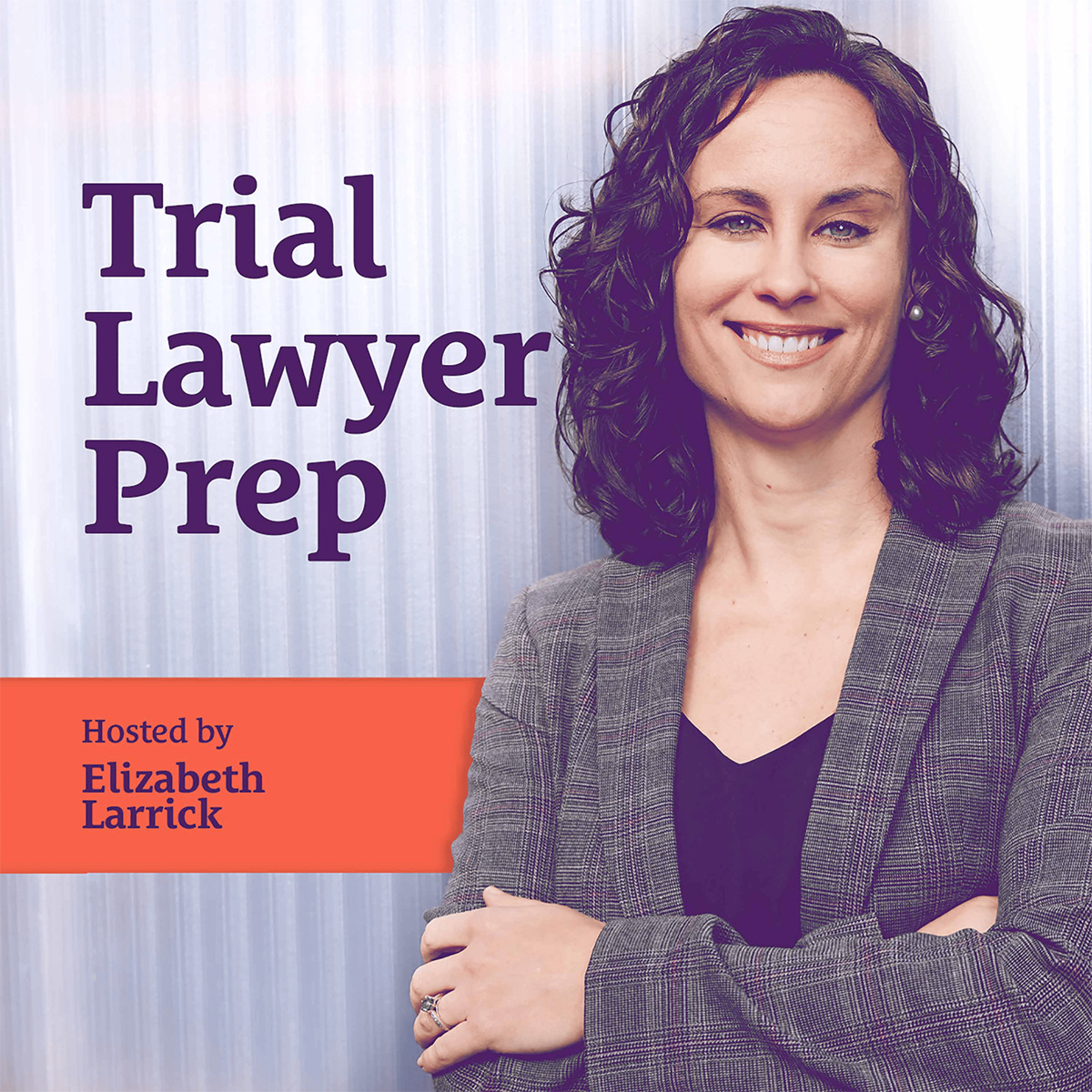
As a trial lawyer, what is your mindset around deposition preparation? Today, we focus our discussion around that. Lawyers have different mindsets going into deposition preparation. You want to get the most value from every single case but it’s also important to do things using a humanistic approach.
At the end of the day, our mindset should be focused on helping our client as they go through seemingly difficult chapters in their lives. They’re probably going through something horrible, whether that’s related to employment, injury, or a business situation – that’s impacting their life. And as their lawyer, you’re there to help them deal with whatever legal situation they’re in.
In this episode, you will hear:
The different mindsets lawyers have when approaching deposition
Selling your case is a disappointing mindset
The importance of shifting your mindset and using a humanistic approach
How your 30-minute conversations reflect the value you want to have
Subscribe and Review
Have you subscribed to our podcast? We’d love for you to subscribe if you haven’t yet.
We’d love it even more if you could drop a review or 5-star rating over on Apple Podcasts. Simply select “Ratings and Reviews” and “Write a Review” then a quick line with your favorite part of the episode. It only takes a second and it helps spread the word about the podcast.
Supporting Resources:
If you have questions or a particularly challenging client preparation, email Elizabeth: elizabeth@larricklawfirm.com.
Episode Credits:
If you like this podcast and are thinking of creating your own, consider talking to my producer, Danny Ozment.
He helps thought leaders, influencers, executives, HR professionals, recruiters, lawyers, realtors, bloggers, coaches, and authors create, launch, and produce podcasts that grow their businesses and impact the world.
Elizabeth Larrick: Hello and welcome. It’s Elizabeth, your host for trial lawyer prep. Thank you so much for joining us in this new episode.
It’s going to be pretty short and sweet, and the focus will be mindset, our mindset, right? What is your lawyer mindset around [00:01:00] deposition preparation? And this came up for me here recently, several different locations. There was a listserv conversation that I read about woodshedding the client. There was a presentation that I saw about woodshedding the client.
And then I had a conversation with another lawyer discussing how he prepares clients and what he tells them to do. That’s really kind of what set me on this idea for this. episode because I realize my mindset is different than other folks and I’ve worked significantly hard on understanding what it is it should be and how to help people, right?
If my mind is focused on helping the person and my mindset is that, yes, this is a case and this is something I’m going to make money on, but it’s also an opportunity to help this person in [00:02:00] their life. They’re probably going through something horrible, whatever may be, an employment situation, an injury situation, a business situation.
It’s changing their life and they’re definitely at a place where they don’t want to be in your office having to hire somebody to help them with a legal situation. That’s not always been my mindset. That’s obviously something I had to learn along the way, but once I was attuned to what my mind was thinking about, that also then attuned my actions at what I picked up on, what I heard and what I looked for when I spoke with clients.
In listening to lawyers here recently, I understand why we get in that mindset of this is a case. We’ve got to talk to the adjusters. This is the time where clients need to just basically sell their case. Those are actually words somebody said, well, this is us. What I tell clients is this is the opportunity to sell their case to the adjuster.
They need to sound the best, look the best, do everything they [00:03:00] can to basically sell it to get the most money available. That’s a pretty disappointing mindset. I mean, I walked in to hire somebody and they basically told me it was my job to sell my case, meaning this factual thing that happened to me that changed my life.
I would kind of have a pause and then I’d have a thousand questions. How do I sell myself? A lot of people hate sales. So I, that just seems to spin off into a whole nother level, but I also think people would take that definitely the wrong way. And the other conversation that I heard from this listserv was about woodshedding the client for specific questions that they may get that defense may try to trick them with.
And at the end of the day, there was lots of advice. A lot of it came from the same mindset of your client needs to say exactly what you tell them. And they need to be. selling [00:04:00] the case. That’s their job and deposition is to sell the case. And I quite frankly think that’s your job, right? We’re the advocates here, zealously representing our clients.
Our client’s job is to come in and tell the truth, tell their story, tell their impact, to stand up, to cross exam, to not fall for tricks. That’s a huge shift that we can make if we choose. But, What is up against changing our mindset? Well, it’s the fact that this is our job and as a personal injury, that’s difficult to get out of that mindset because it’s eat which kill.
Well, that’s a lot of lawyers too, but you want to get the most value of every single case. And so you want your clients to do some of that lifting for you. But instead of taking a very, humanistic approach and thinking about it in different terms, like what the jury would be thinking about. If you tried to sell your case to a [00:05:00] jury, they would not be having it one bit.
They would smell you out like the rat that you would be and dump it. So I don’t know why that would work for insurance adjuster because they have the same feelers, spidey sense for that information as well. So this is episodes really more about a question, you know, what is your mindset? When you’re going to get a client ready.
for deposition, what is on your mind and how does that then craft what you say to the client or not say how much time you spend with them or not. But either way, if you’re thinking about it, or if not, I always wonder 30 minutes is generally 30 minutes to an hour is generally about the time that most lawyers spend preparing their clients.
And how does that 30 minute, one hour, how does your conversation reflect the value that you have, or that you want to gain from this file? Don’t [00:06:00] think you’re gaining it from the clients from the file. How does that help? What can we do to change how we think about this? Because if we change how we think about it, we will look at it differently.
We’ll work it up differently and it will be reflected. In the value of the case, a hundred percent. Every time I hear from lawyers that take less cases, that they turn their mindset, it’s not about turning and burning files. It’s about helping people. It’s about talking to juries, getting people to work through this phase of their life.
It changes. And I guarantee you that you get more value out of the files. I’ve not talked to one lawyer said, you know what? It didn’t work. I’m going back the other way. Now, something else may pull somebody back the other way, and it may be, again, a different kind of mindset, but that’s my thought we’ll leave you with for this episode.
What’s your mindset around deposition prep? And also for next episode, we are going to do [00:07:00] a top 22 things out of 2022 that I’ve learned along the way in podcasting and also just in all the endeavors that I have gone through this year. So some of them will be very practical things, some of them will be probably pretty personal things.
But hope that you tune in for next episode. Either way, this episode drops right before two major holidays. Hope that you enjoy that. Take some time off to rest. And recharge. And until next time, thank you.
As we’re approaching 2023, this is the perfect time for planning, especially if you have cases that are going to be filed in 2023. And one useful case planning tool is a pre-litigation focus group.
Maybe you’ve had this case for a couple of months now and you’ve done a little bit of investigating. So you have a little understanding of the facts around what happened, but you haven’t actually filed the case yet. This can also be the time for you to use a pre-litigation focus group for more in-depth planning.
The perfect time to use a focus group is when you have the information that allows you to make some predictions, and there aren’t any huge missing facts going on so you can pretty well predict the damages.
In this episode, I’m going to discuss planning for focus groups before you file a case, the importance of a pre-litigation focus group, what it looks like, what things you need to be looking for, and the benefits of using it.
In this episode, you will hear:
What happens during the pre-litigation focus group
Questions to ask and where to gather more information
Factoring in your expenses in terms of time and money
Ways to pick a case for a pre-litigation focus group
Subscribe and Review
Have you subscribed to our podcast? We’d love for you to subscribe if you haven’t yet.
We’d love it even more if you could drop a review or 5-star rating over on Apple Podcasts. Simply select “Ratings and Reviews” and “Write a Review” then a quick line with your favorite part of the episode. It only takes a second and it helps spread the word about the podcast.
If you like this podcast and are thinking of creating your own, consider talking to my producer, Danny Ozment.
He helps thought leaders, influencers, executives, HR professionals, recruiters, lawyers, realtors, bloggers, coaches, and authors create, launch, and produce podcasts that grow their businesses and impact the world.
Elizabeth Larrick: Hello and welcome back. I’m your host, Elizabeth Larrick. Thank you so much for joining me for this episode.
We are rounding out 2022 and I thought this might be a good time to talk a little bit about planning. I’m going to be doing a [00:01:00] live LinkedIn this week on planning for 2023, but focus group planning. And I thought we could go a little bit more in depth here on this episode about specifically using focus groups before you file a case.
So in this scenario, you would have probably had this case for a couple of months, probably, probably done a little bit of investigating, understand the facts a little bit about what happened, but you haven’t yet filed it. And I love using a focus group at this point in time where you have information.
You can make some predictions. There aren’t any big missing facts going on. You can pretty well predict a little bit what the damages will be. But you can use a pre lit focus group for a little bit more in depth planning. And that’s what I kind of want to talk about today is why we would be [00:02:00] running these things, what we’d be looking for, and really when we talk about planning, how can we get our bang for our buck here?
And overall, when I talk about what kind of focus group this would be, We’re talking about a very short, more than likely, it’s going to at least take 50 minutes. You may be able to get it done shorter than that, but I always encourage people to set aside at least 50 minutes when you’re going to go in and talk to a focus group about a particular case, because you’re going to have a narrative.
You may need to set the scene with some photos. Now that’s different than if we’re just going to go in and talk about a concept, we’re going We’re going to ask some really straightforward questions. We’re going to practice some jury selection that’s different, but when you have a narrative and you need to set up some information and probably give visual, I always say, try to leave yourself like 50 minutes.
And so that’s what I would encourage you to do here is have very neutral narrative of the facts, some [00:03:00] pictures, right? And sometimes pictures can eliminate possibilities in people’s minds. And helpfully explain things in a very quick fashion so that you can move forward with asking questions. And this style of questioning would be very open and what do you see, how this happened, what would be your concerns, what sticks out, or what could be missing very big, broad questions.
You’re given information. You just want to get whatever their first reaction is to the information or what’s going on in the set of facts. And that kind of leads me to why we’re doing this. So again, we’re asking questions to really figure out what stands out to them, what would be concerns for them, and those can be good things.
All those can be bad things. So we definitely want to make sure that we’re trying to find any negative facts, any negative assumptions that people may be making negative attitudes that could be out there about it. And again, also positive things. Hey, what are the positive facts? [00:04:00] What are things that just stand out in people’s minds?
Where are they needing more information is always a big question I like to ask. And this kind of leads you to, with all this information, we’ve got a good column and a bad column. Where does this lead us and to where we need to gather more information? And that can mean, what is that expense going to be for me as the lawyer?
And by expense, I mean, how much time? Is that going to take, is it going to be a big time endeavor or not? How much money is that going to cost in the sense of case expenses? Am I to hire a third party, whether it may be an investigator or a company to do a forensic exam or a download a vehicle. And will I need to have any kind of expert then to get this information in?
And of course, we’re talking about witness statements or cell phone records, right? There are companies that will do all that, of course, for you and then experts out there as well. And so we get this information. So is it reliable? [00:05:00] If you’re just running one focus group, one pre lit focus group, is it really reliable?
Well, you could certainly do more than one. You’re not limited, but again, I always try to think about, let’s be conscious of our case expenses when it comes to these. I think you can, as long as you’ve conducted it in a very neutral way or had somebody else conduct it for you, I think you can pretty well rely on the information.
Sometimes we go in with what we think the jury is going to tell us, but the feedback that I continually get from folks that I work with is they always learn something new from the focus group at some kind of level, something new. So I think you’re always going to have new ideas or new thoughts, new attitudes that you’re going to see when you run focus groups.
And when we do our pre lit focus group, that allows us then to kind of plan going forward, thinking about discovery to get what other information may be out there. And again, you could be trying [00:06:00] to see, is there any more bad information out there? Is there any more good information out there? At this point, it may help you with your themes.
I feel like most people say most trial lawyers go into cases with several different themes. And again, they’ll go with the strongest theme where the evidence is. Sometimes you may just go in with one or two. And then again, where does that evidence fall to reinforce those themes? And of course, in planning terms of case expenses, which we’ve talked a little bit about, will you have to go find that information at what.
What money expense, and would you need an expert to be able to come in if you do? Do they provide education? What are they bringing in? All those things kind of help you with the case expenses. And sometimes we know what kind of insurance policy we’re dealing with on the other side or what kind of ability to recover from the other side.
And if you don’t, of course, that’s. Generally, number one thing we always get first, and that’s in the federal rules, initial disclosures, and in [00:07:00] most states as well, that’s kind of first blush, they’re supposed to get that right out the gate so then we can plan around that. When would you pick a case for this?
Well, you could have a case with an unusual fact pattern, maybe something that you haven’t experienced before. Maybe you’ve got a fact pattern with unusual damages, not really sure how strong a liability is. I mean, you’ve got really strong liability and not so sure about the damages. Lots of ways to pick a case to do this with.
Again, I think you’re going to learn at first blush what’s on people’s minds, and that may go one way or the other for you, but at least you’ve got that always in your mind as you’re working forward. I’ve got two particular examples to talk about with you, and the first one turned out to be negative. And in the sense that they, the lawyers I was working with, wanted to run a focus group before they filed this case because they just weren’t even sure they could get liability, or responsibility, on [00:08:00] the parties that had the Available resources for recovery.
Several different entities and defendants were involved. It’s a fairly simple fact pattern where an individual is working at a construction site, the The building itself, nearly done, just cosmetic finish out kind of stuff. And the person was working and suffered a catastrophic injury, paraplegic. And of course it’s under construction.
So there’s again, lots of construction folks involved, the building owner, the tenant, and unfortunately the responsible party who they needed to be tagged with. Liability did not come true in our focus group, and so it wasn’t necessarily they placed everything on the injured person, but more they placed it on a few other people in the line before it got to the party with the recoverable resources.
So as a lawyer, they got that information. [00:09:00] And they decided this would not be a case that they’d be able to file a lawsuit for because it was so tenuous, the law was going to be tenuous, the facts, again, according to the focus group was going to be pretty tenuous, but the case expense was going to be astronomical.
So high risk situation there. So that is where, again, focus groups significantly help people make that kind of decision. How risky is this particular case on all fronts? And another example that I have, medical malpractice case, and when we run a pre lit, Focus group for any kind of case, but really, sometimes we have more things that are medical related or scientific kind of related.
We always want to go in asking how much they really understand about what’s going on and understood. Where are the. So in this particular example, there were quite a few [00:10:00] gaps in understanding. People generally grasped all the narrative facts. But when you ask the big question, okay, so what caused the brain bleed?
What caused the heart attack? They don’t know. So that’s kind of where it’s like, all right, let’s figure out what they do know, ask some questions and really look at, okay, how can we best educate this? Do we need an expert? Probably not. Could we get this done with some demonstratives? Probably so. Some education pieces here and there, but really, as always, causation is a big issue for medical practice cases.
So helping get people down that road better with some kind of demonstration, demonstrative or education is always helpful. And those folks were a hundred percent moving forward because as far as liability and that kind of stuff. It was easy. It was a hundred percent good to go on that, but again, that causation part was a little bit missing.
So both those examples just gave the lawyers more information to assess [00:11:00] the good, the bad, assess the risk, assess, Hey, case expense wise, this is going to be a lot, not a lot. How much investment do we need to make in time and in money? And so that’s why I encourage you if you are, you know, it’s the beginning of 2023.
You probably got a few cases in there that you’re thinking, okay, well, these are going to be filed in 2023. Do you have any on that list? That you might need to check in, just double check and make sure, or that you want to learn a little bit more about before you start that discovery phase and have some themes in mind before you go into those depositions when you’re gathering up that evidence and looking for those documents, right, that will fit themes that the focus group gives back to you.
Well, I hope that this was helpful, lots of information there, but if you are thinking about doing a pre lit focus group, you have questions, please don’t hesitate to email me. I have lots of forms for virtual focus groups and also that can [00:12:00] help with in person focus groups as well. So just shoot me an email.
Now you can also find a lot of those forms on my website, LyricLawFirm. com until then, thank you so much.
As a trial lawyer, you probably know what goes into client preparation like the back of your hand but there could still be things missing in your process that you wish to improve on.
In this episode, I’m going to discuss four simple advice tips for successful client prep. These are simple yet sometimes overlooked, tried and true tips for nearly every single client and every single case.
These are small things you don’t want to miss during client preparation so you can learn more about the client, have an easier time preparing the case, and have more success at your client depositions.
In this episode, you will hear:
Why you should prepare the client alone
The pitfalls of preparing people together
Giving the client homework before the first client preparation session
The importance of creating timelines together and making them interactive
Breaking down the client preparation into two sessions
Subscribe and Review
Have you subscribed to our podcast? We’d love for you to subscribe if you haven’t yet.
We’d love it even more if you could drop a review or 5-star rating over on Apple Podcasts. Simply select “Ratings and Reviews” and “Write a Review” then a quick line with your favorite part of the episode. It only takes a second and it helps spread the word about the podcast.
If you like this podcast and are thinking of creating your own, consider talking to my producer, Danny Ozment.
He helps thought leaders, influencers, executives, HR professionals, recruiters, lawyers, realtors, bloggers, coaches, and authors create, launch, and produce podcasts that grow their businesses and impact the world.
Elizabeth Larrick: Hi there, Elizabeth, your host. I have a very short, sweet podcast episode for you today.
We are going to talk about four simple advice tips for successful client prep. And these are simple, but [00:01:00] they’re sometimes overlooked. And where these things came from is I teach. Uh, witness prep for many years with the Kenan Trial Institute. And these are common questions that I get asked, but also when I’m not teaching this, I work one on one with clients.
And so I’ve done that for many years and it’s a multi step process and found that these are tried and true tips for nearly every single client, every single case. So these are things when I say success. They’re really small things that are going to help you learn more about the client, have an easier time preparing them, have more success at your depositions with your clients.
And by success, I mean, they’re not going to get tripped up by things that the opposing counsel may ask. They’re going to be much more thoughtful and they’re going to have a lot better memory and recall based on some of these [00:02:00] things that we are going to talk about. So let me jump in very quickly. And again, like I said, Simple tips, quick episode, first tip, and there’s four of them total.
So first tip is prepare the client solo. Do not prepare clients together. And I’m talking about maybe we’ve got parents or we’ve got spouses or we’ve got maybe Two folks are in the same wreck or both in the same incident, don’t prepare them together. They’ve had an individual experience. And so their perception is going to be different.
And what happens is when you group people together, one person tends to speak more than the other. And they also can speak for the other person, right? So parents will speak for children. The spouse that’s not injured will talk more than the injured spouse. That’s a total normal human dynamic that can happen in those kinds of relationships.
What we really want to do is make sure we are [00:03:00] gathering what this particular client experienced and giving them that one on one information for preparation. And in my experience, people will share much more when they’re solo. Versus when they’re with their parent, their spouse, their friend, and a couple of reasons why one is you’re focusing your attention on them.
So they may feel more compelled to give more, but also they’re seeing that you’re giving like individual attention. And so they want to make sure that they also give you more of their attention. Some of the pitfalls of actually preparing people together is they’ll just feel like share the same story versus actually giving maybe their own individual perception, which none, it’s a lie, but it’s not necessarily individual.
Sometimes we have people who have different concerns. One concern may be that they [00:04:00] don’t want to share about the impact of their injuries or how important their job was to them. And. They won’t share that if the other person’s in the room, maybe they’re scared to share in front of that person. And sometimes people just don’t want to share what they’re concerned about or questions they may have because they don’t want to be embarrassed.
They don’t want to waste time. There’s all kinds of things that go through people’s minds. So this is why I say remove the barrier, just prepare to share. I’m going to get there pretty soon because I know some people think, I don’t have the time to prepare people individually. Sometimes just spending 15, 30 minutes solo with somebody will do wonders and make you say, Oh, I need to spend more time one on one with this person.
It can also sometimes correct behavior as well. Tip number two, which would be give homework, always give homework before that first client preparation session. And it can be even as [00:05:00] simple as before you come to our meeting, I want you to bring three questions with you. That’s it. Three questions. Look how simple that is.
And one, you want to get them thinking, right? You want them to be thinking about the preparation, then be thinking about the deposition. It takes a little bit of work off of you, right? Because the Nick Cummins is the first thing you talk about. But also you are setting up a frame for what they’re expected to do.
They’re expected to participate. This is not just a sit and listen to my lawyer. Tell me what to do. I’m gonna be Participating in this and it’s a quick, easy way to get them to start working on getting things together, thinking about it, getting their brain working towards it. Just give that really simple homework.
You can ask people to bring in their concerns. Ask them, that’s what I say, make it as simple as just, at our first meeting I want you to bring three questions for me. Three questions that you’re going to have for me about this deposition. Super simple. Third tip would be use a [00:06:00] timeline or create a timeline together.
Timelines are great tools to refresh the memory. Depositions generally take Or occur years and months after the events that are in the lawsuit. So we really need to be refreshing memory And it is a fantastic visual aid to do that’s why I say do it together Even if it’s as simple as taking out a dry erase marker and putting a line On your board and then just taking things off together.
Okay. Here’s the date of the crash. Okay. Here’s the date of that surgery. Here’s the date. You lost that job. Okay. Here’s the date and it’s just, you’re putting things together for them in a big picture way. And as I’ve talked a little bit about visuals before, and we’re going to spend more time in other episodes talking about visuals, because I think we really have a great opportunity to speed up the learning and also retaining.
What they’re learning in their memory refresh. And that’s really what we want to do is. [00:07:00] Let’s go through an exercise instead of, hey, let’s just look at all this stuff. It’s all these documents, right, in a timeline that’s, you got asking people to keep multiple things together in their brain at one time.
And I’m saying, Hey, use a timeline to make this work quicker. And also it’s interactive if you do it together. If you use a timeline with the client, again, if it’s already made, that’s totally fine. But just remember from a standpoint of simplicity, keep it all on one page, like an eight by 10, or keep it all on two or three slides of a PowerPoint.
Because again, we really want to get that overall big picture and we overall make sure we’re refreshing that memory. If we get things too large and disjointed, you’ve got a medical timeline that’s 50 pages long, that’s too long, right? That’s just way too complicated, right? We’re missing the big picture here.
We really want to keep it simple. And again, refreshing that memory in a way that it’s going to help them retain it for that deposition. Last simple advice tip, which would [00:08:00] be do two sessions. Two preparation sessions, even if we’re talking about two 30 minute phone calls, stay with me here. I know a lot of people are thinking, well, what if I spend more time?
That’s totally fine. Sometimes we put all of our time together in one session, like the day before, maybe the two days before the deposition. And what I’m encouraging you to do is whatever time you have allocated, split it into two sessions. Or maybe you do, you know. Um, 20 minutes on the front end, 20, 80 or however you want to split it up, but you always want to have a little bit of time in between the session.
That’s why I say due to, because that allows them to really absorb and start searching their brains for more information, more stories, more questions, right? They’re really able to now, Oh, they understand so much more about what it is they’re about to do. Whoa. What it is that their job is. Yikes. And they may be excited [00:09:00] about it.
It doesn’t really matter, but that time allows your brain to keep working on thinking about all of it. And it’s done on a subconscious level, but. That also allows them to really learn the information and that’s what I mean by absorbing it. So when they come back for that second session with you, they may have more questions.
Where, how does this fit in? Right? They’ve been thinking about it. Right. That’s what you want. You want some absorption. You want some questions or even better than they come and say, hey, we talked about this and this came to my mind. I totally forgot this story about how I tried to go volunteer and I couldn’t do it.
Great. So. You want to get those extra things and be able to be hands on when they come in the door. You don’t want that to be happening at the deposition because that’s It could be something that needs to be fine tuned, it could be something that needs to be organized, maybe something that doesn’t apply at all, or it could be a question that really needs to be answered instead [00:10:00] of being left lingering in the deposition.
So that’s why I encourage you to break up into two sessions to allow that time in there to absorb and search their brains more. It also allows them time to solidify their understanding. of what’s happening and that will give you a better opportunity to ask better questions, deeper questions, more challenging questions, get them to another level of being uncomfortable with what they’re going to be asked.
We don’t want to scare the pants off of them at the first meeting, right? We want to get them set, want to get them what to expect. And then maybe in our second session, then we’re getting them to that It’s going to get uncomfortable. Here’s how it’s going to get uncomfortable, right? Because we don’t want to scare them right off the bat and then just scare them.
They just, they don’t ever want to come back. Then they think there’s nothing I can do, right? I’m powerless over the situation. So we just want to divide and conquer here. That’s why I say two sessions. All right, now let’s go back [00:11:00] through very quickly. These are simple things. They’re simple not to do as well, but that’s why, again, I want to make sure number one, prepare the client solo.
Don’t pair people up together in preparation meetings. Number two, give homework. Even if it’s just a super simple, Hey, when you come into our first meeting for zoom, when you come into our first in person meeting, bring three questions that you have for me about deposition. Number three, use a timeline or create a timeline together, right?
Really awesome tool to refresh, to get that 30, 000 foot view. It could be as simple as drawing a line on a page. And lastly, do two sessions. Split your time up, split that preparation time that you have allocated to allow the client more absorption time and things to solidify so that you can work even better with them when they come back because they’re going to stand on much solid ground versus still feeling uncertain about what’s going to happen.
Okay. I hope that [00:12:00] this was helpful for you. It’s a short one here. And that’s what I always try to do short and sweet. If you have questions for me, or if you have a topic that you’d like covered on the podcast, or if you want to come on the podcast, I’d love having guests, please shoot me an email. It will be in the show notes.
Bonding versus preparing a client for deposition are two things that we are told we need to do as trial lawyers to set ourselves up for success. Indeed, both are vital and important parts of client interaction, but where do we draw the line between the two?
Sometimes, when you’ve already built a solid relationship with a client, this can be difficult to separate. But bonding and preparing a client for deposition are two different things. They serve different purposes. Bonding is taking a separate interest in our clients, outside of the legal matter. It’s as simple as asking clients about their families or sharing a common interest. You could also be sharing with this person about yourself or other family details. It’s an important part of any relationship because it helps establish rapport with people. Conversely, preparing a client for deposition is a highly focused training and coaching task that involves things like teaching the client what to expect.
In this episode, we’re going to talk more about how they’re different and what you can do to resist the urge to bond with a client so you can bring it all back to the main task of preparing them for deposition.
In this episode, you will hear:
How small talk sets you up for success
Your specific tasks as you’re preparing your client for deposition
Things you have to do during preparation, which you never do when bonding
Resisting the urge to move into the relationship-building mode
Subscribe and Review
Have you subscribed to our podcast? We’d love for you to subscribe if you haven’t yet.
We’d love it even more if you could drop a review or 5-star rating over on Apple Podcasts. Simply select “Ratings and Reviews” and “Write a Review” then a quick line with your favorite part of the episode. It only takes a second and it helps spread the word about the podcast.
If you like this podcast and are thinking of creating your own, consider talking to my producer, Danny Ozment.
He helps thought leaders, influencers, executives, HR professionals, recruiters, lawyers, realtors, bloggers, coaches, and authors create, launch, and produce podcasts that grow their businesses and impact the world.
Elizabeth Larrick: Hello and welcome to a new episode of trial lawyer prep with me, your host, Elizabeth Larrick.
Thank you so much for tuning in. I hope you had a wonderful holiday weekend. I hope this will be hitting you after Thanksgiving or whenever you choose to tune in. But this is a podcast dedicated [00:01:00] to trial lawyers getting ready for trial, getting ready for depositions, but basically preparing their cases for success through thoughtful preparation.
And today we are going to talk about bonding versus preparing a client for deposition. And these are two things that we are told we need to do, and we being trial lawyers, we need to do to have success. They’re both vital. They’re important parts of client interaction. And I see this happen many, many times when I sit down to prepare clients.
And so I thought this is probably something other people can get trapped up on. So I want to talk about what are these two tasks, right? Like how they’re different. How bonding and preparing client for deposition are different and they serve different purposes and how we can get this urge to do this bonding with the client during deposition prep.
That’s real and how we can avoid doing that [00:02:00] and keeping these jobs very separate because brain science tells us we can only do a one thing at a time and we don’t want to bond. bond with our client at DepoPrep. Right. We don’t want to move into that and we don’t want to endanger our preparation time and risk the client’s deposition.
And so let’s talk a little bit about bonding because it does happen that we bond with our clients. It’s something that we need to do, but really it’s taking it at face value, what is bonding? Well, it’s taking a separate interest in our clients outside of the legal matter. And it’s as simple as asking folks about their family and when you see them every time, sharing a common interest, sharing with this person about yourself or other family details.
And it’s really, it’s an important part of the relationship for any relationship. It’s very important. And it really does help establish rapport. with people and tells us that small talk really does help people succeed, especially [00:03:00] they’ve studied this basically in adversarial negotiations that even just a little bit of small talk beforehand can help negotiations succeed, getting people to feel comfortable, feel at ease.
And so it’s something that you must do. That’s something that’s talked about in the book influenced by Robert Cialdini. Something that we really need to be doing. And again, I know that we’re not negotiating with our clients. We’re just trying to basically bond with them. Most of the time our clients spend a large period of time, longer than sometimes they want, a year, two years, four years, five years with us trying to handle a problem.
And so really the purpose of bonding is about relationship building. And when we hear about this is when lawyers urging other people to go share a meal with the client, go to their home and have a visit, keep up with client’s birthdays, anniversaries, their kid birthdays, pets, sports, hobbies, but it’s something again, it’s outside the legal matter.
So really relationship building, when we talk about this, if it’s something that. Maybe you struggle with, or you have questions [00:04:00] about how to do this in a good way, I really would suggest reading Dale Carnegie, How to Win Friends and Influence People. Total classic. If you haven’t read it in a while, like, put it on your list to do because it’s, I find it to be a super helpful refresher when it comes to really simple things that we can do that people light up with.
One of the simple things he suggests is using people’s first name and remembering. It really does help. Okay, so here’s this task of bonding, but let me switch and really talk about preparing for deposition because that task is really a high focused training and coaching task, right? I mean, when I think about preparing for deposition, we really are trying to accomplish three really big tasks.
And the first one being teaching the client what to expect, but we have to do that teaching in a format That makes sense and with language that they understand. And so many times I hear lawyers [00:05:00] explaining depositions and using words, objection, elating questions, testimony, rules of evidence, discovery, all these words that total legal jargon, not anything that clients use regularly.
And when we do that, like, they’re not retaining it because it’s like, let me give you an example. When we go to talk to an expert, let’s just happen that this expert’s a rocket scientist, right? That rocket scientist is going to probably use terms and phrases that are 100 percent foreign and that can’t be understood in context clues.
So you’re having to like, whoa, whoa, I got to step back here. You’re using all these words that, Like, I don’t understand. Now, lawyers will do that, right? Lawyers, hey, you need to under, help me understand what that word is. Clients won’t do that, right? They won’t ask that question out of embarrassment, like, wait a minute, like, what is a leading question?
What do you mean, what’s the word objection? So we really have to stop and teach them in a format with language that they understand, because that’s hurdle number one, right? Getting them to [00:06:00] understand and what they can expect. The next hurdle would be organizing all that information that they have to share.
Because they have a lot, and a lot of it could be past, it could be stuff that’s involved with the lawsuit. Thinking about injury cases, we’ve got to organize all the information about injuries, medical treatment, future medical needs, limitations, the pain, impact to family and self. That’s a lot of stuff to organize.
We’ve got if you’ve got an employment case, right? We’ve got job events, job history, probably lots of documents to organize. And in this phase, we’re really helping refresh them on it. But also we need to help them organize it around. The areas that they’re going to get hit on, but also just with questions are going to be asked.
It’s not a normal conversation in their minds, right? They’re thinking it’s going to be questions that don’t have unusual terms or are phrased in a way they’re going to understand. So that’s kind of where the organizing [00:07:00] helps. So once you do that, we taught them what to expect. Number two, we’re organizing the information that they’ve got in their brains.
And finally, number three is testing, right? Role playing with the client, giving them that experience, and really testing what you worked on. So the purpose of preparing for deposition is a hundred percent case related, right? It’s not relationship building like bonding. Now, it will benefit your relationship, but in that preparation, you’re going to have to cover uncomfortable issues or bad habits.
And you want to do that before the defense does, but that’s not something you would ever do in bonding. So two really separate tasks. And I definitely would encourage people to do the bonding early. Often, you could do bonding on breaks when people first come in with icebreakers, but once you turn the task to deposition prep, then we really need to be honed in and focused on [00:08:00] doing that task and not moving back and forth between bonding and preparing.
Because again, we can really only do one thing at a time. And this is so easy to occur because we’re sitting down, we’re talking about events, we’re talking about what’s happened since the original events from the lawsuit, what impacts, repercussions, and inevitably conversations turn to difficult things, life changing events, severe injuries, loss of a job, loss of a business.
These are personal things and When you hear them, you want to be empathetic. You want to be sympathetic. But this is where we can creep in back into that bonding and move away from pair pairing for deposition. So let me give you an example. Sitting down to prepare, a young man, he’s 22 years old. His father’s died in an explosion.
And Sitting in to prepare [00:09:00] him for his deposition and we’ve got a couple people in the room and basically having the client kind of walk through growing up. Things he liked to do, how was his dad involved, and the client conversation turns to growing up and he had a very serious passion for breakdancing and went to competitions, and the, an associate in the room pipes in.
Oh yeah, me too. Oh my gosh. Do you know this person? Oh, I used to dance at this studio. Oh yeah, did you do? And the conversation takes a 20 minute detour. Now again, there’s nothing wrong with the conversation. They’re talking about common interests, things that they have in common, but now we’re having a conversation where it’s, Relationship building, and we’ve moved away from our task of we need to learn more about him.
We need to get more information on the table about this. Get him to go to a deeper emotional level to tell us kind of how dad’s [00:10:00] involved or maybe dad wasn’t involved, right? I mean that could be a painful thing. So, it’s so easy to slip into that, right? That, oh, like, it’s a perfect opportunity to talk about things that we have in common.
So, what can you do? Because you may be thinking, well, geez, Elizabeth, I don’t want to be a jerk. I feel for this person. They hired me. I want to be their champion, and I can’t be this heartless person who just sits there while they’re dumping their hearts out. And I know that, totally understand that, and it’s natural.
We’re humans. There’s gonna be a pull towards and somebody’s having an emotional moment, right? You want to get them a tissue, you want to comfort them, but Here’s what I’m telling. You got to resist that urge to move into that relationship building mode and that can look like talking about yourself, talking about another client with the same problem, right?
Trying to comfort them, right? Or even trying to sometimes solve the problem or the issue. Hey, [00:11:00] here’s how we can fix that for you. Oh, here, let’s do this thing instead. It’s like, wait a second, wait, wait, wait, wait, we can’t move into that mode because we want to keep them where they are. But we want to learn more and fit it into where we’re going with our preparation.
So what can you do? We’ll always want to be listened attentively, which means eyes up. We’re not writing anything down. If you want to comfort, just nod your head along that they’re going to get that affirmative agreement from you by nodding and ask questions to show that you’re engaged. Tell me more about that.
What was that like? You want to avoid some of those clinical lawyer questions though. When did that start? Well, when did it end? Did you tell your doctor? Did you make notes? That’s our lawyer minds working, like how can I get this into evidence? Where’s the discovery parts of things? And you will be so glad because you’ll learn so much more, but also Again, you’re giving that person the importance they need in that moment, but you’re staying focused [00:12:00] on the task.
And so really, again, this is the hardest part is for us, right? Clients are there to do whatever we ask them to do, but this is where it’s like, hey, if you feel like you’re slipping into that place, just go back and check, like, okay. How do I get us back on task? And sometimes it happens, but remember, that’s your job as lawyers to get back on task.
Now, bonding, right, that’s something, again, you can do on lunch breaks, you can do on breaks in the hallway when they come in. But once you turn to that depo prep, that highly focused three parts that we’re working towards, you got to resist, right? That bonding urge, that relationship building kind of moments, right?
Where you’re sharing something of your, of yourself, right? Or you’re trying to comfort them. And that’s really where it comes from. And we really just kind of want to resist that. Um, and keep everything focused on the client to learn more, to be able to prepare them better. And along the way, you’ll be able to, once you get through whatever the emotional moment you’re having and learning more, it’s okay to [00:13:00] come back and ask those clinical questions that you’ve got.
But just know like there will be a time and a place to ask those questions, right? We’ve got the organizational part of things, right? We’ve got the role play part of things. There’s a couple of different phases there where you can work in some of those questions that you need to answer. So I hope that this.
episode was helpful, right? So you can kind of catch yourself if you end up falling into that trap sometimes, because once we get off into that relationship building task, sometimes it’s hard to get back. And sometimes we spend a lot of time in that area. And when we really need to be bringing it back to the main task of preparing for deposition.
If you did find it helpful, please rate and review on your favorite podcast platform. Share with somebody who may find it helpful. If you have questions or have a topic that you’d like to discuss on the podcast, or maybe you want to come on the podcast, just shoot me an email. My email will be in the show notes.
We’ll also put links in the show notes to the two books that we talked about, Influenced by Robert Cialdini and the Dale Carnegie [00:14:00] book, How to Win Friends and Influence People. Alright, thanks so much.
Every witness gets asked about what documents they used to prepare. As lawyers, we have to be on the front end of things before meeting the client. This week, we are going to continue our two-part series on how to decide what documents to use in deposition prep.
Whether it’s personal injury, an employment issue, or a business dispute, cases involve dealing with a ton of documents. Depending on the type of case, think about tens and thousands of medical records, employment files, or email communications.
As a lawyer, all this can get super overwhelming. Therefore, having a good organization of these documents is definitely a must. The sooner you can start organizing cases, the better. You’re able to better prepare yourself for events such as hearings, depositions, and mediation.
In this episode, you will hear:
Two sets of documents you need to prepare
Creating a list of “must” documents
The importance of preparing visuals
Documents in the case that are already discoverable
Asking how a document can help or hurt
Looking at the 30,000-foot view of helping them
Subscribe and Review
Have you subscribed to our podcast? We’d love for you to subscribe if you haven’t yet.
We’d love it even more if you could drop a review or 5-star rating over on Apple Podcasts. Simply select “Ratings and Reviews” and “Write a Review” then a quick line with your favorite part of the episode. It only takes a second and it helps spread the word about the podcast.
If you like this podcast and are thinking of creating your own, consider talking to my producer, Danny Ozment.
He helps thought leaders, influencers, executives, HR professionals, recruiters, lawyers, realtors, bloggers, coaches, and authors create, launch, and produce podcasts that grow their businesses and impact the world.
Elizabeth Larrick: Hello and welcome to a new episode of trial lawyer prep with me, your host, Elizabeth Larrick.
Thank you so much for tuning into this podcast. Dedicated trial lawyers trying to prepare better witnesses for better results in the courtroom. We are going [00:01:00] to continue our two part series on documents to use in deposition prep. We took a small break last episode to celebrate 52 episodes, but here we are now at 53.
So let’s keep going with our two part series. If you’ll remember, we talked about in episode 50, using documents in preparation. What to know, we really looked at the rules, right? So a lot of times we forget about the rules that may apply when it comes to documents that are used in preparation. We looked at the Texas rules, right?
So attorney client privilege and also work product privilege. I encourage you to check your jurisdiction for that because there are lots of ways that’s interpreted, but if you’re in Texas, just know it is really broad. That’s great. And what we want to talk about in this episode, though, is [00:02:00] how to decide what documents to use.
Every witness gets asked the question, what documents did you use to prepare? And so of course that takes us as lawyers. To the front end of things of how we decide those documents, like what we do to prepare before we have that client walk in the room or turn on that zoom and start preparing. And in looking at deciding documents, we’ve got one vein of discoverable things that are already in discovery, discoverable.
And two, also thinking about this in the sense of what is our clients or witnesses point of view? Will these documents help them? Because our cases contain a lot of documents. If you think about personal injury cases, especially med mal cases, we’ve got thousands and thousands and thousands of medical records, right?
Look at all these injuries. Look at these surgeries. If we’ve got an employment case, we’re talking about thousands of pages of employment files, email communication. And plus there’s a lot of. [00:03:00] documentation that clients never even seen when it comes to their employment files. There’s a lot there. And then for business disputes, right?
You’ve got this same issue going on. There’s probably multiple players with multiple types of communications and documents, and it just can get overwhelming. As a lawyer, it can get overwhelming, right? Having a good organization of these documents. The sooner you can start organizing cases, the better, because you will find your ability to prepare yourself for events in the case, hearings, depositions, mediation will go a long way.
exponentially more efficient, but much more time efficient as well. So I do encourage you if you don’t have an organizational tool for the documents themselves, I strongly urge you to do that. Maybe we’ll find somebody who can come onto the podcast and talk to us about that, [00:04:00] but really coming back to what’s a good rule of thumb, just generally for looking at these documents, how to side one, you got to review them, which is why an organizational tool helps.
And also we need to be looking at this through the lens of, okay, if they look at this, if our witnesses, our clients look at this, they’re going to have to answer questions about it. All right. So where does that lead? That means, well, we could pick and choose. Right? But by picking and choosing, are we going to be sending a secret message to the other side about our view of things?
If we pick too many, are we going to overwhelm our witnesses, our clients, and basically just provide them an even harder task at deposition when they get asked this question? Or do we just give them too little, give them nothing? I know some lawyers just give them nothing. And are we leaving them vulnerable then to be in a panic and create answers?
And I know that can sometimes be a really good trick to use. You got maybe a one [00:05:00] page medical record that says, Hey, on this day, two years ago, your pain was at a level one, but then three months later, now all of a sudden you need to have surgery. So what’s true, what’s not true. And as a human, and when your face with this black and white.
Document and it’s a doctor, right? It’s a medical record, right? You put in a corner and they love to force people to say, well, who’s telling the truth and who’s lying and what changed. Try them all in this dynamics. And it’s like, Oh, it can be a little bit of a panic and we don’t want to put people in that position.
And same thing can be true with a, with an email. Hey, on this day, you said X is you said that you would, uh, Never go to litigation and we could always work this out, but then here this other, so, you know, what changed, what’s going on? And again, I’m asking broad questions, but we know when it comes to things like that, this are going to be tough cross exam style questions that are obviously leading people to a particular answer.
So let’s talk about how to categorize maybe our documents [00:06:00] so we can Make this a little bit simpler for us. And I kind of like to group things into two different sets of documents. One will be documents in the case, right? Things that are already in discovery. Everybody’s got access to. And the other set being instead are created for the case, right?
So you would talk about notes. Emails, timelines, visuals, statements, emails of communication. So this could come into, again, these are all things that may be covered by word product. And does that then lead them possibly to be discoverable? If they don’t know, clients don’t know the rules or when it’s still under the rules.
Knowing one, if things are already in the case and discoverable, that’s really not a problem. A concern there that we’re going to be revealing some kind of case theory or something that’s you, maybe you’re not ready for your timing, right? The release of information that’s already in there. That’s probably not going to be your concern, but with this other set, that could be your concern, right?
These notes, [00:07:00] timelines, emails, visuals, communications that may have happened and. Or things that are on their way to be produced, right? Expert reports can sometimes fall in that place. So, what I try to do is, I’m going to go ahead and just look at this from a frame of what is, what is my must list, right?
Let me make a list of must documents, like weird things that we absolutely have to have the client, the witness look at, we have to use it in role play and make sure that they have it and know how to navigate questions around it. And that could be a hot button issue, right? That could be that one medical record page that, you know, says, whoopsie, I bent over and pick up a bag of dog food and heard a tweak to my back.
Or that could be the email that says, Hey, I never want to do this and then turn around and they did it or whatever, maybe, but that may be kind of one of those hot, Issues in the case. So you definitely want to put [00:08:00] that on the must list. And other things that go on my must list are things that are just going to help for memory purposes.
And I particularly prefer visuals, photographs in particular, right? So if we’re preparing, I’m preparing somebody who has been in a car crash, showing them the police report, I think mildly helpful compared to showing the photographs of the vehicles, showing them, right, taking them back into that place, but also that visual is going to stick with them more than the police report.
So, that’s really going to be a little more helpful for helping them remember details about that, what happened and, All that kind of stuff. It also helps, too, if you have a particular opposing counsel who, what part of your car hit what part of their car, like those kinds of things. And again, we’re really looking at memory purposes.
How can we help refresh their memory in a very efficient [00:09:00] way, but also a way that’s going to be really fruitful and helps them remember more. I also have a list that I just call the no list, and that would be absolutely not going to show this witness these documents because if I show it to him, it creates a problem, meaning I’m going to reveal some case theory or case information, or I’m going to put the witness in a bad position as to having too much knowledge or too much information.
Therefore, kind of creating them up on this pedestal. I’m putting them in a position in the case that we really don’t want them to be in, meaning having more knowledge and opinions or putting positions in the case. That don’t necessarily match up to what other people are saying or maybe sometimes you just go too far and that can happen and the example that I have of that is really giving too many medical records to a person.
They may be somebody who really gets engrossed in them and then takes the positions too far beyond what your medical [00:10:00] experts may have. And that can even come with, like, a life care plan. I’ve definitely seen it to where clients will take that life care plan and then say, Well, no, I need to have this and I need to do this.
And then they’re not really matching up right with what the expert is. And then they go and kind of say all those things in their deposition, which then can make things worse. Put things in a really weird matchup when it comes later down the road and you’re forced to make decisions as a trial lawyer about what to do about that.
So we definitely don’t want to create problems. And so there’s sometimes there’s a no list that we are documents we’re absolutely not going to show. And then there’s kind of this gray area or maybe like, maybe we need to spend some time on these, uh, on, on documents. This could be, maybe there’s all kinds of things that could fit in this category.
I kind of keep this out there when I’m going through a file. I will look at things and pull them at as I go through and review [00:11:00] things as there is a must, like we must look at this, right? Photographs that kind of generally falls into the must if there’s again. Particular communications or emails that the client, the witness is involved with, that we know they’re getting questions, that goes in the must, that there may be a, again, a second category of maybe, right?
So somewhat dangerous document to them in a position of the case, but not really that dangerous. Necessary. Maybe just for memory purposes, maybe it’ll help, maybe it won’t. So that may be there. And then of course, our no list where I’m gonna review and have the information, but I am not going to let them have the document at all, or maybe even have knowledge about what the knowledge that I have, right?
Because again, we don’t wanna create these difficult positions for our case or our client. And so really at the end of the day, I just look at what do they need to know, right? With that witness point of view, and how does this help and how could it hurt? [00:12:00] And that’s kind of a, those are super general, but a lot of times people will come and ask me questions well, and have, have strong opinions about, well, they must look at this medical summary or this medical records.
They must know their doctor’s names. They must know, um, What did they have surgery? Hey, hands down, not going to argue with that. It’s great when people have strong memories, but sometimes there may be a bigger hurdle in the case that they need to tackle and, or there’s lots of ways to solve that problem.
Looking at a ton of medical records doesn’t necessarily help people remember it later on. That’s why one of the things that I like to do, my preference is really to look at, Hey, how can we work together through this information and make it easy and make it visual? Like one of the things I always like to do with folks, cause I work a lot with, Almost a lot of personal injury folks is we just create a timeline together and it’s super simple.
If I’ve got a driver’s board, I just draw a line on there and we [00:13:00] just start ticking things off. And I think that we’re helping jog memory. We’re also creating this. Visual about the period of time, the things that have happened to them. And sometimes we think, Oh gosh, well, we need to create a different one.
Let’s do one for like your jobs. Like, cause that seems like another part that we can add to this. Any, it’s just a quick visual that we’re going through. Now, what happens a lot of times is we’re testing the waters to see, okay, how much do they really remember? And I always ask them once we walk through this exercise, how comfortable do you feel answering questions?
Everybody’s worried about their memory. Right. That’s one of the biggest concerns I always get when sitting down with clients and witnesses. They’re going to remember everything. It’s always a concern, right? We can’t remember everything. It’s just the nature of who we are. We just kind of happen. So accepting that, how can we help this person?
But I always like to kind of test things out. We create a visual and I always like to ask [00:14:00] them if they would like something to take in with them. Now, some people say, I have a horrible memory, but I don’t want to take anything with me because I feel like if I try to look down or try to refresh, remember something, I’ll just get completely lost.
Great. Appreciate that. Or somebody says, no, I would like to have that. I’ll take it in with me and then I’ll have it just in case, right? So I got like a security blanket. All these are just questions you ask them after we’ve kind of tested things out. But what I don’t want to do is. I’m going to give them something and ask them to look at it or review it.
And it just, they don’t know where they don’t know what we’re talking about. They don’t know what questions they’re going to give around it. They can look at it, review it, but without putting it into a particular place or context for them, it really may not help jog memory or do anything beneficial for them.
So that’s to try and test it out first and also [00:15:00] create a visual together with them. And again, that may open up to me or the lawyer that I’m working with saying like, Ooh, we, we need to get some medical records in here. And sometimes we have to do that. It becomes what goes from the maybe to the must list because people may be forgetting a very particular symptom that they had for a while, but now it’s gone away.
Right? So they kind of. You know, move on, don’t have that sentiment anymore, but maybe it was just, it’s really important part of that damages story and try as we must, their memory is not going to come back. So we’re going to help them do that. And once we use the documents together, we always want to use them again, right?
We want to use them in role play again, to give them that example of how that’s going to be used with them. If they’re going to have a timeline, how. Are they going to be questioned about that if they walk in there? And the timelines they walk in with are very, very tame versions. We’ve got a date, maybe a doctor name, and a purpose for the visit, right?
Depending on kind of what, what’s happening [00:16:00] with this person’s body. Or maybe it’s what happened before, right? The series of appointments before they end up having the injury that they’re there in the case of outpatient. Sometimes, I will tell you, there are just too many documents. There’s just too many.
It’s just not going to happen. And we really have to aim at that 30, 000 foot view of helping them. And just to organize answers around the big pictures. The big things in the case had this happen where I was preparing a mom and a dad and a daughter. Actually, it was a cancer misdiagnosis for the daughter.
She was 14 at the time, but time came deposition. She was 16 and this was a extremely fast moving cancer. She was Not predicted to make it to her 18th birthday. So some very emotional people, very guilt ridden folks, but mom was a total go getter and if I had asked her to, she’d read all 10, 000 pages of this person’s medical, of her daughter’s medical records, but she didn’t need [00:17:00] to do that because she had lived it and she was basically a walking encyclopedia about this particular cancer and her daughter’s experience.
So we didn’t need her to do that. But we needed her to be firm on the principles that we knew, which was the doctor missed it. It wasn’t a matter of mom not taking her back to the doctor. But we did train her with how, what happens when you’re confronted with a medical record, right? You take it, you review it, and wait for question, review it again.
That’s the tool, right? You take the thing and review it yourself. She did such a fantastic job giving the defense lawyer so much hell over these medical records because that’s exactly what they did. They wanted to wear her down and the reverse happens, right? And we didn’t train her to do that, right?
That was not what we had intended at all, but we knew going in, She was going to want to talk about the [00:18:00] symptoms and the impact and their lives and all these doctor’s appointments. We knew that was going to happen. We just, and we trained her what to do. She got documents, but man, she took those documents and she’d read through it.
And then she’d just start talking. She’d just start talking to the defense lawyer. Cause she had a, she knew where he was going. Now that’s not anything we don’t encourage people to do that. We always say, wait for the question, but she gave him such a hard time. He gave up. And she did a phenomenal job fighting for her daughter, but it just showed to me that we didn’t need to spend that time.
We really needed to help her with the bigger view, big, big things in the case. And she would take care of those little things because she wasn’t scared to talk about those things. And she wasn’t in a place where she was trying to, Put positions out there or go too far. I mean, she definitely was just a walk in the encyclopedia on the facts of the treatment and the care and her symptoms and the things that she’d experienced.[00:19:00]
So she became a fantastic witness for that purpose. Now on dad’s side, he didn’t have that information. He did not have that encyclopedia step by step of stuff, but what he had was very different, right? So he had a very different set of story. We didn’t bother him with all the records or the medicine either.
We just stuck to the big view and helped with the big target things. So all that to be said, how do we choose our documents with our clients in depositions? And again, I always go back to, it’s, Do they, what do they need to know? What’s on our must list? We must look at these documents. And how does it help?
What are we trying to help them with? And of course, using a visual aid when we’re preparing them, I think is very helpful and a quick way to look at our memory and see how we’re doing and possibly taking in a timeline to help them. So, I hope that this episode [00:20:00] and this series was helpful. I know that we can go a lot deeper into particular types of cases.
I really stuck with talking about personal injury cases, but of course, business cases again can end up having binders and binders and binders of things to talk about. And at some point you have to, again, go with the big view. You have to take the 30, 000 foot view because otherwise you’re just overwhelming them, right?
Bye. You To the point that they’re just going to give up. And we want to make sure we always optimize the testimony as best as we can. So if you have questions or you have comments, I would love to hear it. Please feel free to send me an email, but for now, please rate review this podcast on your favorite platform and share with somebody who may need some help.
In this episode, let’s take a backtrack to reflect on how I got to this whole spot of podcasting. I’m also sharing lessons we can all take away and use in witness preparation and coaching.
Witness coaching may sound negative because you might think you’re just coaching them on what to say. But try to look at this in a different way and turn this from a different angle. Witness coaching is really about seeing things that the other person can’t see that they’re doing.
Additionally, an overconfident witness can end up getting tripped up really quickly on a cross-exam. And so, we want to be able to prepare people and coach witnesses to do the best they possibly can.
In this episode, you will hear:
My journey as a trial lawyer in depositions
My memory of having to testify in a restraining order hearing at 17
The importance of witness coaching
Subscribe and Review
Have you subscribed to our podcast? We’d love for you to subscribe if you haven’t yet.
We’d love it even more if you could drop a review or 5-star rating over on Apple Podcasts. Simply select “Ratings and Reviews” and “Write a Review” then a quick line with your favorite part of the episode. It only takes a second and it helps spread the word about the podcast.
Supporting Resources:
If you have questions or a particularly challenging client preparation, email Elizabeth directly for assistance: elizabeth@larricklawfirm.com.
Episode Credits:
If you like this podcast and are thinking of creating your own, consider talking to my producer, Danny Ozment.
He helps thought leaders, influencers, executives, HR professionals, recruiters, lawyers, realtors, bloggers, coaches, and authors create, launch, and produce podcasts that grow their businesses and impact the world.
Elizabeth Larrick: Hello, and welcome to a new episode of trial lawyer prep with me, your host, Elizabeth Larrick.
It’s a podcast dedicated to trial lawyers working to have better results in the courtroom with better clients on the stand and in deposition. [00:01:00] We are going to break from our regular programming to have this episode because It’s episode 52. That means a whole year of podcasting, and that’s kind of a big deal.
And I really wanna say thank you for listening and tuning In this episode, we are gonna take a little bit of a backtrack to reflect on how I got to this whole spot of podcasting and talking to y’all. Now I know you’re thinking like, oh no, snooze fest. Let me just skip this one. Wait, wait. I promise it will be brief.
It will include some comedy and some tragedy, and then ultimately four lessons that we can take away and use in witness preparation, witness coaching, and what we do today. So I do want to have a little side note though on witness coaching. Now, that normally makes me cringe, like, Oh, because it sounds something negative.
[00:02:00] Like, Oh boy, you’re just coaching them what to say. And you can actually prep them on what to say to that goes either way. But I have a coach myself and we got talking about, gosh, let’s look at this in a different way. Let’s turn this in a different angle. And coaching is really about seeing things that the person who is doing can’t see.
Let’s talk about like a batting coach, right? So the batter’s in the box and they’re swinging. They can’t actually see themselves doing the swing. So that’s why they get a coach to help them. Right. And we want to be able to prepare people, coach witnesses to do the best they possibly can, but they can’t see it if they’re doing it.
So. That’s why coaching folks on all the different parts, all the different ways, right? So coaching goes lots of different ways, but I really like thinking that it’s coaching because everybody needs to coach. Even Steve Jobs had a coach, right? There’s a book out there, the trillion dollar coach, right?
There’s somebody who he helped out, you know, because we can’t [00:03:00] see and do at the same time. So side note about that. Thanks for going on that journey with me back to our main programming. I started my journey as a trial lawyer, personal injury, and I had a little bit of experience in depositions, but not very well.
And I had tried and most of the preparation had really kind of been stinky. And so at the time, my boss sent me to a seminar for depositions, hopefully to learn and gear up. And this was by a really particular prolific seminar circuit that had all kinds of opening statement, jury selection. And I did.
several, almost all the seminars they offered. But the depth session one was the one that I first one I took and it really opened my eyes. But the experience I had was, while I was there was really what shook me out of where I was. It’s the second day and they’re looking for volunteers to come up on the stage to role play as a witness.
And I was chosen. And as I walk up to the stage, I’m thinking, I got this. I just hope to be one of my [00:04:00] channel a witness and you know, there’s no way that lawyer sitting across me is going to get me to cave. And sure enough, I totally failed. And in that failure and in that experience seeing, wow, there are so many things that I don’t know.
really deep things going on that I need to know if I’m going to start preparing people the right way and with success and depositions. So I started studying, taking it as much as I could, went to classes, bought a CDs and actually there, I bought these DVDs, I should say not CDs, but what I began to gather, obviously I was really honed in on particular method by Don Keenan.
He’s the one who pulled me up on stage. Basically got me to embarrass myself on stage, but got me to that point of just knowing like, wow, there’s so much I need more to know. And in following and going to seminars and absorbing everything and then teaching it and then getting up on stage and speaking about it, really trying to immerse myself [00:05:00] in the principles of what was going on and seeing results and feeling like, wow, this is really x ray vision, like helping these people and seeing around the corners is awesome.
And I took an even deeper dive by fast tracking my experience and taking a year off and going to work for Mr. Keenan and really just getting as much experience as I could, three trials, 10 to 15 case workshops, where it’s immediate feedback, tons of information and immediate feedback application. And it was amazing.
And. It was going through that experience and coming back and starting to apply all these things that it really started to become a big part of my practice and having other people ask me to help that as well. And that’s really kind of how I got to this place of Hey, this is what I love to do. This is really a passion of mine [00:06:00] and passing along those principles that I’ve learned is a lot of what this podcast is about.
Let me pass on what I know so that you can have the same success as well. And along the way, as I’m basically standing up and saying, you know, this is me, somebody approached me and said, you know, there are lots of skill sets out there for trial lawyers, cross exam, jury selection, depositions. What is it that’s drawing you to like this particular focus of clients or witnesses generally preparing them for deposition and trial?
And I spent some time reflecting on that. Question, because, you know, in the moment, I just said, Oh, I, I like helping people. And of course I do. And we all do. That’s why a big part of what we do. Why’d you go to law school? Well, I want to help people. Of course. And one of the biggest things that I took away from my time working at Kean Law Firm was you got to take time for reflection.
[00:07:00] We have so many things to do as trial lawyers. It’s like a checklist. Okay, here’s opening statement, jury selection. Deposition designations. It’s like a checklist, right? And sometimes we just got to work through down and check through it and get it off and move on to the next thing. But what I learned and what we spent a lot of time on was developing reflection and analysis.
At a deeper level to know, okay, I checked that box. Is that the best I could do? Can I think about that a little bit more and have a deeper reflection and maybe get a little bit better? Oh, you’re going to get so much better because you’ve taken that reflection time. So anyhow, spent some time reflecting on that question.
And ultimately kind of what came to me was this memory. I’m going to be talking about the history of me getting up on the stand and me having to testify. And clearly something I had pushed away because it wasn’t anything that I thought, Oh, I had this experience. I must become a lawyer. I already had in my [00:08:00] mind.
That’s what I wanted to do. But taking the stand at 17 years old and had to testify. I chose to testify. I should say I chose to testify in a restraining order hearing. Um, and so I’m going to be talking about, um, how I experienced that hearing against my mom’s husband at the time and reflecting on that experience.
I lived in a small town, walk into the courtroom. There’s not very many people there, right? So anybody there is definitely there for this hearing and seeing the judge and knowing who he is and seeing the, all the familiar faces in the room and, you know, literally feeling like I’m climbing up. A ladder to sit on the witness stand and like sit above everybody, which, you know, I wasn’t, but that’s the way your mind kind of creates this.
And then being on the stand and feeling like an intense amount of frustration and not getting out what I wanted to say. And then [00:09:00] ultimately walking away from the stand and literally walking out. And knowing like we didn’t get it, it was failed, like there, there was not a restraining order and at 17 at the time, I’m not thinking about, well, there’s elements and there’s all the, I don’t know any of that stuff.
It seemed like this seems super simple to me, you know, we’d gone in and met with the assistant district attorney and told him the story and it seemed like, okay, yeah, okay, let’s do this. And okay, great. You know, this seems super straightforward and that. experience. And I should say, probably in my mind at the time, and in my memory, a failure and how so many frustrating things came out of that.
But wow, what a terrible feeling someone could be left with, you know, 17 at the time, carried that with me. And wow, if our clients are feeling the same way, like that’s something that’s [00:10:00] really, really deep and it’s going to stay with them. And. Wow, we can prevent this. So this is kind of my turn on, let’s talk about the lessons that we can take from this experience that we talk about in this podcast.
And as we go through this, you’re like, Oh yeah, of course. And here is the other issue is a lot of times because we are intimately known and know this experience, we sometimes skip over these things. But the first thing that came from this experience was I didn’t know what to expect. All we were told is where to show up.
And then I was going to be asked some questions and in my mind, it all seemed again, so simple, but it turned out so wrong. It made such a huge change or impact on our lives by not having that order. But I didn’t know what to expect and not knowing what to expect can lead to all kinds of problems. And we obviously talk a lot about that when [00:11:00] we sit down to prepare people.
And that’s the first thing we do. Right. We want to talk about their expectations and have that open conversation and really ask them to tell you what it is. Right. Because if we just sit down and tell them, Hey, here’s, here’s this and this and this and this, that’s great. But because again, we are so, we know this process so well, we could skip over something that’s so huge to that person across the table.
We just don’t even know. Right. So asking about what those expectations are. The other thing from this experience was, I really wanted some really specific questions and I didn’t get them. But I felt like I needed these questions to be asked of me. And, you know, he and I never, the district attorney never had that exchange.
And what a simple thing that we can ask folks, right? You know, what is there something you’d, you’d like to say? Is there something that’s really important that we’re not catching on that you would like to talk about? Or you want to make sure [00:12:00] the jury knows? That’s easy to take care of. That’s a super simple question.
The other experience being how frustrating it can be as a witness working with a lawyer and having this assumption, having this trust and assumption that they’re going to get you through this. They’re going to ask you the questions. It’s all going to come out and it’s going to work out because you got to trust them.
And I know more than you, but having that complete trust. Lack of communication in the most important time was huge for me. Right. And how can we avoid that frustration with people on the stand? And one of the ways that I do that is I tell people, listen, I’m probably going to ask you a confusing question.
And we’re going to be in front of the jury. And what I want you to do is you just want you to look at me and just say, can you say that a different way where I’m not following you? It’s okay to tell me I asked you a bad question because what’s so important is what you have in your mind, your thoughts, your experience.
That’s [00:13:00] what we need to get out. My question is not the important thing, your responses. So you’re not going to hurt my feelings. It can get a little confusing up there. So let’s keep this communication clear. And let me tell you that you have permission. To tell me that the question doesn’t make sense to you.
And I’ve had witnesses do it a hundred percent and you know what, that’s my job, just to give them a question. They understand. So just pause, go back and try it again. Right? We’ve got a lot of questions in our arsenal. And of course, this last experience, which would be. The witness type in that experience, I had a lot of confidence.
I had overconfidence, right? I didn’t ask this person any questions when we were meeting with them. I didn’t ask him any questions, but I got there, right? Very overconfident. And it got me in a huge pickle because I should have been asking questions, but I wasn’t right. And we face witness types like this all the time.
And an overconfident [00:14:00] witness, Can end up getting tripped up really quickly on cross exam. And then their reaction to that is the problem right? Maybe it’s defensiveness. Maybe they just flow off the handle. Maybe they go quiet. Right? And don’t answer anything. So, knowing what type of witness that we’re working with is very helpful.
And then there’s the other one who’s just completely No confidence, right? Very timid, right? We’ve got to work on building that person some confidence and some courage, right, to speak. So, and we’ll talk a little bit about in future episodes about witness types and how to look at them, analyze it, and figure out the best way to help them prepare.
And sometimes people are, well, overconfident, you just need to take them down a peg or two. Well, that’s maybe going to help, maybe not because sometimes it could do more damage than good if all you’re trying to do is basically prove them wrong. That’s kind of one of those things is it’s. You know, a lot of people have really deep seated [00:15:00] beliefs.
And if you think that you’re going to be able to upheave those and overturn those, you’re probably not going to, they’re just going to get more entrenched. So how can we work with human behavior to help them get to where they need to be and do it in a way with as least amount of resistance, but also allowing them to come to that conclusion themselves.
When we do that ourselves, we end up understanding a whole lot more and actually remembering it. So. Okay. All that to be said, right, four really important experiences from my time on the witness stand. I hope not to have to go back there ever again, but we’ve got all this help out there. So I hope that you enjoyed this episode and found it helpful.
You know, these are things and principles that we’re going to keep talking about in future episodes. But. I will tell you our next episode, we will jump back and finish our sequence, which would be documents and deposition, the future episode [00:16:00] being how do you decide what documents to use in deposition prep.
For now, thank you so much for joining me and please rate, review on your favorite podcast app and share with somebody who may find this helpful. Thank you.
In today’s episode, we are going to focus on documents in deposition preparation, focusing on clients, not experts. This is an important but highly ignored topic, mainly because as lawyers, we have easy privileges and we don’t get any pushback. However, there may be situations where it’s a really close call.
No matter where you are in terms of knowledge on this topic or even experience, this is a good refresher because we’re looking at situations and cases that are involving volumes of documents. Think about a business dispute, a personal injury case, or lots of medical records. Think about an employment case where there’s a huge volume of employment files to go through.
Traditionally, when we’re getting ready for deposition prep, we’re going to use documents to help refresh the client’s memory. Generally speaking, several months or even years can lapse in these lawsuits before the deposition comes around. We want to specifically show pages to the client because we know that they’re going to be scrutinized over what’s in the documents. And so, we want to review them because document questions can be tricky.
In this episode, you will hear:
The importance of reviewing documents for deposition preparation
The role of the lawyer-client privilege
The communication piece of the lawyer-client privilege
The work product piece of the lawyer-client privilege
Determining whether it’s worth the fight
Subscribe and Review
Have you subscribed to our podcast? We’d love for you to subscribe if you haven’t yet.
We’d love it even more if you could drop a review or 5-star rating over on Apple Podcasts. Simply select “Ratings and Reviews” and “Write a Review” then a quick line with your favorite part of the episode. It only takes a second and it helps spread the word about the podcast.
Supporting Resources:
For Texas lawyers:
Lawyer-Client Privilege Texas Rule of Evidence 503
If you like this podcast and are thinking of creating your own, consider talking to my producer, Danny Ozment.
He helps thought leaders, influencers, executives, HR professionals, recruiters, lawyers, realtors, bloggers, coaches, and authors create, launch, and produce podcasts that grow their businesses and impact the world.
Elizabeth Larrick: Hello and welcome to a new episode of trial lawyer prep with me, your host, Elizabeth Larrick.
Thank you so much for joining this podcast. It’s dedicated to you trial lawyer, who’s looking to better prepare your case and have better trials. Today’s episode, we are going to focus on [00:01:00] documents in deposition preparation. what to know. And next episode, we will look at how to decide what documents to use and deposition prep.
Let me be clear. We are really going to focus in on clients. So we are not talking about experts, different set of rules altogether. So again, we’re really only talking about our clients An important but highly ignored topic, mainly because I think as lawyers, we have two really easy privileges. We can just throw out there and most of the time we don’t get any pushback and it’s a blanket that can cover the, any situation we’ve got.
We generally just move on. However, There may be situations where it’s a really close call. And so this episode is going to walk through a little bit of the privileges and have friendly reminder for some [00:02:00] folks and maybe just a quick education for others. Either way, just appreciate you joining. And no matter where you are on knowledge on this topic, I think it’s a good refresher because every client needs to look at some document before their deposition.
Even if that only document they look at is the notice to tell them where to show up and what time to be there. But really we’re looking at, you know, situations and cases that are involving volumes of documents. Think about a business dispute. Think about a personal injury case with lots of medical records, or think about employment case where there’s volumes of employment files to go through.
And traditionally, when we’re getting ready for deposition prep, we’re going to use documents to help refresh the client’s memory, right? Because. And generally speaking, several [00:03:00] months, sometimes even years lapses in these lawsuits before the deposition comes around. Or we want to specifically show pages to the client because we know that they’re going to be scrutinized over what’s in the documents.
And so we want them to review them. I also think it’s helpful because document questions can be tricky. It’s easy to lure the witness, the client, into argument or defense mode when there’s something in black and white, whether it may be a mistake or a lack of, right, an omission. It can sometimes force a person into a precarious position, which we want to avoid altogether.
And as a lawyer, our job is to decipher what to use in deposition prep, which we’re going to cover in the next episode, because we know they’re going to be asking us questions. that question, what did you review in preparation for your deposition? And [00:04:00] like I’ve already talked about, most of the time, these documents are things that are already in discovery.
So there’s no panic and there’s only a few scenarios that I can think of and I’ve been through one of these scenarios where kind of panic can set in. And one of those scenarios may be you’ve not seen the notes or the documents the client’s referring to when they say, yes, I looked at these notes or, oh yeah, I had this journal that I looked at and you don’t know what it is.
So not having seen the notes or documents that can cause panic. Usually depending on the type of case you have and the type of co counsel, there’s a chance you haven’t produced the notes, the documents the client refers to in their deposition, but you should have already done it. And again, this can set in panic if you’ve got particularly anxious co counsel or a very strict judge on discovery, or if you’re violating a discovery order altogether.
That can cause some panic. [00:05:00] And another scenario would be if you had shown the client some documents, maybe it’s a undisclosed expert opinion or some timelines or an animation that you’re working on behind the scenes, and then they tell the defense lawyer about it in that opening question, that can cause a little bit of panic.
And then occasionally, which is the scenario that’s happened to me, where there are notes that were created in deposition prep by the client, and they start talking about reviewing those to prepare for deposition. And again, in that situation, I just blurted out, no, don’t answer that question. We’re not producing that privilege.
And I actually had. The attorney sent a letter and we had a call about it. She’s trying to get me to produce these notes that were created in Deposition Prep and I just said, well, I don’t agree with you. If you feel so strongly that you need them, then, you know, let’s go [00:06:00] talk to the judge, do motion to compel.
And of course she didn’t, she didn’t need them. And also something we had created together. In any of these scenarios, I just demonstrated the reaction would be to assert privilege. And again, sometimes you’ve seen things, sometimes you haven’t, sometimes you really didn’t want the client to be talking about them.
And if it’s just, you know, a set of documents or notes that hasn’t been produced and is discoverable. You may or may not cause panic to you and you just produce them and there’s no real worry about privilege. And so what I want to talk about are the two main privileges that we generally think of that would actually cover this part, which would be attorney client privilege, which is really aimed at communication.
And researching this, of course, in me being in Texas, I went and looked up the Texas rules. And so it is called lawyer client privilege and it’s in the Texas rules of evidence 503. And this is a privilege that’s. held by the client, right? So the client has to assert it and refuse to disclose or prevent another [00:07:00] person from disclosing confidential communication, right?
So that’s the key part of the lawyer client privileges, this communication piece, right? And then the other privilege being work product. And that being more about the mental processes of the attorney, analyze, prepare a case, and the cool thing about the work product privilege in my mind, that is, is it covers materials prepared, mental impressions, develop communications and anticipation of litigation or for trial.
And sorry, for the work product, we’re looking at the.
I’ll put both of these in the show notes, if you’re curious, you may not be, because we just talked about them, but what is really cool, I will say a little bit about the Texas rules, in particular on both these privileges, is they are really broad and That’s cool because it’s not broad in other places.
And so we think about really broad. So particularly let’s talk about the lawyer client [00:08:00] privilege in that particular role, it lays out all the people that this covers. So we’ve got lawyer, we’ve got a lawyer, somebody in their office. Right. Anybody who works for the lawyer. We’ve got the client. We’ve even got clients representative, right?
So somebody who is affiliated with them in even sometimes even agents, right? So that’s really broad, right? I mean, you know, want to make sure that, Hey, if you’re even going to go consult with a lawyer, right? Those communications are confidential. And that’s great. I think the key there would be communication.
And then for the work product, again, this just really, really broad. We’ve got the attorney, client representatives, rule itself goes really far. So we’ve got party, we’ve got litigants, we’ve got consultants, sureties, indemniters, insurers, employees, or agents. That’s really, really broad, which is great. I mean, it’s [00:09:00] not great if you’re trying to get some things, but again, this is really supposed to intend to cover, right?
When you’re preparing for litigation or for trial and communication is also thrown into work products, but it’s not the same all over. So when I did a little quick review and when I say that, I mean, I, Google that for some time to see what was out there. There’s definitely locations that limit things.
And specifically one of the cases that I came across that came out in 2020 was basically a particular deponent had. been sent medical records from his lawyer to review. And then he’d taken notes while he was reviewing them. And of course, when asked that’s one of the questions they ask, Hey, did you make any notes?
He’s like, yeah, where are they? They’re not here. And it’s like, oh, well I want them. It’s like, well, and so of course this all goes up and down, you know, courts, yes, courts, no. And ultimately they decided that They were not protected by [00:10:00] privilege because they weren’t ever communicated to the attorney, right?
So this particular witness had just taken their own notes and never actually showed the notes to the lawyer, right? So they said, Nope, you got to fork those things over. And another place, is that basically representatives and insurers and consultants are not always covered by attorney client privilege, for sure.
I know that sometimes people, you got to be really careful about that. If you are going to be doing that type of work to make sure, hey, you got to have the lawyer there to make sure it’s all covered. And occasionally having that third person there can then break it. So you got to be really careful there as well.
We, you know, what we’re really aiming at for deposition preparation with the worry here is that there are notes that have been created somewhere, or there are undisclosed expert opinions or timelines or animations that they may not be [00:11:00] discoverable or you weren’t ready, right, to put them out there. You just don’t want to necessarily reveal things.
Too early, and I think that’s the purpose, right, of the work product privilege altogether. So very short review of those two particular privileges. But I know that at the end of the day, like is it worth the fight if it’s some handwritten notes that are on there? And maybe it is, maybe it isn’t. That’s one of the things that in looking through this particular topic on listservs with other lawyers, and that’s generally what most people say is yes.
You can throw it out there, but depending on who you’re facing, is it worth the fight? If you’ve got a defense counselor or opposing counselor who is tooth and nail gonna go for it, they’re bilinearly, they don’t really care and they use that particular issue to make you look bad in front of the judge.
Yeah, you might not want to do that. I imagine they just give it over or bargain with it. There’s something that you want, bargain with either way, and I think that we [00:12:00] sometimes gloss over this particular topic because we don’t use a lot of documents with our clients for preparation, or sometimes we use so many, they just get in there, let’s go, I just, I looked at everything.
Then it, that becomes a long part of the deposition because they’re slowly going through everything. So we’ll kind of talk about the next episode, how to decide what to review with them or what to give with them. Because I do think that there’s a way to do it properly, to do your job, right? It’s one of the things we’ve got to do is get them ready for those documents that they’re going to see, but also to say it in a way that we’re not necessarily being unethical by saying, Oh, well, you know.
Well, I’ll just tell him you can’t answer that question. So just for a quick review, right? We’ve got two particular privileges that we can use in these scenarios where we may or may not know what’s on these notes or things, which would be attorney client privilege, which is again, the client’s privilege, right?
Not the attorney’s, not the lawyers or work product. And again, here in Texas, very, [00:13:00] And I think that the, in the event you get crossways with somebody, they actually have to, it’s on their burden of them to prove there’s no other place they can get this information. All right. Well, thank you so much for tuning in.
If you enjoyed this episode, please rate and review on your favorite podcast platform. And until next time, thank you.
Today, we talk about deposition pressure, specifically, this real-life example of the “Elon Musk vs. Twitter” lawsuit.
Just to give you a little backstory, Elon Musk was supposed to buy Twitter, and then he decided to back out in July which prompted Twitter to file a lawsuit. On October 6, Elon Musk was scheduled to face a deposition, and then all of a sudden, a letter comes across from Elon Musk’s lawyer over to the other side, saying that he will follow through. He will do everything in the agreement, as long as they can stop the lawsuit.
This is a perfect example of how deposition pressure can make people stop and just want to end things quickly because they don’t want to face it.
It’s always a risky proposition to walk into a deposition, and that pressure can cause anybody to crumble – even a billionaire like Elon Musk. Therefore, preparation is key, no matter who you are.
In this episode, you will hear:
How Elon’s letter disarmed Twitter
Why Elon decided to stop the deposition
The pressure that could come in a deposition
Why rules and their enforcement are helpful for everybody
Why preparing for deposition is very important
Subscribe and Review
Have you subscribed to our podcast? We’d love for you to subscribe if you haven’t yet.
We’d love it even more if you could drop a review or 5-star rating over on Apple Podcasts. Simply select “Ratings and Reviews” and “Write a Review” then a quick line with your favorite part of the episode. It only takes a second and it helps spread the word about the podcast.
If you like this podcast and are thinking of creating your own, consider talking to my producer, Danny Ozment.
He helps thought leaders, influencers, executives, HR professionals, recruiters, lawyers, realtors, bloggers, coaches, and authors create, launch, and produce podcasts that grow their businesses and impact the world.
Elizabeth Larrick: Hello and welcome to a new episode of Trial Lawyer Prep with me, your host, Elizabeth Larrick.
Thank you so much for tuning into this podcast that is dedicated to trial lawyers who want to prepare their cases better, connect with their clients and connect with juries in the [00:01:00] courtroom. We have this episode today talking about deposition pressure and our real life example that is going on and then going on, which is the Elon Musk versus Twitter lawsuit, if you haven’t heard, which you may or may not have, if you have, just hang in there for some nuggets.
If you haven’t, let me just catch you up to speed. So Elon Musk was supposed to buy Twitter and he’d been talking about it. And then in June slash, maybe a little bit July, he backed out. So Twitter called in the team and filed a lawsuit. He’s been trying to enforce this agreement, this contract to buy it.
And what I’ve understood now is, of course, lots of discovery disputes and, but things really came to a head here recently around October 5th, October 6th, when Elon Musk was going to have to face a deposition and what [00:02:00] I love about these kind of high profile guys is the fact that they’re cases is we get excited, meaning we being like lawyers, like, Oh, what we do is in the news and the people are interested.
And if you’ll recall, we were all captivated. And I say we all, mostly fantastical news sources were captivated by the Johnny Depp and Amber Heard trial, which of course was televised. So it was very exciting. That’s when everybody who was even remotely called themself Leilanius was jumping up and down and.
videos and all that kind of stuff. And that’s cool. I think it’s helpful because it’s an opportunity to educate the public, especially on certain things like CAPS, which that’s what came out of the Johnny Depp versus Amber Heard situation and kind of a little bit of education there. And we get excited as lawyers to think like, Ooh, gosh, like how can we help other people understand what’s going on?
And that’s what we do. tuned me into was somebody had talked about this Deposition pressure and really what’s going on behind the scenes and in a [00:03:00] podcast episode which i’ll put a link to and in such a succinct manner, but It really shows there’s big education gap with people People not really always understanding what’s going on in the legal system.
So it makes us all excited and of course makes me super excited because I was doing deposition and specifically deposition prep. Let me just give you a little summary. So he’s supposed to go in to get his deposition and all of a sudden, boom. Stop. No way. A letter comes across the bow from Elon Musk’s lawyer over to the other side saying that he will follow through, he will do everything in the agreement as long as they can stop the lawsuit, like basic, yeah, stop the lawsuit, like no depots, no trial date.
And so we’re like, wow, what, what would all that, where would that come from? Because He is now being where a couple weeks after that happened, there hasn’t been really any information laid out about that. And of course, leads all of us to speculate, but I think most people in the [00:04:00] legal profession, especially people who do high profile business cases, and sometimes even the smaller things that I used to deal with, we would see deposition pressure really does make people stop.
and not want to face a deposition. And so they want to end things quickly. And that’s really what everyone is projecting about what’s happening or what happened with Elon Musk, that basically he sat down and went through deposition preparation. And being Elon Musk, he’s that’s super risky for him to sit down and have a lawyer question him because he’s got all kinds of complex and controversial matters.
And he’s not always the most truthful telling person, right? Like he still has these habits. Of lying and the way that this podcaster put it a luxury of being able to say anything until you’re under oath and like, Oh, I just love that so much because it’s true under oath, there’s set of rules. You got a court case going and I appreciate that for sure.
But what he [00:05:00] really got into was, hey, what is deposition prep? It’s a super uncomfortable where they hire a lawyer who’s never met Elon Musk, who more likely not has a background as a prosecutor, and basically comes in and puts the worst of the worst. and just grills them. Every bad document, every way he could look bad, every way he could lose his case, like they’re throwing it at him.
And we’re not talking about like, Oh, maybe for an hour or two, like I’m sure that they slogged it out for like several days because again, so many topics, so much behavior. I can only imagine the amount of documents that they have flying around and communications. And so going through all that and realizing, wow, like.
This is super risky. We can’t do it and pulling the plug on it. Now, the other kind of cool thing was they talked about and analyzed this letter. And I really appreciated that as well, which again was basically, Hey, I’ll do what you ask. [00:06:00] Let’s stop the lawsuit. And the way he described it was Basically disarming Twitter and it’s so true because they in this dealing with each other like Elon Musk has really not been very trustworthy and calling them to carpet a deposition and the trial was looming at that time on October 17th.
There he had a ton of leverage on him. I think most people projected that Elon Musk was going to lose this trial, but the other things that could have come out in that deposition, even more documents that maybe they were going to be disclosed or that Twitter had and that could surprise them with them, all those things were going to be made public.
And then probably again in the trial, which things that you don’t want to be public. And so, Transcribed What a great example of, yeah, this is $44 billion deal or million dollar deal to buy Twitter, and that’s not normal, what [00:07:00] we always deal with, but no matter who you are, it’s still a risky proposition to walk into a deposition and that pressure can cause anybody.
to crumble. And that’s one of the things they talked about was, well, the track record that Elon Musk had was to be testy, to be snarky, and when you know what that other person’s going to do in a deposition, of course you’re going to bait them into that behavior and then get them to make admissions or to say something dumb that doesn’t serve them at all.
So, I loved the very quick analysis of this, and I encourage you to listen to it. The link will be in the show notes. But I think it’s just a good reminder, one, the court system is good. Lawsuits are good. We are structured to have rules and have them enforced. And when they’re enforced, people act. And it’s helpful for everybody.
Like, people. Don’t care which side [00:08:00] you’re on. We need those things enforced. And to reiterate that point, the judge in this particular case gave Elon Musk a deadline and said, hey, if you don’t get this deal done by October 28th, by 5 p. m. Eastern, we got a little trial. We’re doing this thing. And that has so much power, again, just the pressure and all those things, but the court system works, the rules work, but we just gotta enforce them.
And it’s really helpful. And then also, position pressure happens to everybody. Preparation is key, no matter who you are. Elon Musk has to do it, right? Another good example, Oprah had to do it when she had to testify. It’s so vital, important, and especially this concept of role playing with hard hitting questions.
The worse the worse from a complete stranger, right? Somebody that you don’t know, haven’t seen before, don’t have any connection with the case. To [00:09:00] really get that good, thorough, understanding and also to analyze the risks that you may have. And that’s what they did here with Elon Musk. And they said, well, this is way too risky.
We can’t do this deposition. So anyhow, I encourage you to listen very quickly to the blog and grateful for you guys tuning in here today. If you enjoyed this, please rate and review on your favorite podcast platform, share it with any other trial lawyers who you know that may be interested. And until next time, thank you.
Jury selection: either trial lawyers hate it – or love it. Although many trial lawyers are afraid of it, jury selection never gets old. You will be getting different stories, different personalities, and different answers each time. But it takes a lot of practice to get better at it. The skills required for it are learned, practiced, and honed for hours and hours.
Today’s guest, Laurie Koller, a practicing lawyer for 31 years now, shares her experiences doing jury selection and the things she loves about it the most.
Laurie talks about the importance of running focus groups in jury selection as well as the benefits of hiring a voice coach. She also talks about the book that she co-wrote with Rena Cook, called Her Voice in Law, which teaches vocal technique, especially for women in the courtroom.
In this episode, you will hear:
What it was like going through the pandemic in Oklahoma
Her experience working with David Ball
The benefits of getting a voice coach
The importance of having awareness of time
Tips for running focus groups in jury selection
What you can do to get better at jury selection
Subscribe and Review
Have you subscribed to our podcast? We’d love for you to subscribe if you haven’t yet.
We’d love it even more if you could drop a review or 5-star rating over on Apple Podcasts. Simply select “Ratings and Reviews” and “Write a Review” then a quick line with your favorite part of the episode. It only takes a second and it helps spread the word about the podcast.
If you like this podcast and are thinking of creating your own, consider talking to my producer, Emerald City Productions. They helped me grow and produce the podcast you are listening to right now. Find out more at https://emeraldcitypro.com Let them know I sent you.
Episode Transcript:
Elizabeth Larrick: Hello and welcome to a new episode of Trial Lawyer Prep with me your host, Elizabeth Larrick.
I’m excited for this episode because I’m interviewing one of my very good friends and mentors, Lori Kohler. Lori and I have known each other for many, many years. We have lots of connections. And so I was glad to have [00:01:00] her on. She is a very experienced trial lawyer, but we also share the passion of wanting to constantly learn and get better.
So without further ado, here is the interview that I had with Ms. Lori Culler. All right. Thank you so much, Lori, for joining us today. If you would just give us a little intro, a little bit of your background, just to let all the listener know a little bit more about you.
Laurie Koller: Gosh, where do I start? I’ve been a practicing lawyer for 31 years.
I’ve been doing plaintiff’s work for two thirds of that time and now I’m in my own practice for the last five years. Enjoying that and brought a new younger lawyer on board to help me.
Elizabeth Larrick: Just
Laurie Koller: kind of appreciate being able to try cases now that we’re hopefully out of the COVID era. Other than a few friends, I know it
pretty
Elizabeth Larrick: much doesn’t exist anymore.
So no, no worries about that. I mean, I [00:02:00] feel like we have people, of course, who listen from all over. And when we were going through the pandemic, it was not, it was fun to have people come on and be like, okay, well, what’s happening in Tennessee. Okay. Well, what’s happening here. And so you were in Oklahoma.
So tell us a little bit about what it was like going through that, but then also adjusting back.
Laurie Koller: So we immediately moved to work remotely from home, we were in a downtown office tower, and I just didn’t think it was a good idea to have me and my paralegal using the same elevator and all that stuff, because we really didn’t know much.
So we just took our work home, moved out of the office and worked. I was in my attic for a year and a half doing a lot of Zoom and feeling pretty isolated. Courts here were for the most part completely shut down. And so I had a lot less work, a lot less activity than [00:03:00] normal. I used that time to do a lot of CLEs, some things that I had been wanting to do.
Didn’t really have time, so I did that. And then as things started to crank back up again, we got a new office. moved in and now things feel twice as busy as they were before the pandemic. I feel like all the cases that you had that were on pause during that time, you have those. Plus all the new cases that you would have had anyway.
And so it’s a double whammy.
Elizabeth Larrick: And I feel like Oklahoma kind of went from like zero up to back up in person, a hundred percent, but they didn’t do like here in Texas, we had a pretty, I wouldn’t say a pretty smooth transition into zoom hearings and dockets and getting things moving again. And we, some places had better with trials and others, but I feel like Oklahoma was like, Flip the switch, we’re back on, come back in, we’re doing it in person.
Laurie Koller: Yes and [00:04:00] no. It really depended on the judge. Some of them were more concerned about the virus than others. Some of them believed and probably still believe that it was a complete hoax. Some of them are still afraid of getting sick. We tried one case. In state court during the pandemic, so everybody wore masks, even the witnesses, we have the jurors out in the gallery instead of in their box, so they could spread out and do the social distancing thing.
That was, Awkward, like really uncomfortable, not great communication because of the setup, but at least we were trying something. So we’re happy about that. But now I don’t see any difference than pre pandemic. Things seem back to normal, other than occasionally a trial gets postponed because one of the [00:05:00] lawyers got COVID.
Elizabeth Larrick: Right, right. And are you, are everybody, are deputies back in person or is Zoom sticking around for that?
Laurie Koller: That really seems to be a personal choice of the requesting lawyer. I personally like doing depositions on Zoom better than I like in person because I have more control over the documents. And I don’t rely on a lot of bullying tactics and deposition, so it doesn’t bother me not to be there in person.
Bullying? What could you possibly mean? You know full well what I mean. There’s some lawyers who that’s their stick, right? And in order for that to work, you have to be in person. Because otherwise I’m sitting looking at the screen going, really dude?
Elizabeth Larrick: Yeah, and that, so it’s so interesting that you say you have more control of the documents because there are, I feel like there’s still folks who are still like really [00:06:00] struggling to get the Zoom and the documents and all that to work together.
Laurie Koller: Yeah, it’s just a matter of want to if you need to make it work, you have to figure it out.
Elizabeth Larrick: Absolutely. Yeah. No, totally. And I totally, we just launched off and start talking here and I didn’t tell everybody how we know each other. So, back when I 1st started practicing, I was in Oklahoma City. And the plaintiff’s bar in Oklahoma is pretty small.
So I met Laurie pretty quickly doing some Oklahoma association of justice stuff. But also we came together over the, at the time reptile CLE seminars, and then got to be one of the first teachers in the, at the time, or I guess it was Keenan Ball trial college, but you even have a longer history with David Ball.
So tell us a little bit about that.
Laurie Koller: Yeah, actually, David Ball was my boss when I was an undergraduate. [00:07:00] I was an undergraduate on a scholarship and government loans and work study was part of my financial aid package. So my work study job ended up being for the drama department that David was the chair of.
And it was an interesting work. I was doing library research on the Greek chorus. which was a dramatic technique that the Greeks developed and he ended up turning a lot of that research into his first post drama teacher, now jury consultant book called Theater Tips for Trial Lawyers or something like that.
And so I guess I was 19 when I met David and then followed His career after he became a jury consultant.
Elizabeth Larrick: Yeah, I think he just re released the fourth edition of [00:08:00] that with Josh Carton as well. So if you’re in, if anyone, if the readers are interested, I’ll put that link in the show notes, but I just saw that trial guides that they just released their fourth edition of that book.
So he’s had quite a few. Editions of it, I guess, I mean, over the years. Well,
Laurie Koller: actually, now I’m interested in that book because not only do I know David, but Josh Carton has been a presenter at trial lawyers college before, and he’s extremely effective in changing The emotional tone behind lawyers speeches.
So I’m real curious what’s in that book. You’re going to have to go buy that.
Elizabeth Larrick: Oh, there you go. We’ll, we’ll have the link in the show notes for you. Also to do the email too. Yeah. Communication is so key. So that kind of leads us beautifully into what we’re going to talk about a little bit here today, which is how many cases have you tried to verdict?
Laurie Koller: Over a hundred. I stopped counting
Elizabeth Larrick: and that’s pretty awesome. That’s, I mean, I always stress [00:09:00] in a lot of my episodes, you know, that getting to trial is what trial lawyers love to do, but that’s really like 2%. We didn’t always used to be that way. And you had, you’ve trials as Okay. So lots of experience and obviously you’re tuned into the educating mind, the reptile edge and teaching that and trial lawyers college.
So definitely a disciple of educating and learning more constantly. So what would you say in all your realm of experience, what’s your favorite part of trial?
Laurie Koller: So it’s funny because it used to be my least favorite part, but now my favorite part is jury selection. Really, I just enjoy getting to hear from them instead of always being the one presenting, right?
And I used to be afraid of jury selection. [00:10:00] I think most lawyers are afraid of it. I know. Like at trial lawyers college where we have optional classes, right? There’s three classes going on. You can pick A, B, or C. Two thirds of the group will end up in jury selection class. Because we’re always trying to figure out how do we do that part better.
And I just have kind of come to the point where I like doing it. It is the most fun to me. The rest of it becomes a little bit old hat. And the jury selection is never old. There are always crazy answers. Different personalities, different things going on to me keeps it interesting.
Elizabeth Larrick: So let’s, let’s dive into a little bit with the, when you, when you hated it, you mean, or when you, when you didn’t like it, tell me a little bit more about that.
Was there a particular time that like, you can come to mind a story where you’re just like dreading? [00:11:00]
Laurie Koller: Yeah, so it didn’t bother me as a defense attorney to do jury selection because it’s relatively easy to stand up there after somebody has already broken the ice and you know people’s names and that kind of thing where I really started not liking it is after I made the switch to plaintiff side and now I’m the one who has to break the ice.
And I am actually a very introverted person. It takes a lot of energy for me to get to a mind space where I’m ready to connect with other people. And so it was terrifying for a while. And I remember my first really good size verdict. I’m in the courtroom. I do jury selection. It didn’t go very well. It felt painful, like I was pulling teeth.
We’re on a break, probably to [00:12:00] strike jurors, and the judge, we’re in his chamber. He’s an old guy. He’s got his socks on top of his desk, feet on his desk. And he leans over to me and goes, that was the worst jury selection I’ve heard. Geez, that’s painful, right? That was that moment that I’m like, I’ve got to figure this out.
I mean, if I’m going to keep trying cases on this side of the V, I’ve got to figure this out.
Elizabeth Larrick: So then what, what was the, what were your steps in your journey? Well,
Laurie Koller: the first one was. Kenan’s program and his methods of doing jury selection. And that helped, but it wasn’t the whole picture for me. What he did do is give me kind of an outline of What do you need to cover and why, most importantly, the why part, but it doesn’t do much to get that [00:13:00] interpersonal connection with strangers that you need to make jury selection work for you.
When I pick that part of it up, practicing at trial lawyer college events. I had some other lawyers as teachers who really broke it down for me in ways that, you know, it finally got through. And that’s staying connected to the juror you’re talking to, maintaining eye contact for longer than is comfortable for me.
And not letting go of that person until they were ready to let go. Right. Those were things I learned from the lawyers who were involved in that. And the combination of those things now, I’m still nervous. Always, if you’re not nervous, you’re not doing a good job. Yeah. So I’m still nervous, but I have a [00:14:00] level of confidence that the process will work.
Right. And I can trust it. And I can lean into it and know that. Eventually somebody’s going to talk, right? And that’s one of the things, you know, you do a lot of focus groups, I do a lot of focus groups, some with you, some on my own, and I used to practice jury selection with focus group participants. But that’s a little dangerous because you’re actually paying those people to talk to you.
They do talk to you, unlike a normal jury who usually will start out just staring at you. Oh, yeah. Right? And so to think, oh, I killed it in focus group. I’m going to do great at trial. And then you get up there and you ask your same question and there’s crickets. Yeah. You know, you have to be ready to deal with that.
Elizabeth Larrick: Yeah. I mean, I love focus group for practicing for like [00:15:00] hearing like the most outrageous stuff and then navigating back to your outline. Like, that’s what I always feel like focus groups is like, that’s really helping you like navigate when you get something crazy or off the wall. And how do I bring it back?
You know,
Laurie Koller: It’s good to practice. It really is. But for this purpose, you can’t assume it’s going to be the same.
Elizabeth Larrick: Sure. Got to get ready for definitely the uncomfortable silence. So, well, tell me, okay, so let me just make sure everybody gets a little background here. Like when you say you like learned the Keaton method, like.
Okay. Lori taught the method, like, you know, immersed, learned, and then was able to teach people how to do this. So not just like a little bit like dabbling in it. But I’m also curious because I know having spent some time with you as well, that you also did some stuff to help maybe fill a more confident front of people as far as working with your voice coach.
So. Do you mind just telling us a little bit about that?
Laurie Koller: I actually did [00:16:00] two things in that regard that I think helped a lot. I did get a voice coach. That was actually David Ball, back when he and Kenan were on the road doing presentations recommended that you go find a voice coach. And at some point, I took him up on that advice.
There was another lawyer here in Oklahoma, who told me, hey, there is one at OU. So I actually drove from Tulsa to Norman about two hours. Once a month to go work with her while she was a professor at OU, and then fortunately she retired and moved back to Tulsa so I could stop commuting. But that helped a lot, both with boys, breast support for boys.
These are things that, you know, unless you’re in a drama program, they don’t teach you that in debate. Right.
Elizabeth Larrick: No. Or law school [00:17:00] or anywhere else. And you, you run out of breath more than you think,
Laurie Koller: especially when you’re stressed. Right. So she was a big help. And then it kind of started with trial lawyer college, spend some time having the lawyer work on themselves and like dealing with.
What baggage are you carrying around with you? And let’s work on that and deal with that. And I did that through them. And then I worked with people outside of TLC to where I was just a little more comfortable in my own skin. And I didn’t have to put on this fake lawyer persona in order to communicate in a courtroom.
And I think you’ve come to the program where I brought those two ladies. together in one place because they helped me so much. I wanted other people to be able to have that experience. And that was fun. You [00:18:00] don’t have
Elizabeth Larrick: to shroud them in mystery. What are their names?
Laurie Koller: Rena Cook was my voice coach and Lexley Overton is a mindfulness coach, I guess is what I’m gonna call her.
Elizabeth Larrick: And not to have another sidetrack, but you and Rena, like, you wrote a book. So like, tell me a little bit about the book.
Laurie Koller: The book is called Her Voice in Law, and it’s really about vocal technique, especially for women in the courtroom. Now, David Ball made a comment that we really should have written it for everybody, and maybe that’s true, but for me, I have heard criticisms or comments that we Remember unsolicited advice is criticism.
Elizabeth Larrick: I like that.
Laurie Koller: So I heard a lot of unsolicited advice about women presenting and women’s voices. I [00:19:00] was told as early as high school debate that you needed to have a low voice to be able to communicate in a big room, which is bullshit. By the way, my life to use that word.
Elizabeth Larrick: You just did. So we’re
Laurie Koller: okay. And so it’s kind of a desire to.
address that for women lawyers who are trial prisoners?
Elizabeth Larrick: Absolutely. I mean, there’s definitely a void in that space for helping particularly, and there’s absolutely nothing wrong with it. And again, if you’re moved and drawn to do that, then that’s really. Can I help you write a book? Because writing a book is an arduous task.
Yes. Not easy, but okay. So there’s lots of pieces to this journey. Like how long do you feel like it’s taken you to really come to that place of like, Oh, I love this part of trial. And like all these things kind of came together.
Laurie Koller: I would say from [00:20:00] the moment that judge said that sucked right until I felt comfortable was probably about four or five years.
Real serious work on jury selection, seeking out who’s teaching it, being willing to take on the extra work of learning how to teach it, but the beginners course that Keenan offers and the advanced course. And then just practice, practice, practice.
Elizabeth Larrick: Yeah. It’s, it, it takes so much longer. I mean, it’s a, it’s a skill.
I mean, a hundred percent. And you know, I always people, well, they’re naturally good at it and like, no, not trial is there’s really not a lot of natural. I mean, you can, you may be more comfortable getting from people, but all of our skills. Are practiced and learned and practiced and honed and of hours and hours,
Laurie Koller: you have to start by being willing [00:21:00] to public speak.
Right? There’s huge parts of the population that will never do that. Never wants to do that. Would rather die than do that. But if you’ve gone to law school and you find yourself in trial practice, presumably you’re past that part. Right. But that doesn’t mean that you’re, you’ve put your ego aside enough to connect with germs.
That you know enough to understand, like, I don’t have to try my case in jury selection. There are other things I need to be doing then. That’s all learned.
Elizabeth Larrick: Yeah, and I would say also, I mean, if you think about, we also have to evolve with our jurors. One of the things we try to, I try to keep up with people who are going through trials, different places, like, what are you seeing in your jurors?
And like, now we’re past the pandemic. Like, what are we seeing collectively in people and what will they [00:22:00] tolerate not tolerate anymore? And wasting time has been one of the things where people like, were like visibly and rolling eyes and like, wow, like they are really giving the message that they not want any more of this creepy testimony.
Laurie Koller: That has been my experience, attention spans, which were all, they’ve never been, people think, Oh, they used to have long attention spans. That’s not true. But now it’s short and I blame social media, right? We get our news in 10 seconds soundbites and you better get your trial across in 10 seconds soundbites because that’s what they’re used to.
Patience is not there. So last couple of trials. We have cut witnesses out in the middle of trial because, like, they’re not, they’re not patient. They’re not going to hear this. What do we have to have? Right? And it [00:23:00] used to be acceptable for a trial to take a week. Right? When I started practicing, it was not unheard of for trials to take multiple weeks.
Early, you know, pre pandemic for a week long trial, that was kind of the norm. It is not true anymore. I mean, speed trials, people have been talking about that. However you want to name it, the shorter the better, because you will lose them because you’re not efficient and not sure.
Elizabeth Larrick: And what do you feel like you’ve changed in your jury selection of what you’re set up, if anything?
I don’t know.
Laurie Koller: I’m not sure I changed much other than being aware of time. My jury selection, after all this learning, is really juror focused and juror driven. So long as they’re talking and participating, then I feel like I’m not going to lose them on that part. [00:24:00] Right? Now you have to have your sixth sense about you.
If they stop participating or you’re seeing eye rolls or that kind of thing, it’s time to wrap it up. Right? So you have to get in there, know what you want to find out, find it out and be done. But I guess my idea on average takes a couple of hours. And that hasn’t proven to be a problem so far. When it surprised me if it becomes a problem, but so far it hasn’t been as the other parts.
witness testimony. You mentioned the repetitive stuff. For sure that’s out the door. You do not need more than one witness to say the same thing, right? Oh, well, this person has a different perspective. No, they don’t. So you have to be real conscious of that.
Elizabeth Larrick: Yeah. So then what’s the fun part then for you?
You know, [00:25:00] you said it fearful before, you know, now it’s fun. What’s the fun part?
Laurie Koller: It really is. Being able to get them to speak to the things that I know need to be spoken about for this case. Right, and I learned that through focus grouping. So I had a case, a trial, pre pandemic about a railroad injury, injury at work against a railroad.
Unlike every other injured worker, they don’t have to go to work home, they’re in a regular court case. And we were very worried that in that particular case, the jury was gonna get. Off the rails because we didn’t have an instruction manual with this. machine that injured the worker, right? So we’re concerned that was a missing piece and it was going to hurt us.
We focus [00:26:00] group that issue and found out that the jurors assumed that the railroad company had the manual at one point in time and it’s their fault the manual’s not here. We tested that several times because I mean that’s a big seed change from what I thought going in and over and over. They just assumed it.
You didn’t have to tell them. You just assumed it. And so we went to trial with the confidence that this is what they’re going to think about this, right? And let the defense attorney get up in his opening and rant and rave about this missing manual. Like, go ahead, dude. Just go ahead. Yeah. And it. Starts, really starts with jury selection about asking them, you know, when an employer purchases a piece of machinery, what’s the process?
And I’m not telling them, oh, by the way, the railroad company lost the [00:27:00] manual. I’m just leading them to come to that conclusion themselves.
Elizabeth Larrick: Right.
Laurie Koller: And doing the focus group lets me know that I don’t have to do much. Right. I just have to get them thinking about what is normal for them and watch them right in front of my eyes work through it in jury selection.
Elizabeth Larrick: Yeah, it’s pretty phenomenal to me that, like, It’s just really, like you said, one, you’ve got to get them in a place where they’re comfortable that they realize, oh, you’re giving them the space. You’re making them comfortable to talk about that. But then it’s just a matter of just really asking them questions that are easy and.
Open. And now they’re, you know, then they’re doing all the heavy lifting for you. There’s no, well, let me give you these facts and you tell me what you think. Like they hate that because tons of focus groups and focus groups, other lawyers, and you, they hate that setup. They really just feel [00:28:00] like you’re about to pull the rug out from underneath them.
They’re trying to figure it out, you know, versus the other way where it’s like, Oh, here’s this, Oh, here, what happens next? And what do you expect? And it’s very. Okay. It’s much more conversational. Um,
Laurie Koller: so I call it bottom up instead of pop down. Right. A lot of lawyers will try to do top down though. I know the information.
Let’s see if you can figure it out. Right. So it’s kind of the mean teacher approach. Right. Whereas bottom up is. Obviously, I know the information, but I’m not quizzing them. Right. I want to know what their normal experience is. In their jobs or their life or their family that they will bring the bear on these issues that I know are out there.
So I’m starting where they are. Instead of where I am, [00:29:00] right? Because it doesn’t do me any good to be there and try to tell them this is how you have to think. Nobody likes that. Tell a two year old, this is what you have to think. It’s a temper tantrum, right? It’s against human nature. Instead, let’s figure out what in their life connects them to what they’re going to hear.
And get them starting talking about that and thinking about that, because that’s really what we ask for a jury anyway, is bring your life experience. So why don’t we start there?
Elizabeth Larrick: Right. It’s true. And, but yeah, I love that analogy of top down versus bottom up because I mean, we do, and I think I’ve learned so much from doing focus groups, like listening, watching over and over again, however many years I’ve been doing them.
Yeah. Thank you. And I, I see people take for granted so many things like what, like, don’t repeat something. They heard it, you [00:30:00] know, like don’t what you’re taking for granted. They know what preponderance, like literally the word preponderance, why are you using the word? You know, like you’re already confusing them and they are already in a confusing place.
So the study of human nature, I feel like really comes to bear in a lot of, almost all the trial work. But I love jury selection because you do start off where it’s like, You’re walking in there and angry group of
Laurie Koller: people. Well, sure. I’ve had family members be jurors. My mother was a juror. My husband was a juror.
It’s a really pain in the butt process. To get this notice, to figure out where you’re supposed to go, to listen to them drone on and on about, Whatever the process is, before they ever get to the courtroom, right, they’re frustrated. And nobody wants to be there, but the couple of people who do want to be there, you kind of got to worry about.
That’s true. [00:31:00] Right. Yes, there’s, there’s an agenda there. Right, exactly. And you have to be aware of that. But for everybody else, it’s kind of giving them permission. Right. To have space to have a life to acknowledge that they’re giving up for the community and getting them to connect to you really are here for a reason.
And the reason is important, even though you’ve had to jump through all these hoops and deal with all this. annoying bureaucracy, right? And so let’s stop and think about why you’re really here. And that’s because it’s your life experience, 12 people, random strangers, right? What are you bringing to the table?
Let’s talk about that. And then I think they can hear the evidence. In a way that helps them connect to their power and their ability to make a decision, or if [00:32:00] you don’t give them that if you don’t give them that underlying connection to why they’re really there. Right. I think they stay mad.
Elizabeth Larrick: I mean, people having to make decisions, like, we, we don’t like to do that, right?
Like, you know, when you get, you’re going out with friends, or even when it go in a happy, or something like, where do you want to go? Where do you want to go? Where do you want to go? Right. Oh, you pick, you pick.
Laurie Koller: No, President Obama gave that interview. I think it was for the Rolling Stone or something. He said, He wears the same suit, not literally the same suit, but the same style of suit every single day.
So he doesn’t have to waste energy making that decision. Right? And if he’s doing that, then the rest of us are like, why make a choice if you don’t know?
Elizabeth Larrick: Especially one that doesn’t involve me and then you’re inconveniencing me to do this for you. Like I have to do something for you. I don’t even know you and there’s lawyers and most people [00:33:00] don’t like lawyers.
So I mean, I, what do you, I feel like you’re, you know, jury selection is one of the biggest places where people like lawyers love it or they hate it. And because there’s so many places to start, there’s so many different theories out there. And the other part that I think we forget about as lawyers sometimes is we have another person, another juror in the room, which is the judge who at any moment can shut down what you are doing.
And you’ve got to have plan B, plan C, if they don’t like it, or if your time’s up and you really got to hope you finish everything you’re
Laurie Koller: doing. I find a lot of that actually solved by talking to the judge ahead of time. I mean, at pre trial conference, I’m asking, you know, what’s your process? What order are you putting all these seated people in?
How much time are you comfortable giving me? [00:34:00] And clear that up with them then, right? Sure. I’d much rather know at pre trial the judge thinks I can get voir dire done in 30 minutes, I would much rather know that then, then at the beginning of my plans to our warden. Right.
Elizabeth Larrick: Yes. And I totally, totally agree.
I know that we’ve got, you know, I occasionally hear the murmurings of you go to pre trial and the judge is like, Hey, listen, I, we haven’t done that reptile life, blah, blah, blah. If I see it, I’m shutting it down. It’s just like, what does it look like? And I think that. Judges want to know what to expect too.
They’re that juror as well. They don’t want to be surprised or hoodwinked or the lawyers pulling over on them. Well,
Laurie Koller: and I think they’re also reacting to what’s going on in the room, right? Like if the jurors are rolling their eyes and clearly uncomfortable and not communicating, the judge is going to be much more inclined [00:35:00] to go, okay, we’ve done enough of this.
Let’s move on. Okay. With good reason, right? Then if the jurors are engaged, they’re talking, they’re talking to each other, and it doesn’t feel like you’re at the dentist’s office, right? And if it’s going well, I don’t think the judge, in my experience, or state court judges anyway, If jurors are not giving obvious signs of distress, the judge is pretty much going to let the process happen.
Right.
Elizabeth Larrick: Absolutely. So, you know, as we kind of kind of wrap up here, of course, thank you so much for joining us. But what I want to do is thinking about somebody who might be in that same place of, I’m terrified of it. I stink at it. Like what would be things that you would practical things or things that you would suggest for listeners as far as if they’re starting out maybe on this journey to get better at this?
What would you suggest?
Laurie Koller: I definitely think [00:36:00] education is helpful, and I know we have a lot of options on zoom now, but I don’t think that’s an effective way to learn jury selection, because it’s so interpersonal. It really helps to be in an environment where you’re with other lawyers who maybe have more experience than you at jury selection, you’re getting up on your feet and practicing.
In a place where it can be dissected. What did you do? Did it work? Why didn’t it work? You know, what else could you try? Oh, great. So go try it or watch right? And there are lots of places that do that. Keenum. Trial Lawyers College is now in Estes Park. There are some newer people out there who are doing that kind of thing.
I don’t think it really matters who you start with. I think it [00:37:00] matters that you go and that you practice. Right? And learning and getting comfortable can happen from lots of different people, but it does involve a time commitment. Setting the time aside to work up a jury selection and go be with lawyers and get some solicited advice, right?
Right. Which is not criticism. You’re asking for help.
Elizabeth Larrick: Yeah, absolutely. You said it at the very beginning. Right. Right. What are the most unpredictable parts of trial? You don’t know who’s going to show up. You don’t know if it rains that morning and everybody’s soaking wet. Like, you know, I mean, there’s so many factors versus opening.
I mean, you can plan that booger out and practice it, practice it, practice it. These witnesses, they’ve deposed them. Those things you can really work and prepare on. But sometimes that like on the fly thing and. That’s why I love jury selection, having that, like you talked about the human connection and that whole role that [00:38:00] it plays into being comfortable holding that and feeling the connection and knowing when it’s okay to move away and when it’s not, and if you do, what have you just done and how’s the group reacting and it’s hard to practice that without live interaction.
And like you said, just having other people there to say. Hey, I would do it this way, or how’d that feel, questions like that. So absolutely. Awesome. Well, Laura, you’re in Tulsa. I’ll put your contact information in the show notes. Is there anything else that you would suggest or help people with when it comes to jury selection?
Laurie Koller: I think we’ve pretty much covered those things, and we did mention using a focus group now. I use it less for practice. than I used to, but I don’t think you can be ready to do jury selection unless you focus group two days. Because you don’t have a way of [00:39:00] understanding what are the issues that really matter to these journals, right?
Because that’s where you need to connect with them, but you’re not going to know that unless you’ve done the focus report.
Elizabeth Larrick: Very, very good point, because otherwise you are guessing. And if you guess wrong and they’re sitting there thinking, why are they not asking me about that? I need to know about that one thing.
I can think of a thousand examples. Well, they didn’t say about the weather. I just know about the weather. If you don’t tell them, they are going to be worried about that weather the entire time. They’re not even listening to you.
Laurie Koller: If you don’t tell them, they’re going to make it up.
Elizabeth Larrick: Yes, that’s right. It’ll
Laurie Koller: be bad.
They might start by worrying, but they’re going to fill in those gaps, right? So you got to figure out what do they need to know?
Elizabeth Larrick: Exactly. Exactly. Awesome. Well, Lori, thank you so much for coming on. I really appreciate your experience and of course our friendship and I always appreciate you. Let me pick your brain on different things.
So thank you so much. And again, if anyone wants to reach out to [00:40:00] Lori or have questions about her journey to loving voir dire, I know she’d be happy to help. I’ll put. the book, all the notes and everything in the show notes. So again, thank you so much, Lori. It was really good to talk to you, Elizabeth. All right.
I hope that you enjoyed that interview with Lori Kohler. And again, all the resources that we talked about in the episode are going to be in the show notes. If you’re interested in any of the books or the classes or the people that we spoke about. And I do hope that maybe I can have Lexi Overton and Raina Cook on for an episode.
Of course, anybody else, Josh Carton. David Ball would love to have him as well. So again, thank you so much for listening. I appreciate that. If you would rate and review the podcast on your favorite platform so other people can find this podcast. And of course, if you have questions or suggestions for show, please send me an email.
My email will be in the show notes. All right. Thank [00:41:00] you.
Focus groups before mediation? As trial lawyers, we all want clarity and certainty in any given case and focus groups can help provide those even as you’re preparing for mediation.
Whether you settle, which is great, or you don’t, you’re still going to have this great information from running a focus group. It’s going to help boost the case value as well as your confidence in your case and how you’ve put it all together.
If you really want to wait until after mediation to run focus groups, that’s fine. But just know that if you’re preparing for trial, you can’t just run with whatever theory you have. You have to test out different theories in order to make a strong case. With a focus group prior to mediation, you have the advantage of testing out theories, giving you a leg up.
In this episode, you will hear:
The benefits of doing a focus group before mediation
Examples of scenarios people run focus groups before mediation
The need for a neutral moderator
The exchange value of running a focus group
Subscribe and Review
Have you subscribed to our podcast? We’d love for you to subscribe if you haven’t yet.
We’d love it even more if you could drop a review or 5-star rating over on Apple Podcasts. Simply select “Ratings and Reviews” and “Write a Review” then a quick line with your favorite part of the episode. It only takes a second and it helps spread the word about the podcast.
If you like this podcast and are thinking of creating your own, consider talking to my producer, Danny Ozment.
He helps thought leaders, influencers, executives, HR professionals, recruiters, lawyers, realtors, bloggers, coaches, and authors create, launch, and produce podcasts that grow their business and impact the world.
Elizabeth Larrick: Hello and welcome to a new episode of Trial Lawyer Prep with me your host, Elizabeth Larrick.
Thank you so much for tuning into this podcast. It’s designed for trial lawyers preparing cases for trial, or as we will learn today in this episode, trial. Mediation. This [00:01:00] is going to be a recording from a live LinkedIn session that I did. If you are curious about joining in those live sessions, I do them about once a month.
This year, we’ve really looked at five. focus groups, all different facets. You can find the old videos are still on LinkedIn if you’re curious about those. But today this episode is going to be about focus groups before mediation. Here recently, I’ve had several folks who are gearing up for mediation. And just going through why you would choose to do focus group before mediation, some examples of focus groups, what you can learn, actually even the style of what to run and the need for a neutral moderator.
And then also some holdbacks for what may be standing in your way of doing a focus group before mediation. All right. So let’s tune in. Thank you so much for joining me today. We’re going to talk about focus groups and mediation. If you’re here, just say [00:02:00] hello, put a little hello in the chat so that I know that you are joining us.
That’d be super fantastic. If you watch this later, then it would be good as well, just so I can know how interested people are in learning about focus groups and mediation. So this comes up really often for me when I chat with lawyers and they talk about using focus groups and they really want to know, Hey, I’m at mediation or I’m going to mediation.
But a lot of times I’ll get, well, I need to get through mediation. If we don’t settle, then I’ll do a focus group. And I always ask, well, what are your chances of settlement? And maybe, you know, maybe you don’t know, but I always say, wouldn’t you like to increase your chances for settlement by doing a focus group about your mediation proposal, maybe, or just putting together your strongest points, things that you probably are going to use at mediation and test those out.
But I really. Like the idea of doing a focus group [00:03:00] before your mediation, because whether you settle, which is great, or you don’t. You’re still going to have this great information that’s going to really help boost your case value, but also your confidence in your case and how you’ve put it together.
Because the nice thing about when you make it to mediation, most of the time, your case is pretty well at the point where discovery is done. You know what they’re going to say. You’ve got your things all sorted out. You’ve got your experts. Discovery is pretty much sealed up where everybody is. Maybe you’ve got a few experts.
Depositions to take, but you generally know what those people are going to say. There’s nothing really surprised. It’s just maybe how they say it, or maybe they’re smoother than other experts. I always get this. And I saw really thought, Hey, this is going to be a good topic for us to talk about just really briefly here on LinkedIn life.
So what I always think of is. You’ve got a case, it’s a larger case, you’ve probably spent quite a bit of time and [00:04:00] effort already to get it to the point of mediation, and so maybe it’s a good idea to run a focus group so you can see how strong you’ve put the case together. I also see people use a focus group right before their mediation when they’ve got a particularly challenging case.
For example, we’ve had a daycare case that came through that the other side wasn’t giving a lot of feedback. There wasn’t a lot of action. And so they were guessing about what the defense holdouts were. They had what they thought was a pretty good theory, but they said, you know what, this could totally go to trial, but we want to know.
Before mediation, what are the strong points from the other side? And so that was a good use of time for them. They were able to find the strong points for their case. They were able to really understand the opposite side a lot better where those jurors would stand. And also I see people use a focus group before mediation when they [00:05:00] have a particularly challenging disputed liability case.
The most recent example is there’s a Three car wreck, one person passes away. So then we miss out on that testimony. We don’t really know what happened in that vehicle, but we’ve got some other information and of course, all everybody’s. Account is a little different. So which way is it gonna go? How strong is the case?
Should they really just push really hard to settle mediation or there’s some gems that they can lean on when it comes from going to trial? So when we’re talking about running this focus group would be, have you set your mediation? You’ve. 30 days out for mediation. Maybe you’re two weeks out for mediation.
Try not to get too close to mediation because you really want to be able to fine tune that mediation presentation based on the feedback. And a lot of times people say, well, I really want to wait until after mediation to run a focus group. And that’s funny. Just know if you’re [00:06:00] preparing for trial, you can’t be trying to learn, Oh, Hey, what should the rule be?
Or how should we have Doctor, what questions should we be asking and what discoveries should we go do? Well, you’re trains on the tracks, you need to just go with what your theory is. So that’s why I like running it before mediation. And particularly, like I said, test out your theory. Test out the defense theory, opposing counsel’s theory.
How strong is it? Can you make it stronger? You’re basically seeing it. Hey, did I develop this strongly enough in depositions? An example of that is anytime we have a lie in the case, maybe a defendant lied at the scene, maybe there’s a lie to an investigator, some kind of lie around the time, or maybe it’s a lie later on.
And you really want to know how strong is that? Is that a critical lie of the case? Do they really care or not? And did I prove it? Did I really get the berry in the bucket and actually show this person like purposely lied about this? That’s always a good [00:07:00] way to test it out. Also, I like that you can practice mediation presentation and then you’ll be able to fine tune it before you get in there.
And then also practice. giving that mediation presentation, how it feels, how to say it, your delivery. I think it always helps to have a little bit of practice. That’s what makes it better. And also going to give you just a little more confidence when you actually go to the mediation. So those are my three main points for like, Hey, let’s do it before mediation.
test it out, fine tune it and practice it. Our most recent example that I had is we had a premises case. It was an apartment complex and felt pretty good about liability. That really wasn’t what we were going to test out before mediation. Just really wondering about damages and the defense theories going on.
So what we found was, of course, liability was nice and strong. It was solid. But, what we got from them was the language. So occasionally, we can go [00:08:00] out on a limb as lawyers and use really strong advocate language, and sometimes it misses the mark. And you don’t really want to go too far. I mean, that’s always a worry.
The jury thinks we go too far, it’s too much, and you can’t back it up. So what I loved was we heard some really great, strong language, complex, ignored her, they chose to ignore her. So some really nice, strong, persuasive language that they gave to us that, okay, great. Let’s use this. Right. We’ve got the green light.
People are on there. And also what we had in damages were we had some questions and questions we can answer, which is always great. And some questions that we can’t, and that’s okay too. We’re storing that for later so we can answer those questions in our mediation presentation. We give it to those decision makers, but also maybe there’s a need for explanation, which in this particular file there was, and it wasn’t that we didn’t think that there needed to be one.
Sometimes in [00:09:00] focus groups, we have to. pare down that presentation so we can have that really fruitful discussion. And that’s really kind of where it came in. Hey, there’s a hole here. We need some more explanation. We definitely need some more before information to really show where this particular client was before the injury and fine tuning for that mediation presentation.
So super helpful. So how do we run this? What’s the style? What’s the presentation? The way I think of it is your presentation is going to be full. persuasion, right? You can actually run your mediation presentation. I think that that’s one of the best ways to use that time. If you do that, then you will need a neutral moderator, right?
So you can’t do both because you’re taking the full side of one particular position. So you need a neutral moderator to come and ask questions, right? Because they’re not going to give you right at the opposite side. They’re going to be obviously biased. They know where you stand. So It’s helpful if you just do the [00:10:00] full mediation presentation, you’re going to get a critique, what points suck out to them, the good follow up how come, which way are they leaning.
Right. If they were going to take the other side, how would they argue? And it’s also helpful that once you have discussion, you can actually test out some numbers because you’ve told them from the very beginning, that’s, this is the purpose of today. We’re going to give you this settlement presentation.
We’re going to talk about it. And the purpose of it is for settlement, how strong. Is that settlement presentation, throw some numbers out. Then again, this is one of the big things I always get from people. I want to learn my case value from focus group, which we’ve talked about in a podcast. Probably do another one on that, which is you can, it’s a little shaky ground.
Don’t 100 percent rely on it. But in this particular presentation, that’s the whole purpose. And that’s really helpful when you set things out. Clearly the focus group, they know what the target is. They’re going to walk towards that target. And this is more of a, Hey, the [00:11:00] purpose of this is for settlement.
Let me throw some numbers at you. You’ve done which thing would you put on it? That kind of stuff. The gold being the gold feedback being why, how come that’s a good number? How come that’s too low or too high? Ultimately we get, sometimes we have a few holdbacks, right? Maybe we are not sure if we can actually do run the focus group.
And again, Just get that neutral person, that neutral moderator can be anyone in your office or even a colleague that can come in and help and ask those questions. Sometimes we’re worried about the expense of it. Again, we’ve talked extensively about using virtual, which cuts a lot of the money expense on it.
And they’re also quick. They cut down on time, right? There’s no travel time to the venue and all that kind of jazz. So that is always a helpful alternative for doing the focus group. Um, and I was thinking about, okay, let’s look at the exchange here, right? So we’re going to exchange an amount of money and some time, three and a half hours, four [00:12:00] hours, five hours, right?
Some prep time in there. And what do we get in exchange? I mean, you could get a boost of case value in the thousands, tens of thousands, right? Because you will learn, Oh, let me. rearrange that theory a little bit. Let me go grab this other evidence and boost that theory that we have. Or, Ooh, that’s not a very strong one.
Let me replace it with another one. And rearranging all that, having that ready in that presentation for mediation is huge. And maybe you feel like, Elizabeth, I don’t really like to give presentations. We’re talking about the big mama jam. We’re talking about the large cases in your office where you want to talk to those decision makers because you want to make sure all this hard work you’ve been doing in these depositions and these motions and this discovery that you’re able to show them how you’re putting this puzzle together because you don’t necessarily trust opposing counsel to do that, to be a Truthful reporter [00:13:00] about what is happening and so again, just where we’re at and what we’re talking about.
Let me give you an example. Commercial case with a delivery driver. Pick one of the big ones. Okay. Lawyer comes to me and says, Hey, I think I can do better. We’ve got a million on the table. I’m like, okay, cool, man. We’re going to go to mediation. I really want to run one or two before mediation. Okay, cool.
Here’s your list. Just settlement 3. 4. Million pretty good return on investment there. Right. You end up doing three focus groups, each of those being a one hour. He did just what we talked about as far as the setup. So the exchange value is there, I promise you on your return of investment, if you’re worried about that.
So. Running a focus group before mediation, fine tuning, right, that presentation, understanding the strength of your theory, understanding the strength of their theories, so that you can walk in there with confidence and [00:14:00] know, hey, this is the point I need to make in order to shut down. their defense theory, you’re going to get a lot of more clarity about the strong points in your case, how to rearrange those and ultimately certainty, right?
Settling a case. You really want to have some certainty. You’re doing it for the top dollar, or you’ve got some certainty like, Hey, this is probably not going to settle, but certainty helps no matter where we are in the game or what we’re doing. And at this point in your case, you think, Spent the time, the effort, the money.
You really want to have some certainty about moving forward or getting it settled. All right. I hope that this was helpful. If you have questions, please put them in the comments. I will be trolling around later just to make sure there aren’t any questions. If you watch the replay, Just put your name also in the comments.
So then I know that you appreciate it. Or Hey, if you thought, Hey, I need some more information here. Not enough. Just let me know. Thank you so much for tuning into this episode. I [00:15:00] hope that you found it helpful. If you have questions about how to use a focus group for mediation, or whether you have the right case to run a focus group for mediation, please don’t hesitate to send me an email.
An email. I promise I check those. If you have questions or maybe concerns, or you have a particular topic you’d like to see on the podcast, please don’t hesitate to email me as well. The email is going to be in the show notes. And again, thank you so much for tuning in. This podcast is designed for you. So please share it, rate it, review it on your favorite podcast platform so that other folks can find it.